Long before crime fiction became a genre, there was Sherlock Holmes—and behind him, the mind of Sir Arthur Conan Doyle: physician, spiritualist, and literary architect of deduction itself. He didn’t just create a detective; he carved out an entire way of thinking, a cold, rational clarity that sliced through Victorian fog like a magnifying glass catching the morning sun.
Born in 1859 in Edinburgh, Doyle was a man of science before he was a man of letters. Trained as a doctor, he brought a clinical precision to his writing that made Holmes’s logic feel almost forensic in an age when forensic science was still in its infancy. The A Study in Scarlet debut in 1887 wasn’t just the birth of a character—it was the birth of modern detective fiction. And yet, Doyle always saw Holmes as a side project. It was his historical novels, like The White Company, that he considered his serious work.
But Holmes had other ideas. Readers were captivated—not only by the mysteries, but by the chemistry between the brilliant but aloof detective and the warm, grounded Dr. Watson. Doyle tried to kill Holmes off in 1893’s The Final Problem, but public outcry forced a resurrection. The fans had spoken, and Doyle—grudgingly at first—listened.
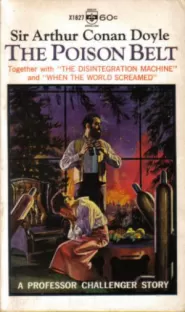
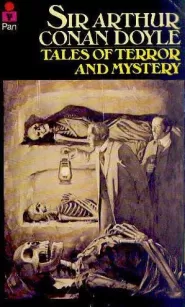
Though his name is forever linked to Baker Street, Doyle’s literary range reached far beyond murder and magnifying glasses. He explored horror in tales like The Captain of the Polestar, penned historical adventures with a romantic flair, and even dipped into science fiction with The Lost World, which introduced Professor Challenger and inspired generations of dinosaur-loving dreamers.
His life outside fiction was just as curious. A vocal supporter of justice, he helped exonerate two wrongly accused men, blending his Holmesian instincts with real-world consequence. Later in life, he became an outspoken believer in spiritualism, convinced that the mind survived death. To some, this seemed at odds with Holmes’s hard logic—but Doyle saw no contradiction in believing both in reason and the unseen.
Sir Arthur Conan Doyle remains one of literature’s rare figures whose creations have transcended the page to become cultural mythology. Yet behind Holmes’s deerstalker and pipe was always Doyle’s restless intellect—part doctor, part mystic, always searching. As he once wrote, “When you have eliminated the impossible, whatever remains, however improbable, must be the truth.” It’s a sentence that lives on in popular culture—but it’s also a glimpse into the complex, questioning spirit of the man who wrote it.