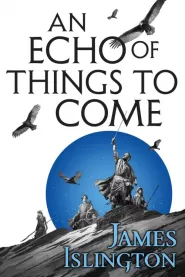
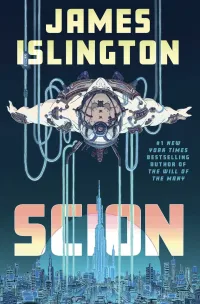
James Islington’s work stands as a testament to the power of intricate world-building and the unyielding pull of morally complex characters. As a master of epic fantasy, he crafts stories that stretch the imagination, leaving readers questioning the very nature of fate, choice, and time itself. His debut novel, The Shadow of What Was Lost, quickly became a beloved cornerstone of modern fantasy, praised for its layered narrative and deep philosophical undercurrents.
Born and raised in Australia, Islington’s early love for speculative fiction was sparked by the works of authors like J.R.R. Tolkien and Brandon Sanderson. However, it wasn’t just these giants of the genre that influenced his writing. The complexity of time travel, alternate realities, and the tension between light and dark are themes he has explored ever since his first foray into the world of storytelling. For Islington, writing isn’t just about creating new worlds—it’s about asking the big questions: What happens when the hero must become the villain? What if choices made in the past could irrevocably alter the present?
What truly sets Islington apart is his ability to blend fast-paced action with philosophical musings, making each chapter feel like a puzzle waiting to be solved. His characters, flawed yet compelling, drive the narrative with choices that are never black and white. In The Licanius Trilogy, a series hailed for its depth and inventiveness, Islington explores the idea of time as a non-linear force, leading readers on a journey through dimensions where every moment is both a cause and an effect.
His style—rich in dialogue, intricately detailed, and often layered with subtle foreshadowing—keeps readers on the edge of their seats, while still offering them moments of quiet reflection. He knows when to pull back, letting the weight of his world speak for itself, and when to press forward, keeping the action taut and unpredictable.
Throughout his career, Islington’s work has resonated with both readers and critics alike, earning praise for his ability to craft a narrative that is both intimate and grand in scale. A keen observer of the human condition, his stories often feature protagonists who are forced to grapple with their own limitations and the consequences of their actions—whether those actions are taken willingly or not. His exploration of fate, destiny, and personal agency in a world where the rules of magic and time are constantly shifting has earned him a devoted following in the fantasy community.
For Islington, writing is as much about immersion as it is about self-discovery. As he often says, “The greatest stories are the ones that challenge not just the characters, but the readers themselves.” Through his gripping plots and deeply philosophical themes, Islington continues to carve a niche in the fantasy genre, inviting readers to step into a world where nothing is ever quite as it seems.
Fans of complex, thought-provoking fantasy will find in James Islington an author who not only entertains but also asks us to rethink the very nature of storytelling itself.