Risingshadow
Speculative Fiction Books
  • About
    • Home
    • Articles
    • About Us
    • Contact Us
    • Privacy Policy
    • Terms of Service
    • Staff Members
    • Newsletter
    • Finnish (FI)
  • Books
    • New Releases
    • Coming Soon
    • Books of the Year
    • Bookshelves Activity
    • Recently Added
    • Advanced Search
    • Reviews / Comments
    • Genres and Tags
    • * Submit Book
  • Community
    • Discussions
    • - Recent Messages
    • - Recent Topics
    • - Hot Topics
    • - Popular Topics
    • - Search
    • CHALLENGES
    • - Reading Challenge
    • - Book Trivia Quiz
  • Home
  • Books
  • Frank Herbert
  • Dune
  • Heretics of Dune

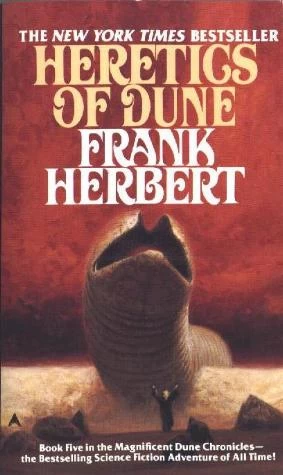
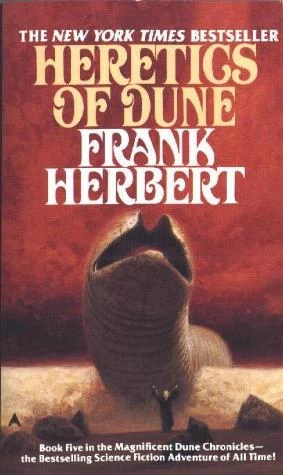
Heretics of Dune

Dune #5 / 6
by Frank Herbert
Heretics of Dune (Dune #5) by Frank Herbert
★ 5.86 / 14
122334546172819110
The epic that began with the Hugo and Nebula Award-winning classic DUNE continues...

From Dune to Rakis to Dune, the wheel turns full circle. From burning desert to green and fertile land and on again to burning desert... the cycle is complete.

The people of the Scattering are returning. Amongst them, mysterious and threatening, are the women who call themselves the Honoured Matres, adepts of an ecstatic cult.

And on Rakis, become Dune, an ancient prophecy is fulfilled with the coming of the she-sheer, Sheeana...

Amazon: Check Best Offer

Science Fiction
Release date: 1984
Reviews and Comments (1)

Book Order
Amazon
Kindle
Audible
Amazon CA
Amazon UK
Amazon Europe

Your Rating
☆☆☆☆☆☆☆☆☆☆
Standard Shelves

Readers also enjoyed

Pandora's Star (The Commonwealth Saga #1)
★ 9.70 / 10
Barrayar (Vorkosigan)
★ 9.32 / 19
Memory (Vorkosigan)
★ 9.26 / 19
A Civil Campaign (Vorkosigan)
★ 9.12 / 16
Embassytown
★ 9.00 / 10
Brothers in Arms (Vorkosigan)
★ 8.94 / 17
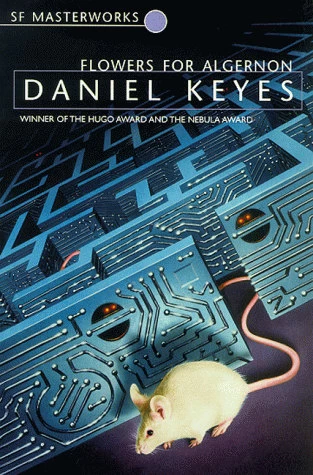
Flowers for Algernon
★ 8.92 / 25

Join the Discussion
You can post as a guest or sign in for more features.
Have questions about this book or want to share your thoughts? Join the conversation!
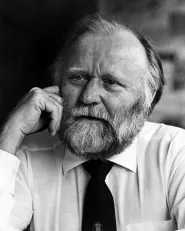
Frank Herbert

Frank Herbert

Frank Herbert, a towering figure in science fiction, is best known for crafting the Dune saga, a series that forever changed the genre and left an indelible mark on the world of literature. Born in 1920 in Tacoma, Washington, Herbert’s early years were marked by a keen interest in philosophy, politics, and the complex interplay of ecology—elements that would later shape his writing in profound ways. His life was one of exploration, not only through words but through experience, taking him from a journalist to a novelist who would change the way we think about power, religion, and the future of humanity.

Read more ...

Herbert’s Dune series, particularly its first novel, is a masterwork of world-building, where the arid desert planet of Arrakis is not just a setting, but a character in itself, teeming with political intrigue, environmental catastrophe, and metaphysical questions. But at its heart, Dune is about more than just the struggle for control of the spice melange—it’s about the complexities of leadership, the cycles of history, and humanity's unending fight to master its destiny. With themes that span ecology, religion, and the psychology of power, Dune remains one of the most deeply philosophical science fiction works ever written.

Herbert’s ability to weave together such grand ideas with intricate plots and vivid characters made him a unique voice in a genre that often favored action over introspection. His work was rarely about simple solutions or clear-cut heroes. Instead, his characters—like Paul Atreides, the reluctant messiah—were faced with moral quandaries, often finding themselves caught between the very forces they sought to control. Herbert didn’t just build worlds—he questioned them, creating narratives that were as intellectually stimulating as they were gripping.

While Dune brought Herbert the most fame, his career was filled with other notable works, including The Dosadi Experiment and God Emperor of Dune, where he continued to delve into the complexities of human nature, exploring how societies and individuals evolve under immense pressures. His writing was never about easy answers; instead, it asked questions about the nature of power, survival, and the long-term consequences of humanity’s actions.

Herbert’s influence on science fiction cannot be overstated. His exploration of ecological themes in Dune, especially the idea of environmental interconnectedness, was ahead of its time and resonates today more than ever. He had the rare ability to blend hard science with deep, speculative thought, creating a work of fiction that was as scientifically informed as it was philosophically profound.

Frank Herbert passed away in 1986, but his legacy lives on. The Dune saga continues to inspire new generations of readers and creators, while Herbert’s unique approach to science fiction continues to shape the genre in ways that few could have predicted. In his own words: "The mystery of life isn't a problem to solve, but a reality to experience." With works that continue to challenge and excite, Frank Herbert remains one of the greatest voices in speculative fiction, urging us all to think more deeply about the world—and the universe—we inhabit.

Dune

Dune consists of six primary books, and includes one additional book that complement the series but is not considered mandatory reads. The current recommended reading order for the series is provided below.

Main series Dune Universe

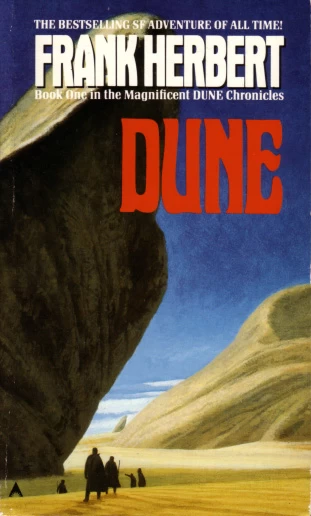
Dune (Dune #1)
★ 8.60 / 92
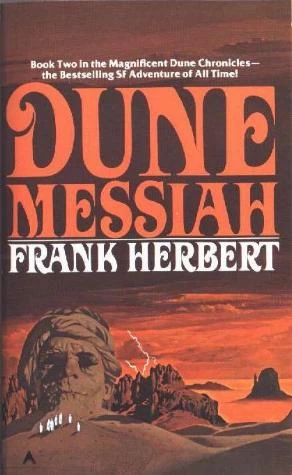
Dune Messiah (Dune #2)
★ 7.34 / 42
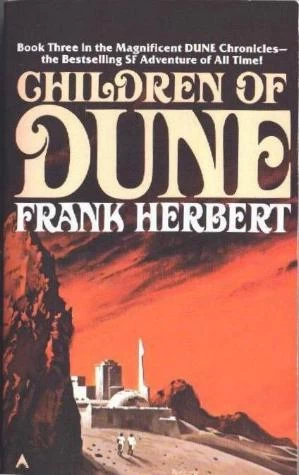
Children of Dune (Dune #3)
★ 6.92 / 34
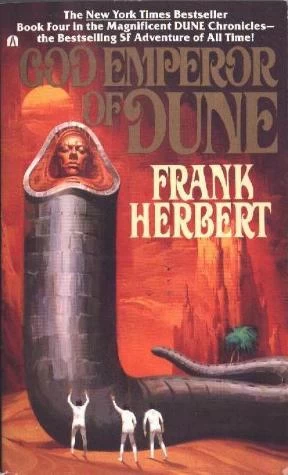
God Emperor of Dune (Dune #4)
★ 6.66 / 18
Heretics of Dune (Dune #5)
★ 5.86 / 14
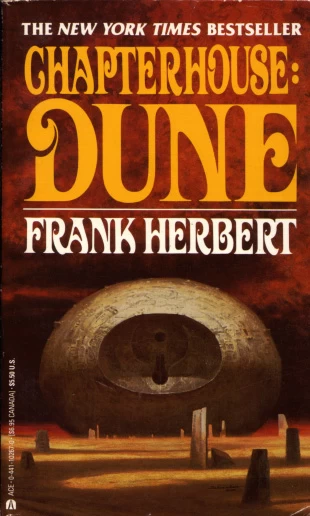
Chapterhouse: Dune (Dune #6)
★ 6.16 / 12
The Great Dune Trilogy (Dune)
★ 8.26 / 4

Reviews and Comments

06/30/2008
Seregil of Rhiminee avatar
Seregil of Rhiminee
3707 books, 260 reviews, 15 posts
★★☆☆☆☆☆☆☆☆ 2 / 10

Heretics of Dune is a bad and horrible science fiction book. It's definitely one of the worst books I've ever read. I didn't think it was possible to write something as bad as God Emperor of Dune, but obviously (and unfortunately) it was possible. I can give Heretics of Dune only one star, because it doesn't deserve more stars. In my opinion this series should've ended after Children of Dune, because the other books are unnecessary sequels.

^ Top
Follow Us: Newsletter | Facebook | X | Mastodon | RSS
Hosted by Planeetta Internet Oy
© 1996 - 2026 Risingshadow. All rights reserved.
This website uses cookies to ensure you get the best experience on our website.
Privacy Policy