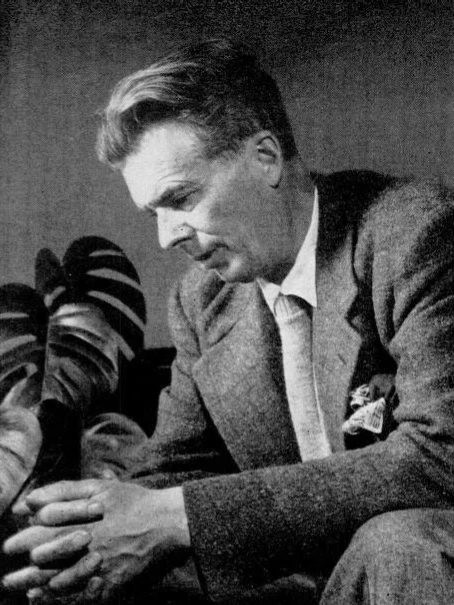
Aldous Huxley was a writer who looked at the world through a lens both sharp and reflective, always questioning the assumptions of his time and exploring the human condition with profound insight. Born in 1894 in Godalming, Surrey, England, he came from a family steeped in intellectual traditions—his grandfather was a renowned biologist, and his mother was a writer. This legacy of inquiry and exploration ran deep in his veins and became the foundation for his later works, which spanned novels, essays, and philosophical writings.
Though Huxley is often best known for his dystopian novel Brave New World, his literary legacy extends far beyond this single work. With a style that is both lucid and profound, Huxley delves into complex themes such as human freedom, the impact of technology on society, and the tension between individual desires and societal norms. His exploration of consciousness, particularly in works like The Doors of Perception, where he reflects on his experiences with psychedelic substances, adds an extra layer of depth to his writing, making his body of work both timely and timeless.
Huxley’s life was as multifaceted as his writing. After studying at Eton and later at Balliol College, Oxford, he worked as a teacher, a journalist, and an editor, but his true passion was always in writing. His early novels, such as Crome Yellow and Antic Hay, were satirical, reflecting the disillusionment of the post-World War I generation. These early works provided a biting commentary on the absurdities of the social classes and the conflicts brewing in the world around him.
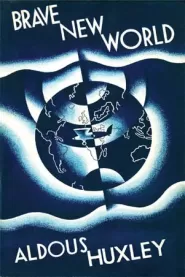
Yet, it was Brave New World (1932) that sealed his place in literary history. A chilling vision of a future dominated by mass production, genetic engineering, and a loss of individuality, Brave New World warned of the dangers of unchecked technological progress and the erasure of human agency in the name of stability and pleasure. While it was a work of fiction, its themes about the dangers of totalitarianism and consumer culture resonated with readers in ways Huxley had not anticipated, cementing its place as one of the greatest dystopian novels of the 20th century.
While Huxley was a keen critic of the world around him, his work is not without moments of hope. His interest in mysticism and spirituality, particularly in his later years, reflects a search for deeper meaning and a yearning to understand the larger forces at play in human life. His fascination with Eastern philosophy and his studies of psychedelics culminated in works that sought to explore consciousness and the human mind—subjects that remain relevant in the modern era.
Huxley’s ability to blend intellect with imagination, wit with wisdom, has made his work a vital part of the literary canon. His legacy is not just in the books he wrote, but in the questions he asked—questions that continue to challenge readers to think deeply about the world and their place in it. Whether dissecting the future or probing the nature of perception, Huxley’s voice remains as relevant today as it was when he first set it to paper.
In his own words, “Maybe this world is another planet’s hell,” capturing his skeptical yet visionary outlook on life, which resonates with readers even today.