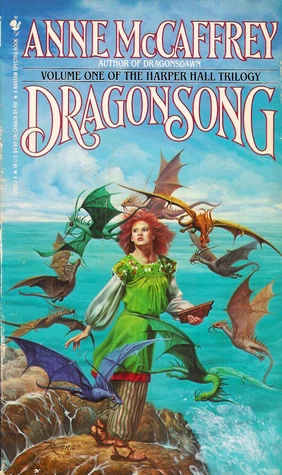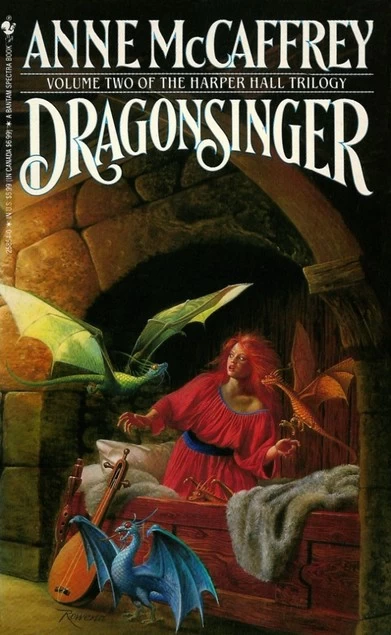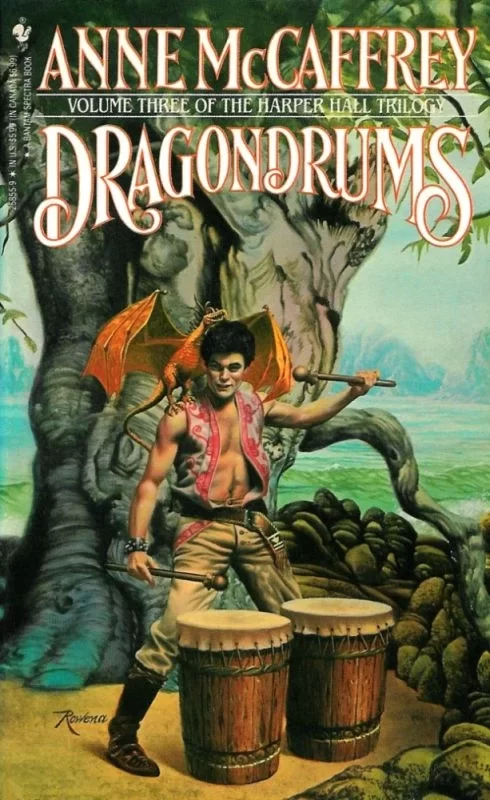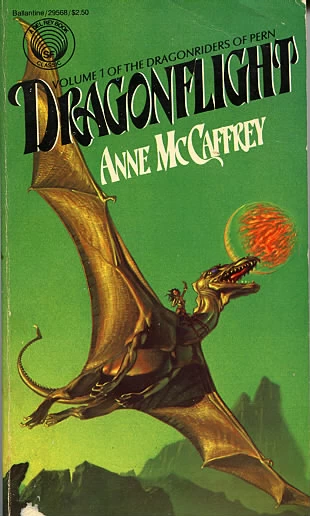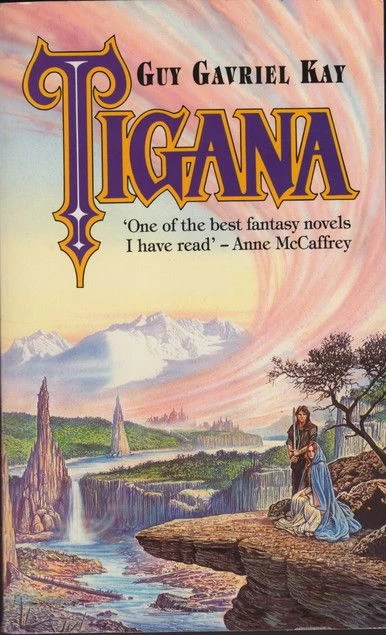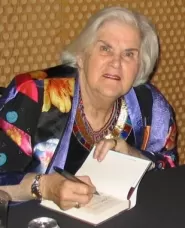
Anne McCaffrey’s name resonates deeply in the world of science fiction, not just for her imaginative worlds but for her ability to weave emotional depth and humanity into stories about dragons, space travel, and the bonds that define us. Born in Cambridge, Massachusetts, in 1926, McCaffrey’s passion for storytelling took root early, though her path to becoming one of the genre’s most beloved authors was not an immediate one. Before turning to writing full-time, she explored a variety of professions, including acting and singing, but it was the written word that eventually captured her heart.
McCaffrey’s breakthrough came with Dragonflight (1968), the first book in the Dragonriders of Pern series. In a genre largely dominated by male voices at the time, McCaffrey’s lush, world-building style and her focus on complex characters, particularly women, struck a chord with readers. The series, set on the distant planet of Pern, centers around the legendary bond between humans and telepathic dragons, facing off against deadly Thread storms that threaten to wipe out life. But beneath the surface of thrilling dragonriders and intergalactic adventures, McCaffrey’s work explores themes of survival, loyalty, and the intricate dance between destiny and choice. The Pern books became a hallmark of her writing career, blending science fiction with fantasy in a way that had never been seen before, and it made McCaffrey a pioneering voice in speculative fiction.
As her career progressed, McCaffrey continued to push boundaries, exploring diverse genres within science fiction, including the Crystal Singer trilogy and the Tower and Hive series, both of which garnered loyal followings. But it was her exploration of the complex relationships between humans and their surroundings that truly set her apart. Through stories of exploration, survival, and resilience, McCaffrey created worlds where empathy, cooperation, and understanding were just as important as the fantastical elements.
McCaffrey's influence extended far beyond her storytelling. She broke down barriers for women in science fiction, becoming one of the first female authors to achieve widespread recognition in a field historically dominated by men. Her work earned her numerous accolades, including the Hugo and Nebula awards, and her books remain cornerstones of modern science fiction. She once said, "To be a good writer, you have to be a good observer," and it’s this keen eye for the smallest details—the quiet moments of connection between her characters—that gives her stories such depth.
Even after her passing in 2011, Anne McCaffrey’s legacy continues to inspire new generations of readers and writers. Her tales of dragons and distant worlds will forever be treasured by fans who seek not just escapism, but also profound emotional journeys. Through her writing, McCaffrey didn’t just create worlds—she showed us that we can find the extraordinary in the most human of experiences.