Risingshadow
Speculative Fiction Books
  • About
    • Home
    • Articles
    • About Us
    • Contact Us
    • Privacy Policy
    • Terms of Service
    • Staff Members
    • Newsletter
    • Finnish (FI)
  • Books
    • New Releases
    • Coming Soon
    • Books of the Year
    • Bookshelves Activity
    • Recently Added
    • Advanced Search
    • Reviews / Comments
    • Genres and Tags
    • * Submit Book
  • Community
    • Discussions
    • - Recent Messages
    • - Recent Topics
    • - Hot Topics
    • - Popular Topics
    • - Search
    • CHALLENGES
    • - Reading Challenge
    • - Book Trivia Quiz
  • Home
  • Books
  • Andrzej Sapkowski
  • The Witcher
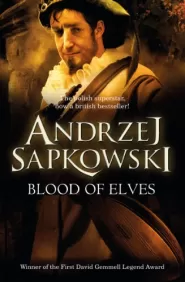
  • Blood of Elves

Blood of Elves

The Witcher #3 / 9 ✓
by Andrzej Sapkowski
Blood of Elves (The Witcher #3) by Andrzej Sapkowski
★ 7.80 / 49
123425767722859610

Winner of the David Gemmell Legend Award for Fantasy (2008).

Geralt, the witcher of Riva, is back – and this time he holds the fate of the whole land in his hands...

For more than a hundred years humans, dwarves, gnomes and elves lived together in relative peace. But times have changed, the uneasy peace is over and now the races once again fight each other – and themselves: dwarves are killing their kinsmen, and elves are murdering humans and elves, at least those elves who are friendly to humans...

Into this tumultuous time is born a child for whom the witchers of the world have been waiting. Ciri, the granddaughter of Queen Calanthe, the Lioness of Cintra, has strange powers and a stranger destiny, for prophecy names her the Flame, one with the power to change the world – for good, or for evil...

Geralt, the witcher of Rivia, has taken Ciri to the relative safety of the Witchers' Settlement, but it soon becomes clear that Ciri isn't like the other witchers. As the political situation grows ever dimmer and the threat of war hangs almost palpably over the land, Geralt searches for someone to train Ciri's unique powers. But someone else has an eye on the young girl, someone who understand exactly what the prophecy means – and exactly what Ciri's power can do.

This time Geralt may have met his match.

Amazon: Check Best Offer

FantasyEpic FantasyHigh FantasyTranslationVideo GameDavid Gemmell Award
Release date: October 15, 2008
Reviews and Comments (1)

Book Order
Amazon
Kindle
Audible
Amazon CA
Amazon UK
Amazon Europe

Your Rating
☆☆☆☆☆☆☆☆☆☆
Standard Shelves

Readers also enjoyed

Free the Darkness (King's Dark Tidings #1)
★ 9.42 / 14
The Name of the Wind (The Kingkiller Chronicle #1)
★ 9.18 / 181
The Lord of the Rings (The Lord of the Rings)
★ 9.12 / 168
Malice (The Faithful and the Fallen #1)
★ 9.08 / 12
The Way of Kings (The Stormlight Archive #1)
★ 8.98 / 71
The Heroes (World of the First Law)
★ 8.94 / 30
The Will of the Many (The Hierarchy #1)
★ 8.90 / 11

Join the Discussion
You can post as a guest or sign in for more features.
Have questions about this book or want to share your thoughts? Join the conversation!
Andrzej Sapkowski

Andrzej Sapkowski

Few writers have reshaped the fantasy landscape like Andrzej Sapkowski—though he never set out to become a legend. Long before The Witcher earned its place in gaming lore and Netflix queues, Sapkowski was a Polish economist with a love for stories that didn't flinch. In the late 1980s, he entered a short story competition with a sharp-edged tale about a monster hunter named Geralt. He didn’t just win; he kicked open the doors to an entirely new world—one filled with political tension, moral ambiguity, and beasts that often looked a lot like men.

Read more ...

What sets his fantasy apart isn’t just the swords or sorcery—it’s the bite. Sapkowski’s writing walks a narrow, dangerous path between folklore and philosophy. His characters grapple with power, prejudice, and survival in a world where the lines between good and evil are constantly blurred. It’s dark, often brutal, but laced with sardonic wit and an undeniable sense of mythic gravity. His storytelling draws heavily from Slavic legends, blending the ancient with the cynical, the magical with the all-too-human.

Born in Łódź, Poland, Sapkowski brought a post-Communist realism to fantasy that felt anything but escapist. His Witcher Saga, which includes titles like Blood of Elves, Baptism of Fire, and The Lady of the Lake, doesn’t just follow Geralt’s journey—it challenges readers to confront uncomfortable truths, all while navigating a treacherous world where every choice has consequences.

Though he's famously skeptical of adaptations—once noting, “I can’t stop people from doing stupid things; I just wish they wouldn’t do them with my books”—his influence is undeniable. The international acclaim of his series has opened doors for Eastern European fantasy on a global stage, drawing comparisons to genre titans while maintaining a voice that’s distinctly, unapologetically his own.

Sapkowski’s work continues to resonate not just because it entertains, but because it unsettles. In his world, monsters aren’t always the ones with claws—and sometimes, a silver sword isn’t enough.

Photo: Elzbieta Lempp

The Witcher

In a land soaked with blood, riddled with ancient grudges and riddles sharper than swords, one man walks the line between myth and nightmare. Geralt of Rivia isn’t your typical hero—he’s a witcher, a monster hunter trained from childhood and mutated by alchemy to fight the creatures that haunt the dark. But in a world where humans are often crueler than beasts, what counts as a monster is rarely clear.

Read more ...

The Witcher series is not a tale of simple quests or shining champions. It’s a slow-burn descent into a morally tangled landscape, where war, prejudice, and destiny twist through every kingdom and forest path. From the war-torn edges of the Continent to the eerie calm of cursed castles, these books build a rich, brooding world steeped in Slavic folklore, political intrigue, and philosophical bite.

At its heart is Geralt—stoic, weary, and deeply human beneath the scars. But he’s not alone. A runaway princess with chaos in her blood, a sharp-tongued bard with too much heart, mages, elves, rebels—all collide in a storm of alliances and betrayals. Loyalties shift like smoke, and destiny doesn’t care if you believe in it.

With razor-edged dialogue, dark humor, and moments of haunting beauty, the series balances brutal action with quiet introspection. It's no wonder it sparked a global phenomenon, inspiring award-winning video games and a hit TV adaptation—yet nothing captures the grit and soul of the world like the original novels.

For readers drawn to fantasy that dares to question heroism, that revels in shadow as much as light, these stories leave a mark. Not with flashy spells or predictable endings—but with the weight of choice, and the lingering question: what do we become when we fight monsters too long?


The Witcher consists of nine books — considered a complete series. The current recommended reading order for the series is provided below.

The Last Wish (The Witcher #1)
★ 7.60 / 74
Sword of Destiny (The Witcher #2)
★ 8.20 / 35
Blood of Elves (The Witcher #3)
★ 7.80 / 49
Time of Contempt (The Witcher #4)
★ 8.48 / 36
Baptism of Fire (The Witcher #5)
★ 7.96 / 29
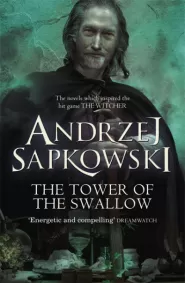
The Tower of the Swallow (The Witcher #6)
★ 8.14 / 28
The Lady of the Lake (The Witcher #7)
★ 7.90 / 21
Season of Storms (The Witcher #8)
★ 7.40 / 15
Crossroads of Ravens (The Witcher #9)
★ 8.50 / 8

Reviews and Comments

06/27/2013
Emmi avatar
Emmi
75 books, 13 reviews
★★★★★☆☆☆☆☆ 5 / 10

While I've never played The Witcher video game series, I have watched bits and pieces of it from time to time, and since I liked the world and characters, I thought it could be interesting to read Blood of Elves. Overall, I found this translation to be mediocre. I couldn't say, of course, anything about the original, but the story in itself wasn't particularly enthralling. Nothing actually really happens except a couple people change locations. There is very little description at all, and a lot of free dialogue without any detail into what's happening. There is a lot of character interaction and the dialogue itself is perfectly fine, but when it comes to action, practically nothing happens to further the story. A little fight here, a little betrayal there, but it's fuzzy and you're left thinking you know what happened but you're not entirely sure. There was one chapter, which seemed to be almost entirely pointless. There were no characters introduced that would reappear at any time, no actions or decisions that had later repercussions, and no lessons to be learned that were passed on to any plot further on in the story. It seems like it could definitely be a prelude to something much more interesting, and Geralt, Yennefer, Triss, and Ciri were all incredibly interesting characters. Perhaps that pointless chapter will contain something that will be relevant in another book, but as it stands, it wasn't especially good on any level. That being said, if you enjoyed the games, by all means give the book(s) a read and get a little more insight on the lives and relationships between the characters. I was happy to understand a bit more about the awkward relationship between Geralt, Yennefer, and Triss, myself.

^ Top
Follow Us: Newsletter | Facebook | X | Mastodon | RSS
Hosted by Planeetta Internet Oy
© 1996 - 2026 Risingshadow. All rights reserved.
This website uses cookies to ensure you get the best experience on our website.
Privacy Policy