

Achievements




What's New in My Bookshelf

I LOVED this book—and I don't say that very often! Until All Curses Are Lifted, by Tim Frankovich, is about magic—and society—gone horribly wrong. The magic system is incredible, unusual, and mangled. That is to say that the magic has been twisted in an effort to make life "fair," but (as with nearly all good things) people have contrived a way to abuse the system. How does one get around a system that curses the innocent and punishes good deeds? Worse, this broken magic is breaking the world…
I found "Blood Song" to be a gripping coming-of-age tale with better-than-fair character and setting development. I enjoyed the single-point-of-view persepctive and the pacing is good — except for a few places when the timeline changed suddenly and without warning, or the actions and attitudes of the players didn't seem to match their ages or time spent at the school. Also, while I didn't feel the protagonist, Vaelin Al Sorna, did anything *out* of character, the meat of his motives was sometimes missing. I wanted to know more about how he felt and how he came to be such a devout and moral person. I liked that he often made the hard choices, and that he didn't whine about it. Sometimes didn't even tell others about them! I enjoyed Ryan's language skills and he can paint a very nice scene, though I could easily have lived without the crass language. Even so, the few appearances seemed natural rather than used (or over-used) for shock value. The political landscape intrigued me, as did the virtual landscape. With the Orders being numbered rather than named, their purposes (aside from the Sixth, which is "main character" material), were tricky to keep track of. On another note, there were some kind of funny typos (like "three men under your yolk") and very minor puncutation issues. In the end, it kept me turning the pages and suffering an unwillingness to put it down until I was done. I am glad I read it, it's a very impressive beginning to the series and I'm looking forward to reading more.

Newcomer A. E. Marling does a bang-up job with this novel about a magic-wielder afflicted with a sleeping disorder. Her drowsiness does not equate boredom for the reader. On the contrary, "Brood of Bones" is a fantasy whodunnit, with Enchantress Hiresha cast in the role of arcane detective. The setting and the magic are skillfully portrayed; the characters are complex and not always predictable. Hiresha struggles not only with her sleeping problem, but with the past that has formed her; her position is her armor and her purpose. Maid Janny is a gem of irreverence, while the Lord of the Feasts is both charming and terrible. The deposed arbiter of the city is exasperating at the same time she is delightful, and the two city leaders (a pair of priests representing different deities) are not what they might seem. I could wish the bodyguard were better developed, but it is a small complaint. The story is told from Hiresha's point of view, depicting her insecurities and fears in a very personal, very *human* way embroidered with the mores of her particular society. This is a really excellent debut novel.

What a fun romp--I love the hare-brained schemes and the irreverent humor. The characters are really engaging. Of course Sicarius, with his sense of distance and mystery, begs following just to catch another glimpse of what lies beneath that unreadable façade, but I also found Books and Akstyr intriguing. The first for his wit and his intelligence as well as loyalty to Amaranthe, and the latter for his quirkiness and the hint of hidden depths. Maldynado, I suspect, hangs around out of curiosity: the adventures he gets into with the Edge are a lark, and how can Amaranthe not be attracted to him? Amaranthe herself is a funny contradiction of terms, alternately determined, fearing to fail, failing, and delighted at turning tables. And Sespian, dear Sespian, might have escaped the first pot he was set to brew in, but he's still in the clutches of adolescent hormones and idealism. Even Hollowcrest fascinated me. I would love to know more of what he was thinking and what influenced his choices. The "steampunk" setting is delivered with a light hand (which is good, because I would not like to be run over by thundering locomotives). I enjoyed the contrasts between the classes and genders. While I have seen comments that the gender discrimination is excessive, I feel that it fits not only the story itself, but our own historic (and even current) patterns. Standards of our own society now are not global and they are certainly distinct from most of history. The plot was a wonderful roller-coaster ride of ups and downs, and I am very much looking forward to reading more of the adventure!
I really enjoyed the first book in this series, Emperor’s Edge, and the fun continues in Dark Currents. Buroker has developed a good, solid framework of society that isn’t thrown off kilter with the inclusion of magic—a magic that is referred to in Amaranthe’s world as “science.” Her writing style is smooth and engaging, neatly balancing narrative and dialogue. The characters continue to capture the reader’s interest. What’s more, they develop even further—no cardboard cutouts here! They are each wonderfully detailed and clearly different from one another, and the fact that they are not all always comfortable and heroic makes them even more believable. When one of them goes out of his comfort zone in order to get something important accomplished, it *means* something. The quality of writing style, grammar, punctuation, formatting, characterization, setting—all are top notch. The story is a quick read, not too long and it’s fast-paced. There are some wonderfully quirky twists and surprises, though the antagonists remained slightly distant and nebulous. If I have one complaint it’s about the gratuitous crass innuendoes. They felt like a forced afterthought and could honestly (and beneficially) have been left out altogether. Otherwise, the humor and the usual exchange of barbs had me laughing out loud in places. Buroker has a knack for telling a good tale.

Enchantress Hiresha's intelligent fantasy/mystery story continues in the wonderful follow-up to "Brood of Bones." Marling's prose beautifully captures the flavor of the desert, creating richly painted scenes. The plot is full of expertly crafted twists and turns, and the characters are brought to you in vibrant technicolor. I loved seeing Hiresha thwarted, regrouping, stepping outside the bounds of what she knows, and growing as she does. She's not just a focused 'scientist,' she's whimsical, at times callous, and she has a habit of putting her foot in her mouth. Her new bodyguard, Chandur, strikes me as a good-hearted, wonderfully loyal and idealistic but frustratingly dense individual, but he too grows through his experiences, making for a more solid, engaging character. The doings of the Soultrapper antagonist are devious and woven expertly into the tapestry with threads of creepiness and dark humor. Well done! I would have liked Tethiel to figure a little more prominently; I missed his biting wit and dry humor, and the knife-edge relationship with Hiresha developed in "Brood of Bones" only received token attention after his reintroduction. "Fox's Bride" flows well, keeps a quick pace, and ends on a strong note. Again, I am looking forward to Marling's next book.
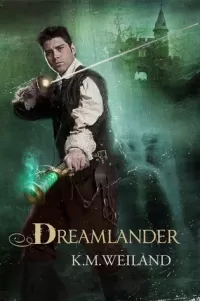
From the immediate appeal of the opening paragraph to the highly emotional ending, Ms. Weiland has crafted a wonderful story encompassing the "real" and the "dream" worlds. Her world-building is creative and interesting without bowling the reader over, and her descriptions conjure colorful, unique scenery. The Reivers are delightful, the fearless Cherazii are compelling, the Garowai peculiar and mysterious. The unique technology puts the tale within the borders of steampunk without it actually becoming an alternate history of our world. Indeed, "our world" is firmly in the present day. I wasn't certain I'd be sold on the "dreamworld" premise, but it is written in a fashion that makes it entirely believable, entirely plausible--and the tension is increased by the sheer stress of the situation. The dreaming of the protagonist, from one world to the other, is so filled with emotion and physical duress that it's a wonder he got any rest at all. I found the development of individual characters very well done, with flawed and yet appealing personalities. Some of the relationships with other people were outstanding--particularly the one between Chris and his father--while others were a little lackluster. For all of the emotional involvement between one person and the other, which lent a fine sense of depth and reality, the romantic interest left me wanting somewhat, at least in the middle. It wasn't bad, it was just not quite "there" for me. The end, on the other hand, was marvelous and heart-rending. The theme of choices and consequences resonates. More people should be aware and attentive of their actions, not just to each other, but in the way it affects themselves. Ms. Weiland skillfully handles the technical side of writing while presenting a nearly seamless tale that will have the reader avoiding chores and/or staying up late to reach a very startling, very satisfying ending.

My curiosity was piqued when I discovered this was set in the Welsh borderlands and in an earlier time period than we are accustomed to, but Lawhead's notes make perfect sense of his choice. The people in the book are wonderfully characterized, particularly Robin/Bran, who starts out as a spoiled, spineless annoyance. The book moved along at a good pace most of the time, and I was not put off by the slower parts. I found the details surrounding who was in charge (William Rufus) and what was going on (the Franks in Wales) a little confusing, as though it was assumed that this was information everyone automatically knows. While the author's notes at the end clarified, I wish I'd read them first. Even so, I already bought 'Scarlet,' the second book in the series
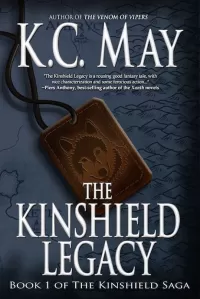
Fairly typical of the fantasy genre, but an enjoyable, fast-moving read with plenty of action and adventure. The plot is simple and straightforward, without a lot of embellishment, but the protagonists are believable and engaging. The book opens with a scene guaranteed to make you want to read more. The reluctant hero stays reluctant, and his nobility outweighs his lowborn crassness, inspiring a somewhat gratuitous loyalty in those who follow him and his cause. I found the antagonist a little flat; for a man planning to take over the kingdom, his actions seem small and petty in scope and give no view of how he sees his future. As another reviewer mentioned, the occasional crass comments from the male characters could have been omitted. They did nothing for the story and, in fact, detracted from the overall pace of the tale. Aside from that, I found May's style to be engaging and humorous, and I look forward to reading the next book in the series.
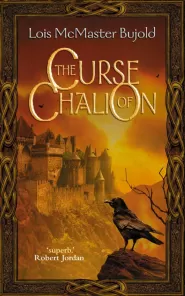
This was an easy story for me to be drawn into, character-driven — and how! Lupe dy Cazaril is not your typical fantasy hero. He is a man damaged, betrayed, and afraid. This, of course, begs the question: How on earth is he going to accomplish his heroics? The use of demons and gods is complex and intriguing, providing a unique religious presence that — while a significant aspect of the story — is not "preachy." Bujold handled it neatly, showing the entirely human tendency to wander back and forth on the road of faith. The kinship between the gods and demons of her world, and between gods and the world, is intricately and beautifully sketched. Add to that the development of a complex political situation shaded by the magic. Or the gods… I loved that the characters were incredibly well developed and "whole." No flat or cookie-cutter personalities here! While they could be described via "the usual fantasy cast of characters," they don't stay stuck in those molds. None of them have black-and-white qualities; they are shaped by the setting, by their interactions, by the choices they make. No one is simply evil, and no one is perfectly good. The language is marvelous, though occasionally complicated. There is a sad and desperate sort of humor that reminds me of the axiom, "We laugh because we must not cry." All in all, a book entirely worth reading.
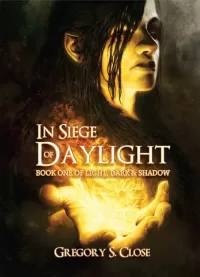
Are you a fan of traditional fantasy? In Seige 0f Daylight delivers a sweeping fantasy tale full of adventure, prophecy, and intrigue. Author Gregory S. Close translates many of the familiar tropes into his own breed of characters—characters with flavor and rich backgrounds in a setting that is comfortable, but not too familiar. His pacing is spot-on, and his prose provides some lovely scenes. If there's one thing that interrupted the read, it would be the naming conventions. Close veers from horrendous, unpronounceable, apostrophe-ridden monikers to French (what?) names without missing a beat. Many of the characters and creatures share names so similar that they confuse. If you can ignore that, a compelling prologue catapults the reader into the first chapter, where the young protagonist makes his debut. I wanted to slap him several times, but that's a good thing; a young apprentice who knows everything, can do everything, and doesn't demonstrate his actual youth is difficult to believe. Calvraign may be a quick study, but he's also victim to a mercurial temper and a teenage sense of invincibility. The other figures introduced in this story are equally well developed — no cardboard cut-outs here. Aside from the names, the other races are introduced without the baggage of an info dump, yet they flow into the tale smoothly, and still leave room for surprises. The plot unwinds at a good pace, displaying contrasting cultures, veiled histories, and surprise reveals. While the territory is familiar, Close does a fine job of keeping it from being cliché. In spite of the number of character views, he’s kept them in balance and done it in a way that coaxes the reader to keep turning the pages to find out what happens next. He is clearly a storyteller worth watching.

I have to confess, this short story was not nearly as impressive as the other Robin Hobb works I’ve read. I wanted to love it, but I never felt personally involved in the story. It is told as a narrative—a written record—of the truth of King Charger’s life. It involves much telling and very little showing. Far too much of the story took the form of “some would say… but…” Yes, and the former became history. I like the idea of it, but I very much missed becoming invested in any of the characters. The format leaves a vast gulf between reader and characters. Still… Hobb writes with her typically compelling and intelligent style. The politics are clever and frustrating (as all politics are!). The story of how the Witted were so thoroughly discredited is compelling, believable, and heart-breaking. “The Willful Princess and the Piebald Prince” makes for an interesting tasty historical tidbit.
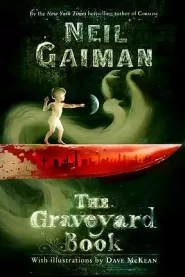
The Graveyard Book, set in the graveyard in “Old Town” (somewhere in England) is a story about Bod, an unusual boy living in an unusual place and under truly unusual circumstances. When tragedy strikes his family, Bod is adopted by the denizens of the cemetery and guarded by a man known only as Silas. While he grows he is taught by ghosts from every century, by Silas, and by Miss Lupescu (a werewolf). The tales of his adventures combine a wonderful sense of humor with shades of creepiness and a dash of magic. The assassin that killed Bod’s family was supposed to kill him, too. His failure haunts him and he continues to hunt the boy. In the end, Bod faces the killer—but not without cost. The end is bittersweet, but well crafted and fitting, even full of hope for Bod’s strange future. More suitable for tweens and teens, The Graveyard Book has its dark moments and some violence. It is the winner of the British Carnegie Medal and the American Newbery Medal. As an adult, I found it occasionally dark, occasionally sad, and frequently heart-warming.

I thoroughly enjoyed this single-point-of-view tale. It begins with the introduction of a staggering drunk as the main character—a not entirely likable character, but the reader can sympathize with him—and journeys with him to his surprising new position in the world. This advancement doesn’t come to Errol Stone easily; he has physical and emotional demons to overcome while he’s being chased by poison- and blade-toting villains. He makes some incredible faux pas, and he also does exactly the opposite. There is a lot going on his world that he doesn’t know or understand. Carr handles the mystery well, and the reader learns as Errol learns. This doesn’t prevent the revelation of several subplots that keep the action and suspense going—and the story is wonderfully complex. The end is a little shaky, but not abysmal. It didn’t keep me from moving directly on to Book 2. The intriguing epilogue definitely helped in that respect. Criticisms? There are a few typos and confusions about direction, number, and who a character is talking to — enough to make me read the passages twice, but not enough (by any means) to ruin the story. The book does have a virulent case of Comma Splicing, which I find annoying in general but, again, not enough to ruin the story. And… naming conventions are inconsistent, with some taken straight from our world, some slightly modified (Morgols, Soedes, Basqu — and Finn Maccol), and some original. What was going on there? Did I miss something? Those nit-picking concerns aside, the book is a wonderful page-turner. Clean, gore-free (in spite of fight scenes), and an all-around good read.
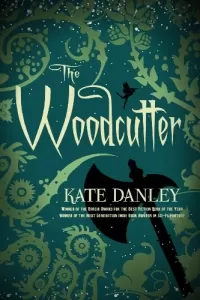
What a wonderful, unique twist on fairytales! Danley weaves her own style into a retelling of familiar stories and does not disappoint. I love the brevity of her descriptions; it is a rare author that can convey so much information and emotion with so few words and still maintain such a lyrical quality. I was completely enchanted by her prose and by the story itself. Duty, treachery, love and sacrifice wind throughout a mystery that the Woodcutter must solve. He has help on his long and twisting journey, and we’re given a sizable dose of the old-fashioned magic one rarely sees outside of fairytales. Humor, setbacks, and plot twists lead to a climax and resolution that surprised and delighted me with its emotional impact. A few editing issues interrupted the otherwise smooth flow of the tale—typos, words left out, and odd chapter breaks. I hope they are cleaned up in later editions than my copy. Otherwise, I say Bravo, Kate Danley! Thank you for a truly engaging read!
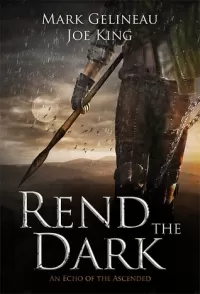
"Rend the Dark" starts off with a slightly strange prologue—and then launches into a rich, well-done tale of fantasy and horror. The magic is unique, the evil the characters face is unusual (at least in my reading experience!), and the world-building is tidily woven into the meat of the story. The characters are diverse, cleverly sculpted, and appealing in their flaws. The pace is easily intense enough to keep the reader eagerly turning the pages. Gelineau and King have produced a first-class story that fits in a little bitty space. I received a free copy of this book from the publisher through NetGalley, and I’m glad I got to read it!
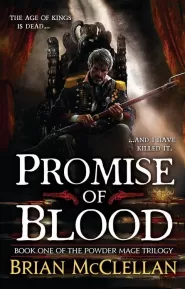
Wow. What a tense, action-packed, intrigue-filled, story! While not without its (few) flaws, Promise of Blood is an extraordinary debut. So much about it was epic: revolution, religion, magic, world-building, family issues, addiction issues, mystery—and McClellan has managed to blend them all together completely and seamlessly. This book sets a very high standard for *epic* flintlock fantasy. And the characters! More wow. They're as far from cookie-cutter as you can get. McClellan brings them to life with unique perspectives on what is happening around them. Those that matter are completely fleshed-out and fascinatingly multilayered. Never do the multiple points of view confuse the reader or stop being interesting. (Though I wanted to knock a few of them upside the head now and then…) The magic system receives an injection of originality and interest, though I might have liked to see better how and why a powder mages “works.” (Snorting or ingesting gun powder isn’t really a logical course of action to my way of thinking!) The vivid story-telling wonderfully supports a fast-paced plot that gradually increases in tension and intrigue—and just plain human interest. I don’t often give five star ratings, but I find McClellan’s style and talent satisfying in ways that most authors never achieve. The third and fourth books in the series are equally gripping, but lost a star each to both some slow sections and to increasing gore. Yes, I realize it’s hard to pull off a revolution without blood and guts, but I’m a fan of the technique that leads me up to a critical moment and lets me fill in what appears to be obvious with my own imagination. Still a great addition to my bookshelf!