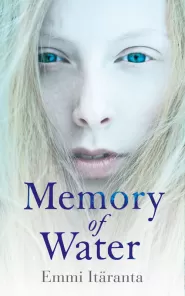
When Emmi Itäranta began writing Memory of Water, she did something quietly radical—she wrote it in two languages at once. Switching back and forth between Finnish and English as the story unfolded, she created a novel that carried the rhythm and intimacy of both languages, a rare duality that mirrors the world she so often writes about: beautiful, fragile, and quietly brimming with tension.
Born in Tampere, Finland, Itäranta grew up surrounded by forests, lakes, and a culture steeped in nature’s rhythms—landscapes that seep into her fiction like mist. Her writing is not loud or showy; it lingers like a memory, often blurring the line between dystopia and dream. Her debut novel, Memory of Water, tells the story of a young tea master’s apprentice in a future where water is tightly rationed—a haunting premise rendered with poetic restraint. The book earned international acclaim, winning the Kalevi Jäntti Prize and being nominated for both the Philip K. Dick Award and the Arthur C. Clarke Award, quietly placing her on the global speculative fiction map.
Itäranta’s stories often carry a sense of quiet rebellion—characters navigating decaying worlds not with weapons, but with silence, tradition, and inner resolve. Themes of environmental collapse, memory, and the persistence of beauty are recurring threads, woven with a lyrical voice that avoids melodrama in favor of subtle emotional depth.
Her follow-up novels, including The City of Woven Streets (also published as The Weaver) and The Moonday Letters, further established her as a writer of atmospheric, genre-bending fiction. Each book explores not only imagined futures, but also the emotional architecture of those who live in them—what it means to carry secrets, to question inherited truths, to long for something just out of reach.
Despite her growing recognition, Itäranta maintains a quiet presence in the literary world. She has spoken about how writing in two languages changes the way she constructs stories—how each language holds different emotional weight and leads her to unexpected narrative choices. This bilingual approach isn't just a technical feat; it’s a reflection of her writing’s very soul: layered, fluid, and attuned to nuance.
For readers who seek speculative fiction that leans into quiet wonder rather than spectacle, Emmi Itäranta offers something rare—a body of work that doesn’t just imagine the future, but invites us to feel it with all our senses.