Vulcan's Hammer
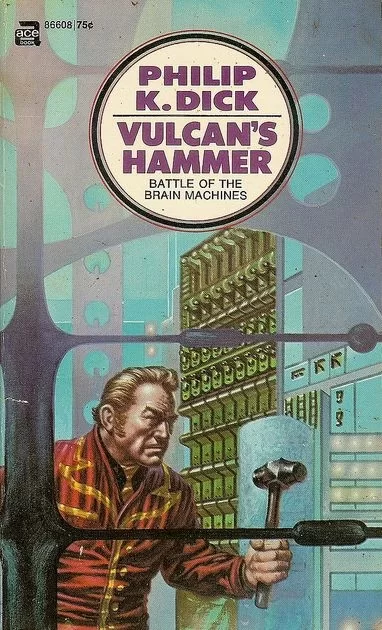
Objective, unbiased and hyperrational, the Vulcan 3 should have been the perfect ruler. The omnipotent computer dictates policy that is in the best interests of all citizens – or at least, that is the idea. But when the machine, whose rule evolved out of chaos and war, begins to lose control of the "Healer" movement of religious fanatics and the mysterious force behing their rebellion, all Hell breaks loose.
Written in 1960, Philip K. Dick's paranoid novel imagines a totalitarian state in which hammer-headed robots terrorize citizens and freedom is an absurd joke. William Barrios, the morally conflicted hero, may be the only person who can prevent the battle for control from destroying the world – if, that is, he can decide which side he's on.
Winner of both the Hugo and John W. Campbell awards for best novel, widely regarded as the premiere science fiction writer of his day, and the object of cult-like adoration from his legions of fans, Philip K. Dick has come to be seen in a literary light that defies classification in much the same way as Borges and Calvino. With breathtaking insight, he utilizes vividly unfamiliar worlds to evoke the hauntingly and hilariously familiar in our society and ourselves.
Readers also enjoyed




Philip K. Dick
Philip Kindred Dick (1928–1982) was an American novelist and short story writer whose published work during his lifetime was almost entirely in the science fiction genre. Dick explored sociological, political and metaphysical themes in novels dominated by monopolistic corporations, authoritarian governments, and altered states. In his later works, Dick's thematic focus strongly reflected his personal interest in metaphysics and theology. He often drew upon his own life experiences and addressed the nature of drug use, paranoia and schizophrenia, and transcendental experiences in novels such as A Scanner Darkly.
More books by Philip K. Dick