We the Living
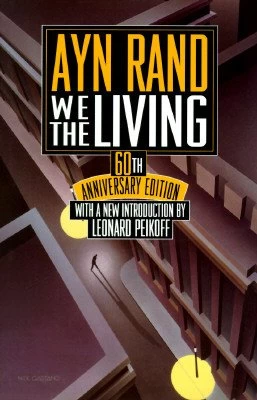
First published in 1936, the theme of this classic novel is the struggle of the individual against the state. It portrays the impact of the Russian Revolution on three human beings who demand the right to live their own lives and pursue their own happiness. It tells of a young woman's passionate love, held like a fortress against the corrupting evil of a totalitarian state.
We the Living is not a story of politics, but of the men and women who have to struggle for existence behind the Red banners and slogans. It is a picture of what those slogans do to human beings. What happens to the defiant ones? What happns to those who succumb?
Against a vivid panorama of political revolution and personal revolt, Ayn Rand shows what the theory of socialism means in practice.
Ayn Rand
Ayn Rand (Alisa Zinov'yevna Rosenbaum, 1905–1982), was a Russian-American novelist, philosopher, playwright, and screenwriter. She is known for her best-selling novels and for developing a philosophical system she called Objectivism.
Born and educated in Russia, Ayn Rand emigrated to the United States in 1926. She worked as a screenwriter in Hollywood and had a play produced on Broadway in 1935–1936. She first achieved fame with The Fountainhead, published in 1943, which in 1957 was followed by her best-known work, the philosophical novel Atlas Shrugged.
More Books Ayn Rand