The Woman in the Dunes
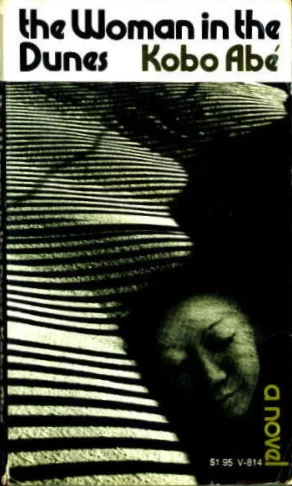
One of the premier Japanese novels of the twentieth century, The Women in the Dunes combines the essence of myth, suspense, and the existential novel. In a remote seaside village, Niki Jumpei, a teacher and amateur entomologist, is held captive with a young woman at the bottom of a vast sand pit where, Sisyphus-like, they are pressed into shoveling off the ever-advancing sand dunes that threaten the village.
"Abe follows with meticulous precision his hero's constantly shifting physical, emotional and psychological states. He also presents... everyday existence in a sand pit with such compelling realism that these passages serve both to heighten the credibility of the bizarre plot and subtly increase the interior tensions of the novel." – The New York Times Book Review
"Some of Kobo Abe's readers will recall Kafka's manipulation of a nightmarish tyranny of the unknown, others Beckett's selection of sites like the sand pit...as a symbol of the undignified human predicament." – Saturday Review
Readers also enjoyed





Kobo Abe
Kobo Abe, pseudonym of Kimifusa Abe (1924–1993) was a Japanese writer, playwright, photographer and inventor. Abe has been often compared to Franz Kafka and Alberto Moravia for his surreal, often nightmarish explorations of individuals in contemporary society and his modernist sensibilities.
Among the honors bestowed on him were the Akutagawa Prize in 1951 for The Crime of S. Karuma, the Yomiuri Prize in 1962 for Woman in the Dunes, and the Tanizaki Prize in 1967 for the play Friends. Kenzaburo Oe stated that Abe deserved the Nobel Prize in Literature, which he himself had won (Abe was nominated multiple times).
More books by Kobo Abe