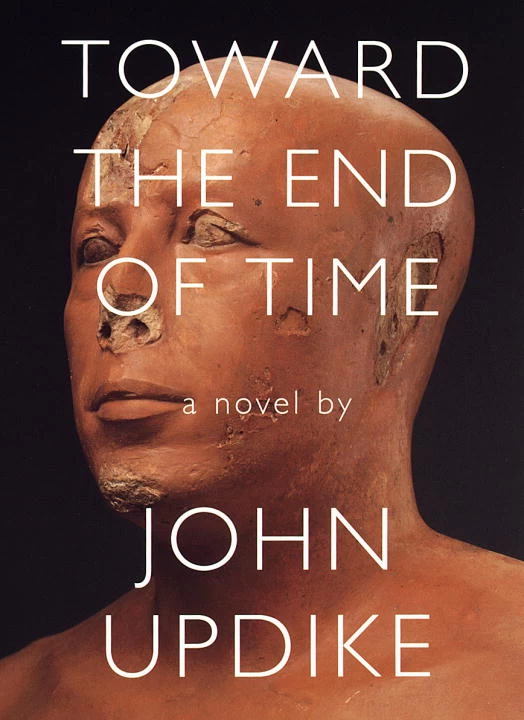
Toward the End of Time
A journal by an aging banker in which he reflects on subjects ranging from the decline of civilizations to the many-universes theory. The year is 2020 and America is in chaos following a nuclear war with China. Ben Turnbull, the hero of John Updike's 18th novel, is a 66-year-old retired investment counselor living north of Boston in the year 2020. A recent war between the United States and China has thinned the population and brought social chaos. The dollar has been locally replaced by Massachusetts scrip; instead of taxes, one pays protection money to competing racketeers. Nevertheless, Ben's life, traced by his journal entries over the course of a year, retains many of its accustomed comforts, as supervised by his vibrant wife, Gloria. He plays golf; he pays visits to his five children and 10 grandchildren.
Something of a science buff, he finds his personal history caught up in the disjunctions and vagaries of the 'many-worlds' hypothesis derived from the indeterminacy of quantum theory. His identity branches into variants extending back through history and ahead in the evolution of the universe, as both it and his own mortal, nature-enshrouded existence move toward the end of time.