Conjure House
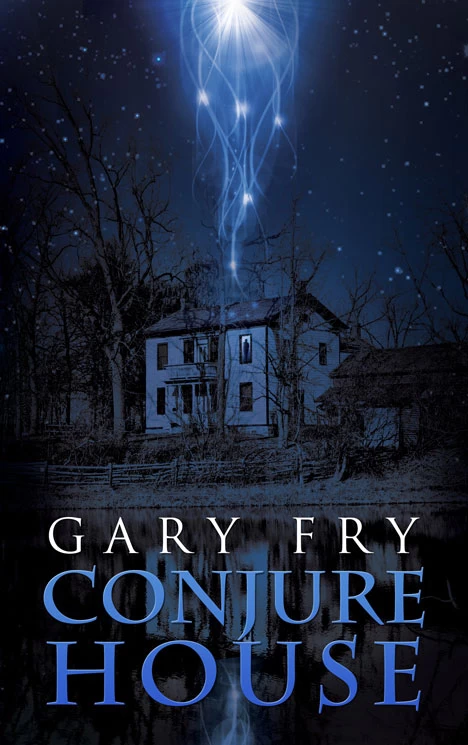
The village of Deepvale has a sinister past. Built in the 1400s, it has been home to a number of sordid characters, including Peter Suman, known locally as 'The Conjurer' due to the diabolical experiments he was rumored to have conducted during the 19th Century, in a dark old house beside a lake.
In the 1990s, after a bet with his elder brother and three friends, seven-year-old Simon Mallinson goes missing inside the now derelict Conjurer's House.
Fifteen years later, his brother Anthony is back in Deepvale, following the brutal deaths of his parents. And strange events have begun to occur in the village again, including the apparent return of young Simon and his creepy new friends. Worse still, Peter Suman appears to be back, too, bent on achieving what he failed to do over a hundred years earlier...
Conjure House, a novel of cosmic terror from Gary Fry.
Readers also enjoyed
Gary Fry
Gary Fry lives in Dracula's Whitby, literally around the corner from where Bram Stoker was staying when he was thinking about that character. Gary has a PhD in psychology, though his first love is literature. He is the author of four short story collections and a novella. The House of Canted Steps is his first novel.
More books by Gary Fry
Reviews and Comments
In what feels like a much older novel than it is, Conjure House offers up a solid, old-fashioned horror novel story, the kind where the real horror always seems to be just off the margins of the page. Gary Fry establishes each scene beautifully, engaging the reader's imagination so well that it's often a surprise to look back and realize just how sparse the details are upon the page, when they're so vivid and vibrant in the mind's eye. It's a neat narrative trick, and one that's not easy to pull off, but it really serves to draw you deeper into the story. Horror novels are often a bit odd, requiring a kind of patience that we, as readers, don't extend to other genres. We're generally willing to sit back and let the author establish the scene, foreshadow the real horror, and build up the suspense before finally allowing our fears to escape. Here, however, we get two of the strongest opening chapters I've read in a horror novel in quite some time. By the time we're through them, we already have the background we need to appreciate the horror, some sympathy for the protagonist, and a burning desire to find out what's really going on behind the doors of the Conjure House. Fry makes use of a lot of the standard elements of the genre here, including a haunted house; the tormented, secretive father; the sensitive, somewhat prescient mother; the child who is surprisingly mature for his age; and the small circle of childhood friends who have scattered over the years, but who immediately return home to put the past to rest. Anybody who has ever read a Stephen King or Dean Koontz novel knows the formula, and also knows that formula can work very well, with enough inspiration and talent behind it. Even if Fry doesn't quite pull it off, there's enough imagination and ingenuity here to justify the attempt. The pacing lags a bit in the middle of the book, as old friends are brought back together, but there are enough eerie, creepy, unsettling glimpses of the true horror embedded in their journeys to keep the reader close. Unfortunately, Anthony and his family dynamic is the weakest part of the story, and the lack of likability/sympathy does keep the novel from achieving the full impact of its potential. As for the mystical mumbo-jumbo of the Conjure House, the philosophical concepts of folding time, and the Lovecraft inspiration behind it all . . . well, it's a big heavy-handed for such a short novel, and probably a bit too intangible for some readers. I didn't particularly buy it, and didn't find it lived up to the atmosphere Fry created, but I did find it a nice alternative to the typical religious/spiritual conflict of good and evil. Overall, it's a good book . . . a solid read . . . and a nice addition to the genre. I doubt I'll have any strong memories of it a few weeks or months from now, but I am curious to give Fry another read, and have no hesitation in recommending this to fans of the genre.