The 13 Clocks
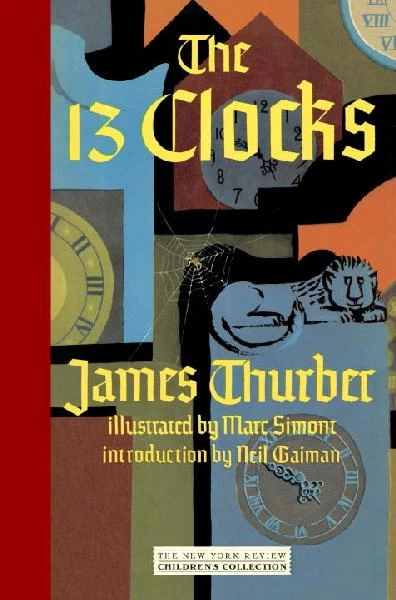
Illustrated by Marc Simont. The 2008 edition (published by New York Review of Books) contains an introduction by Neil Gaiman.
Once upon a time, in a gloomy castle on a lonely hill, where there were thirteen clocks that wouldn’t go, there lived a cold, aggressive Duke, and his niece, the Princess Saralinda. She was warm in every wind and weather, but he was always cold. His hands were as cold as his smile, and almost as cold as his heart. He wore gloves when he was asleep, and he wore gloves when he was awake, which made it difficult for him to pick up pins or coins or the kernels of nuts, or to tear the wings from nightingales.
So begins James Thurber’s sublimely revamped fairy tale, The 13 Clocks, in which a wicked Duke who imagines he has killed time, and the Duke’s beautiful niece, for whom time seems to have run out, both meet their match, courtesy of an enterprising and very handsome prince in disguise. Readers young and old will take pleasure in this tale of love forestalled but ultimately fulfilled, admiring its upstanding hero (“He yearned to find in a far land the princess of his dreams, singing as he went, and possibly slaying a dragon here and there”.) and unapologetic villain (“We all have flaws,” the Duke said. “Mine is being wicked”.), while wondering at the enigmatic Golux, the mysterious stranger whose unpredictable interventions speed the story to its necessarily happy end.
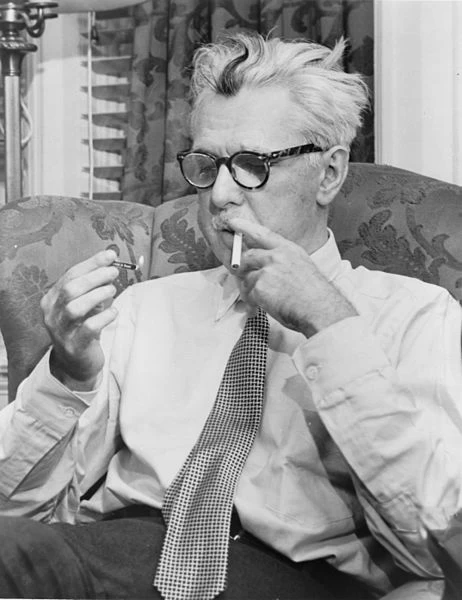
James Thurber
James Grover Thurber (1894–1961) was an American author, cartoonist and celebrated wit. Thurber was best known for his cartoons and short stories, published mainly in The New Yorker magazine and collected in his numerous books. One of the most popular humorists of his time, Thurber celebrated the comic frustrations and eccentricities of ordinary people.
More Books James Thurber