J.L. Dobias avatar

RISINGSHADOW BOOKSHELF

J.L. Dobias

Apprentice· Level 20

THE READER’S VOICE

Book Reviews

J.L. Dobias’s own thoughts on books they have read. These are reader-written book reviews, separate from Risingshadow’s editorial reviews.

59 book reviews
Sort book reviewsSort: Date written · Newest first
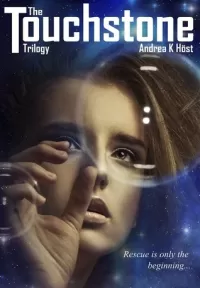
The Touchstone Trilogy

BOOK REVIEW

The Touchstone Trilogy

Andrea K. Höst

10/10Written Apr 8, 2013

Touchstone Trilogy by Andrea K Host.

I purchased this book after reading a sample of Andrea K Host's -And all the Stars-. I had already put the three books in my wish list prior to that. But after reading that sample I had a feeling I should just buy the whole and totally unrelated trilogy. I read through them in three days.

People have told me that writing in first person is hard to do. They have given various reasons why it does not work and sometimes those reasons are conflicted. Some even suggest that it's this decades fad to write in first person. Because this is written as a diary it's naturally in first person. Andrea nails first person right on the head, and right out of the box.

Cass is such an engaging character in Stray that she sucks you right into her story at the beginning. There is not doubt of Andrea's world building abilities and her strong characterization. But what really got me in this story is in the chapter February when Cass's birthday arrives. And I'm not giving anything away, other than to honestly say I was so into Cass by then that I nearly cried. It's not often a book does that.

And then there was Lab Rat One. And by now this series is peopled with a couple of handfuls of characters that you would think you'd need a score card but there are more to come and Cass has a way of making sure we don't lose track of who is who. Or maybe I should say that Andrea does.

It doesn't take long before Andrea does it to me again. Even though Cass sometimes begins to sound a bit whinny I just get so into her whole dilemma that I can't help but feel what she must be feeling.

So by Caszandra the third installment, you would think I was steeled and ready to handle it. But, Andrea through Cass has a way of now drawing you into her life and the extended family of people around her.

This series of books is one powerhouse. Well told tightly packed. Emotionally charged.

But what really got me was how it all touched me. I would need more stars if I gave a star for every time I was greatly affected by this story.

J.L. Dobias

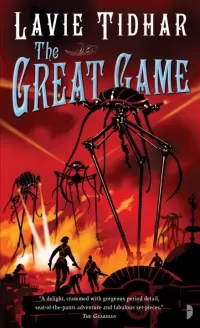
The Great Game

BOOK REVIEW

The Great Game

Lavie Tidhar

10/10Written Apr 8, 2013

'm a fan of Science Fiction and Fantasy. So, stepping into Steampunk can be both easy and trying. Fortunately I'm not so tied up with the harder form of science fiction.

I think some contemporary authors of Hard Science Fiction take the hard part to heart and make it as hard as they can.

Still, I wanted to do some research before I started into the Bookman Histories by Lavie Tidhar.

First, though, I must admit that I read the sample of the first book on Amazon and was intrigued to say the least.

With a character using the name Gilgamesh I was assuming that someone might lose something valuable and someone would have to go through hell to get it back.

And it looked in this case that the protagonist, Orphan, was to lose the love of his life, Lucy. I wanted to know how that was going to work out.

Since the price of the three volumes together as an e-book was the same as each individual I saw no way to lose by purchasing the Bookman Histories.

I was not disappointed.

In my search to help define Steampunk I was led to one place where there was a notion that such authors as Jules Verne,H.G.Wells and even Mary Shelley could be considered to be influences of Steampunk. Those were good influences and I'm fairly certain that they all figure nicely into the Bookman Histories.

I also found mention of the movie - Metropolis- which was intriguing. I don't have a copy of the movie but I do have one of the novel by Thea Von Harbou which is quite a bit different from the movie. It's been suggested the book was made from the film but there is not enough evidence to substantiate that and its just as likely the book was made to be a film and the screenplay was adapted from the book. It's not so much different though, to make it unqualified as an influence. In fact I found some interesting parallels with the book Metropolis and the first book of the Bookman Histories.

Both Protagonists Freder in Metropolis and Orphan in Bookman have lost their mother.
Both Protagonists fall in love at first sight. Freder with Maria and Orphan with Lucy.
Both become driven by their love and passion, as their motivation throughout the story.
Both are destined to be catalysts for change, even though they would deny it.

Of Metropolis Thea Von Harbou spoke of it being a moral - that the mediator between brain and muscle must be the heart.

The first book of the Histories seems to be the same since it is Orphan who seems to be the heart. His love for Lucy (his heart) is his motivation for moving forward into things he barely understands. He soldier's on in his devotion to the belief he's doing this to help him regain that lost love, Lucy. It becomes an inner conflict between his selfless devotion to undo an enormous wrong while trying at all times to do what, in his heart, is right.

I first read Metropolis when I was around sixteen years of age. It was a difficult read. When I reread it for this I thought it would be less difficult. But, it's written as are many books of its time a bit florid and in a time when purple prose wasn't a nasty thing. Although it's entertaining; it's difficult.

Thankfully the reader of the Bookman Histories will not find this book difficult. The entire three volumes are quite easy to read. Not only a pleasure; but, in some cases a wonder.

There is an enormous amount of name dropping in these books.
They are almost a who's who of famous people not only out of history but characters from the fiction of those times. We have elements of Jules Verne, Arthur Conan Doyle, H.G Wells, Lord Byron and many more. If not in their actual appearance,then in the appearance of characters they created. Often they are anachronistically portrayed.

In some ways these books remind me of the RiverWorld series by Philip Jose Farmer. And in other ways they remind me of the later work of Robert Heinlein where there was an alternate world where many of his favorite characters were resurrected.

An interesting side note is that in a scene in the first book, Bookman; Orphan is going through a pile of books and they are named to a tune of around 39 various titles that are all fictitious books written by fictitious characters. These books show up in a variety of real books and are out of the imaginations of the authors of those books. I have no idea if Lavie Tidhar is suggesting that he's read all the books that those come out of; or if he did an extensive search for books and authors that don't exist.

In that list there is one news article mentioned that may have some basis in reality.(It might be a foreshadow of the last book also.)

And of course there is Rime of the Ancient Mariner which is quoted throughout.

There are some parts of this trilogy that get a bit gruesome and remind me of the Deathstalker series by Simon R. Greene. Elements reminiscent of the surgeries of Dr. Frankenstein in Frankenstein by Mary Shelly Or Ras Thavas in Edgar Rice Burroughs Master Mind of Mars.

The fun fantastic part is that Lavie Tidhar puts it all together with such wonderful prose and a tight plot that it all works.

All I have to say is, "I want more."
There are plenty of threads left-for more.

Save time and money and buy the whole History its well worth it for the first story, Bookman. The rest is like icing on the cake.

J.L.Dobias

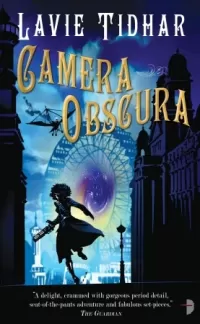
Camera Obscura

BOOK REVIEW

Camera Obscura

Lavie Tidhar

10/10Written Apr 8, 2013

'm a fan of Science Fiction and Fantasy. So, stepping into Steampunk can be both easy and trying. Fortunately I'm not so tied up with the harder form of science fiction.

I think some contemporary authors of Hard Science Fiction take the hard part to heart and make it as hard as they can.

Still, I wanted to do some research before I started into the Bookman Histories by Lavie Tidhar.

First, though, I must admit that I read the sample of the first book on Amazon and was intrigued to say the least.

With a character using the name Gilgamesh I was assuming that someone might lose something valuable and someone would have to go through hell to get it back.

And it looked in this case that the protagonist, Orphan, was to lose the love of his life, Lucy. I wanted to know how that was going to work out.

Since the price of the three volumes together as an e-book was the same as each individual I saw no way to lose by purchasing the Bookman Histories.

I was not disappointed.

In my search to help define Steampunk I was led to one place where there was a notion that such authors as Jules Verne,H.G.Wells and even Mary Shelley could be considered to be influences of Steampunk. Those were good influences and I'm fairly certain that they all figure nicely into the Bookman Histories.

I also found mention of the movie - Metropolis- which was intriguing. I don't have a copy of the movie but I do have one of the novel by Thea Von Harbou which is quite a bit different from the movie. It's been suggested the book was made from the film but there is not enough evidence to substantiate that and its just as likely the book was made to be a film and the screenplay was adapted from the book. It's not so much different though, to make it unqualified as an influence. In fact I found some interesting parallels with the book Metropolis and the first book of the Bookman Histories.

Both Protagonists Freder in Metropolis and Orphan in Bookman have lost their mother.
Both Protagonists fall in love at first sight. Freder with Maria and Orphan with Lucy.
Both become driven by their love and passion, as their motivation throughout the story.
Both are destined to be catalysts for change, even though they would deny it.

Of Metropolis Thea Von Harbou spoke of it being a moral - that the mediator between brain and muscle must be the heart.

The first book of the Histories seems to be the same since it is Orphan who seems to be the heart. His love for Lucy (his heart) is his motivation for moving forward into things he barely understands. He soldier's on in his devotion to the belief he's doing this to help him regain that lost love, Lucy. It becomes an inner conflict between his selfless devotion to undo an enormous wrong while trying at all times to do what, in his heart, is right.

I first read Metropolis when I was around sixteen years of age. It was a difficult read. When I reread it for this I thought it would be less difficult. But, it's written as are many books of its time a bit florid and in a time when purple prose wasn't a nasty thing. Although it's entertaining; it's difficult.

Thankfully the reader of the Bookman Histories will not find this book difficult. The entire three volumes are quite easy to read. Not only a pleasure; but, in some cases a wonder.

There is an enormous amount of name dropping in these books.
They are almost a who's who of famous people not only out of history but characters from the fiction of those times. We have elements of Jules Verne, Arthur Conan Doyle, H.G Wells, Lord Byron and many more. If not in their actual appearance,then in the appearance of characters they created. Often they are anachronistically portrayed.

In some ways these books remind me of the RiverWorld series by Philip Jose Farmer. And in other ways they remind me of the later work of Robert Heinlein where there was an alternate world where many of his favorite characters were resurrected.

An interesting side note is that in a scene in the first book, Bookman; Orphan is going through a pile of books and they are named to a tune of around 39 various titles that are all fictitious books written by fictitious characters. These books show up in a variety of real books and are out of the imaginations of the authors of those books. I have no idea if Lavie Tidhar is suggesting that he's read all the books that those come out of; or if he did an extensive search for books and authors that don't exist.

In that list there is one news article mentioned that may have some basis in reality.(It might be a foreshadow of the last book also.)

And of course there is Rime of the Ancient Mariner which is quoted throughout.

There are some parts of this trilogy that get a bit gruesome and remind me of the Deathstalker series by Simon R. Greene. Elements reminiscent of the surgeries of Dr. Frankenstein in Frankenstein by Mary Shelly Or Ras Thavas in Edgar Rice Burroughs Master Mind of Mars.

The fun fantastic part is that Lavie Tidhar puts it all together with such wonderful prose and a tight plot that it all works.

All I have to say is, "I want more."
There are plenty of threads left-for more.

Save time and money and buy the whole History its well worth it for the first story, Bookman. The rest is like icing on the cake.

J.L.Dobias
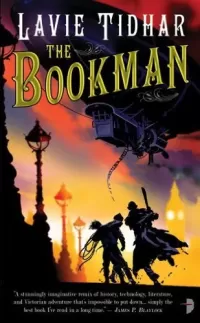
The Bookman

BOOK REVIEW

The Bookman

Lavie Tidhar

9/10Written Apr 8, 2013

'm a fan of Science Fiction and Fantasy. So, stepping into Steampunk can be both easy and trying. Fortunately I'm not so tied up with the harder form of science fiction.

I think some contemporary authors of Hard Science Fiction take the hard part to heart and make it as hard as they can.

Still, I wanted to do some research before I started into the Bookman Histories by Lavie Tidhar.

First, though, I must admit that I read the sample of the first book on Amazon and was intrigued to say the least.

With a character using the name Gilgamesh I was assuming that someone might lose something valuable and someone would have to go through hell to get it back.

And it looked in this case that the protagonist, Orphan, was to lose the love of his life, Lucy. I wanted to know how that was going to work out.

Since the price of the three volumes together as an e-book was the same as each individual I saw no way to lose by purchasing the Bookman Histories.

I was not disappointed.

In my search to help define Steampunk I was led to one place where there was a notion that such authors as Jules Verne,H.G.Wells and even Mary Shelley could be considered to be influences of Steampunk. Those were good influences and I'm fairly certain that they all figure nicely into the Bookman Histories.

I also found mention of the movie - Metropolis- which was intriguing. I don't have a copy of the movie but I do have one of the novel by Thea Von Harbou which is quite a bit different from the movie. It's been suggested the book was made from the film but there is not enough evidence to substantiate that and its just as likely the book was made to be a film and the screenplay was adapted from the book. It's not so much different though, to make it unqualified as an influence. In fact I found some interesting parallels with the book Metropolis and the first book of the Bookman Histories.

Both Protagonists Freder in Metropolis and Orphan in Bookman have lost their mother.
Both Protagonists fall in love at first sight. Freder with Maria and Orphan with Lucy.
Both become driven by their love and passion, as their motivation throughout the story.
Both are destined to be catalysts for change, even though they would deny it.

Of Metropolis Thea Von Harbou spoke of it being a moral - that the mediator between brain and muscle must be the heart.

The first book of the Histories seems to be the same since it is Orphan who seems to be the heart. His love for Lucy (his heart) is his motivation for moving forward into things he barely understands. He soldier's on in his devotion to the belief he's doing this to help him regain that lost love, Lucy. It becomes an inner conflict between his selfless devotion to undo an enormous wrong while trying at all times to do what, in his heart, is right.

I first read Metropolis when I was around sixteen years of age. It was a difficult read. When I reread it for this I thought it would be less difficult. But, it's written as are many books of its time a bit florid and in a time when purple prose wasn't a nasty thing. Although it's entertaining; it's difficult.

Thankfully the reader of the Bookman Histories will not find this book difficult. The entire three volumes are quite easy to read. Not only a pleasure; but, in some cases a wonder.

There is an enormous amount of name dropping in these books.
They are almost a who's who of famous people not only out of history but characters from the fiction of those times. We have elements of Jules Verne, Arthur Conan Doyle, H.G Wells, Lord Byron and many more. If not in their actual appearance,then in the appearance of characters they created. Often they are anachronistically portrayed.

In some ways these books remind me of the RiverWorld series by Philip Jose Farmer. And in other ways they remind me of the later work of Robert Heinlein where there was an alternate world where many of his favorite characters were resurrected.

An interesting side note is that in a scene in the first book, Bookman; Orphan is going through a pile of books and they are named to a tune of around 39 various titles that are all fictitious books written by fictitious characters. These books show up in a variety of real books and are out of the imaginations of the authors of those books. I have no idea if Lavie Tidhar is suggesting that he's read all the books that those come out of; or if he did an extensive search for books and authors that don't exist.

In that list there is one news article mentioned that may have some basis in reality.(It might be a foreshadow of the last book also.)

And of course there is Rime of the Ancient Mariner which is quoted throughout.

There are some parts of this trilogy that get a bit gruesome and remind me of the Deathstalker series by Simon R. Greene. Elements reminiscent of the surgeries of Dr. Frankenstein in Frankenstein by Mary Shelly Or Ras Thavas in Edgar Rice Burroughs Master Mind of Mars.

The fun fantastic part is that Lavie Tidhar puts it all together with such wonderful prose and a tight plot that it all works.

All I have to say is, "I want more."
There are plenty of threads left-for more.

Save time and money and buy the whole History its well worth it for the first story, Bookman. The rest is like icing on the cake.

J.L.Dobias
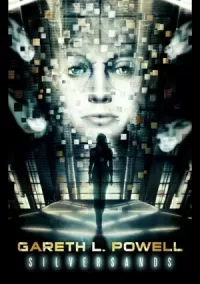
Silversands

BOOK REVIEW

Silversands

Gareth L. Powell

10/10Written Apr 8, 2013

Silversands by Gareth L. Powell is one of those delightful surprises that you run across while searching the internet for something else.

I was searching for another author and stumbled upon a link to Silversands.

The story started out slow for me but by the end of the sample I was hooked and had to download the rest.

This is the story of Avril Bradley a young woman who has been orphaned and is looking for her father. A man she only knows from a photograph and her mother's memories. To quirk up the equation, her search has taken her aboard a star ship that travels through a wormhole that has so many random destinations that it's improbable that she'll succeed.

After many jumps and a cargo full of refugees from a failed settlement on another star system they seem to have lucked into finding the ship that her father was supposed to have been aboard. In a strange turn of events something causes a malfunction in their ship, when they attempt to communicate with the other ship. Suspicious and unsure what caused their problem, they are forced to seek help from the settlers on the planet below the ships as their cargo begin to awaken from a long sleep.

This is where the story begins to weave into a convoluted set of political plots and strange events that point to Avril and her quest.

This has some excellent world building that helps drive the plot.

Though I found some of the plot to be predictable it did not interfere with my enjoyment of the story.(I can't really mention more about it without spoiling things) There were plenty of ways for the whole plot to play out and Gareth gives us plenty of surprises.

I recommend this to anyone who enjoys Science Fiction and is looking for some fresh new ideas and Characters.
There's plenty of room for more stories in this universe.

J.L.Dobias

And All the Stars

BOOK REVIEW

And All the Stars

Andrea K. Höst

9/10Written Apr 8, 2013

And All the Stars by Andrea K Host.

I first had a taste of this novel in a sample; before discovering that it hadn't been released. In the bit of the beginning that I was able to read, I was hooked. I don't read a lot of apocalyptic novels or dystopian novels. I can't say with great knowledge that this contains no dystopia, but in my meager knowledge it didn't seem so much. I was drawn into the story by the great writing and story telling. It certainly wasn't the claustrophobic description or the ever-present feeling of being choked by some strange and possibly alien dust.The slow but persistent buildup of the character, Madeleine's, suspicion that she's at ground zero of a possible bio weapon. The eventual realization that she's all alone and that those around her who aren't dead are locked up in any type of safe containment that they could find. No one is going to offer to let her, and the strange dust that's choking her, into their safety.

Some of the earlier pages are difficult to get through for some people-someone I know put it down very early and it's too bad they did. There are some very important plot points in those pages. So, it's important and it does help drive the story and the character. Madeleine has survived the worst of the catastrophe with some injury and is confused and afraid.

Madeleine is your average rebellious teen who seems to be a bit of a loner. She's immersed herself in her art and wants to gain honor in that field at a young age. To that end she's skipped school and gone into the big city for a chance to paint a portrait of her famous cousin Tyler.

Now she's face to face with that very place that parents always warn their teens about and it could be her most fatal move in her rebellion. In her early wandering she contacts her parents and continues to lie about where she is to keep them from worrying.

There is a great sense that Madeleine is already dead. She's just been given a temporary reprieve and it's not yet clear if that's a good thing or a bad thing. Madeleine eventually makes it to her cousins apartment. Her cousin is gone and she's able to get in. She cleans up and while trying to avoid facing the inevitability of her death, she decides that her last act should be the portrait of her cousin even though it won't be possible to have him pose live.

For me this was a very interesting type of character development. The author,Andrea, builds a believable portrait of how an artist feels and sees things while choosing what eventually ends up on the canvas. We see this development quite a number of times throughout the story. Enough for the reader to wonder if Andrea is applying how she writes to how an artist might be inspired or if, in fact, it's from her own experience with sketching and painting.

Eventually our Character, Madeleine, starts experiencing the side effects of the dust. They are both strange and unsettling, and there is always the fear that she might die. All the time she's monitoring broadcasts about others who are affected, and many of those have died. I found no problem with the notion that much of technology was still active; even after establishing that this is an invasion. In fact it made sense that since this was happening everywhere that it would be more demoralizing to have a constant feed of information telling everyone how bleak things were.

Eventually the side affect that causes Madeleine to have an insatiable appetite is what brings her out to brave the city and seek sustenance. This is when she begins to meet more people and make friends in a way she would never have done if things were normal. This is when the story really takes off.

I found the pacing in this novel to be quite tight. I'm not a fan of seat of your pants action from cover to cover and there were plenty of well place lulls in the narrative that make perfect sense as far as plot and character development. It did seem a bit longer than 205 pages in the e-book, but when I love the characters I love more pages because I usually don't want to say goodbye so quickly once I get to know them.

As has been noted by other reviewers; there are plenty of plot twists in the story to keep the reader guessing. I often catch these in most novels, usually before they are -on the next page. There is one in here though that caught me unaware- the twist makes perfect sense- and you want to kick yourself and few other people when it happens.

Young, old- whatever genre- I think everyone will love this book.(Except perhaps those who are genuinely claustrophobic; as is someone I know.) Trust me. Once you get past that first bit of suffocating but possibly accurate description (I've never been in that situation so I don't know.) things will be easier to take.

J.L. Dobias

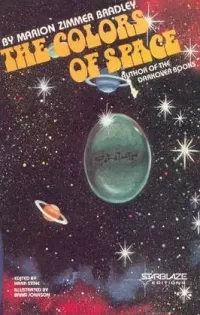
The Colors Of Space

BOOK REVIEW

The Colors Of Space

Marion Zimmer Bradley

10/10Written Apr 8, 2013

The Colors of Space By Marion Zimmer Bradley

I remember reading this a long time ago. Some time after the 1963 edition was published. I decided to read it again and see if it still stood well against time.

Bart Steele is a young Vegan who has come to Earth to study at the academy. He is a product of a human and Mentorian pair, although he lost his mother, the Mentorian, early in his life. His father owns a space shipping business that struggles as it must against the monopoly that the Lhari race has over interstellar flight. The Lhari have made it clear that only Lhari can survive while the warp-drive is active and that all other races must go into cold-sleep.

This monopoly causes Bart and many others to have a prejudice against the Lhari.

On graduation Bart is to meet his father at the Lhari spaceport where he will return home. Bart will never see his father again and will be catapulted into a universe of danger and intrigue. He discovers that his father and several others have died while trying to obtain the secrets of the Lhari and of the warp-drive. Bart is thrust into his father's world while he's become a fugitive from Lhari authorities.

The Lhari are not able to perceive colors the way humans and Mentorians do and this becomes a major plot device or I should say part of several plot devices. This is the only part that my more mature insight has quibbles about during this read. There are some big things that are hinged on this color disability that might not work quite as well as I once believed. One major one is that the Lhari could not tell something was red hot because they couldn't see the red. Since often survival hinges on such things there would likely have been another way for them to discern that a surface they were working on in their ship might be hot.

Most everything else in the story seems to stand the test of time and still seems to work quite well to move the plot along. Since not enough is revealed about how a specific disguise is worked out, it might seem a bit thin but it still works here.

The story itself beyond being science fiction seems to contain a mix of moral elements as regards prejudices and race hate. It becomes a story of a young mans journey to grow to maturity in his thinking and his beliefs.

J.L.Dobias

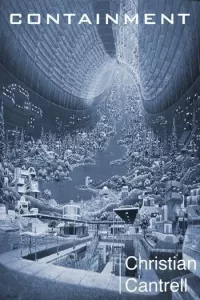
Containment

BOOK REVIEW

Containment

Christian Cantrell

8/10Written Apr 8, 2013

Containment by Christian Cantrell

I loved this book and the character of Arik and it would be nice to give it five stars, but that would be lacking honesty.

This is good hard science fiction about a group of settlers on the planet Venus. As such, it is necessary to draw the proper picture of why we are there and how we got there and how we survive there so much of this hard science has to be there to support that. Some of the science seems questionable to me but that's only because I didn't stop to look things up to verify them and I'm just not an expert in many of those fields.

Often the hard science of Containment seems to come at the reader from a distance with detachment. Other times there are moments when Arik resonates with the science. There are long paragraphs about the harshness of the planet and life in the biosphere that contrast to the Arik's feelings because he expresses a few times how he's comfortable within the biosphere that he must live. The exposition often draws on the harshness of the planet almost as though we are portraying the planet as another character, and that didn't work that well with me because I didn't see the plot developing in that direction.

There also seems to be two stories happening. The present and some flashbacks. Again it's necessary, but at times it's confusing.

I had this one curious problem, Containment caused what I refer to in my antiquated thinking as the vinyl record skip syndrome. It's like having that scratch on the record where the needle skips and you have no idea how much you just missed. That's where I'm reading along and stumble into exposition and then suddenly reach the bottom of a page that I can't remember reading. It's a bad habit of mine and I believe many other readers might have something similar. I know to catch it because, as is the case with Containment, the parts I nearly napped through have some plot points that I need to know.

Containment qualifies as a hard science science fiction. The problem with that is that in trying so hard to do this many times hard science becomes hard to read. If the goal is to deliberately alienate readers who hate walls of exposition then it's likely to be successful at that. Most readers will accept a few of those when they clearly drive the plot. But, when a few of them seem to be there just to increase the hard science quotient, some readers end up skipping the important ones later. And, although I can point out many occasions where the exposition does drive the plot forward; for each of those there always two that are questionable.

I would never ask a writer to give up their babies, especially when they are doing hard science because it does tend to create some lovely images. The problem is that they often serve as a match for the dreaded purple prose that other creative writers get noted for. Neither of these are bad, But out of necessity they should drive the plot or character development and serve a purpose that the reader can identify.

Over all Containment is one of those curious books that everyone who loves science fiction might like, but it will always have a variety of reactions from love to mild acceptance to confusion.

Obviously many people do love it, and although it's possible one more good edit might have made those numbers rise, it's just as likely to make it worse. By the numbers (reader response) I can't say that the author made any large mistake in leaving it as it is. It might be a tough read for one out of four readers, but overall it's a tightly written and entertaining read.

J.L.Dobias

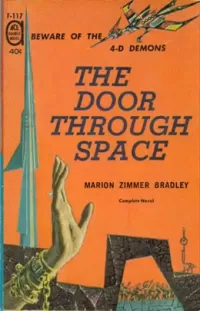
The Door Through Space

BOOK REVIEW

The Door Through Space

Marion Zimmer Bradley

8/10Written Apr 8, 2013

The Door Through Space by Marion Zimmer Bradley

I read this; because it was there. Well, it's written by Marion Zimmer Bradley and its one of the first novels of her's that was published. I loved The Colors of Space but honestly did not read much more than that because her stories seemed predominantly fantasy and at the time I was reading science fiction.

I'm almost sorry I haven't read more of her's- the good thing is that enough is out there I might still have time.

The Door Through Space demonstrates that she had a lot of talent coming out of the gate.

The story starts on the planet known as Wolf. The reader is introduced to Race Cargill former intelligence agent of the Terran Secret Service. He's at the spaceport in Kharsa and in the first chapter we are introduced to the natives much of the political situation and some of the back-story of Cargill all through the movement of a mob chasing a dwarf who appears to be peddling toys. And the reader is introduced to a mystery when the dwarf disappears while Cargill is trying to calm the natives, using his skill at speaking in their language. All of this is in the first short chapter.

Cargill is intent on leaving Wolf on the next Star-ship. He's ready to go and on the ship waiting when he's pulled off by his employer who has one more job for him. This job involves a traitor named Rakhal. Rakhal had been a fellow agent. When he turned native he left with Race's sister Juli and he disfigured Race's face. Race has since been at a desk job and he has no desire or ambition to seek after Rakhal or to kill his own brother in law. The problem is that Juli has come back and she's desperate to have Race find Rakhal and bring back her own daughter to her.

If that's not enough Race finds out that Rakhal has been pursuing the possibility that someone on Wolf might possess a matter transmitter. If that's true then Terran Intelligence needs to be on top of it.

One more time Race Cargill must go undercover to find his niece and try to secure the matter transmitter.

This is a tightly written tale that has survived the test of time and still stands as an intriguing story that keeps the reader on their toes and involved to the very end.

I sure hope Amazon has that download fixed. If not Guttenburg has this in kindle format and its easy to upload it from a pc into your que- I believe that's how I did it.

J.L. Dobias

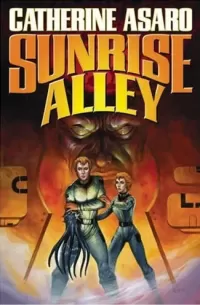
Sunrise Alley

BOOK REVIEW

Sunrise Alley

Catherine Asaro

8/10Written Apr 8, 2013

I don't care what everyone else says-I enjoyed this book

Sunrise Alley by Catherine Asaro

I picked this book up in the kindle version- probably from the publisher-I don't see it here on Amazon. I'm familiar with Catherine Asaro and had not yet read any of her novels.

This novel reminded me of some of Heinlein's middle years - you know after the juvenile and after stranger in a strange and before the really wild stuff he wrote near the end. This is more on par with Friday. Except that the female character in Sunrise Alley has more depth.

Samantha Bryton is a rich intelligent woman who, after having suffered the loss of her father and her husband, has become a bit of a recluse. In the year 2033 where everyone is connected by what they refer to as the local mesh, Sam is trying to shed most of technology. This is a difficult thing for her since she's a leading figure in the development of EI Intelligence and EI Psychology. To say nothing of the basement lab she has in her seclude home.

We find Sam on a secluded beach near her home after a storm jogging and checking out storm damage while remaining as disconnected as she can from the mesh. She discovers first a shipwreck and then the man who calls himself Turner. It takes Sam a while and much conversation before she discovers that Turner is and EI - sentient machine that's been hybrid into a deceased human.

One quibble right away might be that this story early on takes the shape of a slightly contrived plot.

Here we have Turner an EI who, though he died and someone named Charon has altered his brain with an EI, claims he is still Turner Pascal the human.

Since Sam has been a staunch supporter of the notion that EI intelligent machines are sentient and should be accorded the same rights as people this seems all too convenient.

But the contrived nature of this story is also a plot point so it works as it is.

There are a number of twists and turns in the plot and plenty of thrills and danger to match many Hitchcock suspense films. There are some places where are hero's get into tight spots and squeak out of them rather conveniently - again a plot device and that becomes clear soon enough. What isn't clear is the why and that keeps the story going.

The evil character of Charon is shrouded in mystery and there are some twists and turns here but there are plenty of clues about this to make any final reveals work well.

It was an easy read for me-one sitting- and anyone who enjoys science fiction, suspense and even romance will find plenty to keep them involved.

J.L. Dobias

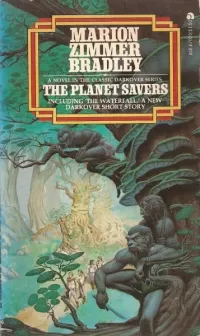
The Planet Savers

BOOK REVIEW

The Planet Savers

Marion Zimmer Bradley

8/10Written Apr 8, 2013

The Planet Savers, by Marion Zimmer Bradley

The copy I have of this is from the Gutenberg project. It is taken from the pages of amazing stories. And I want to share the little quote at the beginning.

[Quote] Marion Zimmer Bradley has written some of the finest science fiction in print. She has been away from our pages too long. So this story is in the nature of a triumphant return. It could well be her best to date.

Marion Zimmer Bradley. The Planet Savers (Kindle Locations 16-17). [/Quote]

I had not read this prior and it's fairly old. It's from Bradley's Darkover world and I think it's a masterpiece. Even after all this time it still holds together well as a relevant and well told tale.

This short novel easily demonstrates the author's massive ability at world creation and her skill in writing that makes this not only a marvelous work of Science Fiction but a literary masterpiece.

This is the story of Jay/Jason. A highly intelligent and driven doctor who is respected on one hand and despised on the other. He's aloof most of the time and has nothing but prejudice against most of the inhabitants of the Darkover world especially the trailmen whom he considers to be low life beasts.

Ironically Jason is also the man who as a child was rescued and raised by the trailmen in their remote mountain village. They raise him until they decide he's old enough that he needs to be returned to his kind.

It might be that this young man felt abandoned by them as he may have felt abandoned when his father died. Whatever the reason, he's pulled off a sort of Jekyl-Hyde or Sybil turn in his life where he has segmented the old Jason from the new Jay.
Now, at the time of the reawakening of a cyclical pandemic fever he is forced to bring out the Jason- trailman- side of his personality.

The Trailmen are immune to the illness because they suffer a milder form of it when they are young. The notion is that they might be able to make a serum from the trailmen blood. The problem is the trailmen never come down from their mountain. Jay even has to agree that this trip out to the trailmen is necessary because his greater understanding of medicine can see the value. They need Jason to help insure its success.

Submitting to a procedure that will bring forth this other personality he becomes Jason- a somewhat genial and reckless young man. The transformation he undertakes affects even his physical characteristics to a point that colleagues who have known him for years don't recognize him.

All this takes place in a matter of few pages all packed in expertly with the added bonus of creating the affect that the reader comes to identify and love Jason, while loathing and despising Jay.

There's a lot more to come in this story as they make the dangerous trek into the wild and up through treacherous mountains that tax even the local Darkovans.

Will they survive, will they find a vaccine, how did Jason get so messed up. All these and more will eventually come out in this gem of a short.

The skill with which Marion Zimmer Bradley weaves and fills this novel and the fact that it stands the test of time make it easy to see how she became such a respected author and remains that to this very day.

This book is a good read for anyone who wants to become acquainted with the author and her Darkover series. And for those already acquainted who may have missed this one, they should pick it up and give it a go. There is no way for you to be disappointed.

J.L. Dobias