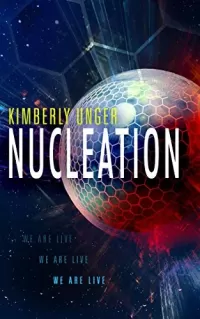
Kimberly Unger is a speculative fiction author whose work deftly blends the intricacies of technology with the raw humanity of its characters. Known for her vivid storytelling, Kimberly’s novels often explore the possibilities and ethical dilemmas of a future shaped by artificial intelligence, space exploration, and the virtual worlds of tomorrow. Her writing stands out for its technical precision, immersive world-building, and thought-provoking themes that examine both the promise and peril of advancing technologies.
Before becoming a full-time author, Kimberly spent years working in the tech industry, gaining firsthand experience of the very innovations that often inspire her novels. Her expertise in both the sciences and the arts gives her work a unique edge, allowing her to create rich, complex narratives that resonate with both fans of hard science fiction and those who appreciate deeply human storytelling.
Her debut novel, The Extractionist, delves into the consequences of a future where virtual and physical realities blur together. The story centers on a protagonist whose job it is to extract memories from virtual spaces, posing questions about identity, consciousness, and what it means to truly be alive. The book received praise for its compelling characters and gripping plot, but also for its exploration of complex ethical and philosophical issues.
A passionate advocate for diversity in science fiction, Kimberly incorporates a wide range of perspectives and experiences into her work. She believes that the future of science fiction is brighter when it reflects the diverse world we live in. This dedication to inclusivity has earned her a loyal following among readers who crave fresh, boundary-pushing narratives.
Kimberly’s storytelling is as much about heart as it is about technology. Whether she’s writing about the far reaches of space or the intricate landscapes of the mind, her characters always come first. Her work invites readers to ask difficult questions while immersing them in worlds of possibility. For Kimberly, science fiction is more than just a genre—it's a lens through which we can explore the human condition and consider the ways in which we shape our future.