Eli Brown is an American author whose fiction has moved from pirate ships and impossible meals to an alternate nineteenth-century America filled with dangerous magical objects. Adventure, history, food, folklore, and a taste for the peculiar frequently overlap in his stories, giving even his darkest worlds a playful streak.
Brown studied painting and sculpture before turning his creative attention toward fiction, later earning an MFA from Mills College. His working life has been nearly as varied as his books: he has been a groundskeeper, massage therapist, and stay-at-home father. He is also a Yaddo fellow and has appeared as a featured reader at San Francisco's Litquake literary festival. He lives with his family in Northern California.
His first novel, The Great Days, was published in 2008 and won the Fabri Prize for Literature. The story explored the unsettling world of a cult, but Brown's next major novel took him in a very different direction. Cinnamon and Gunpowder combined historical adventure, piracy, romance, and an unusually important ingredient: cooking.
Set in 1819, Cinnamon and Gunpowder follows chef Owen Wedgwood after he is kidnapped by pirate captain Mad Hannah Mabbot. His survival depends on preparing an extraordinary meal for her every Sunday, despite the decidedly limited pantry of a pirate ship. Brown developed the idea partly from his own interests in food and history, creating a seafaring adventure in which elaborate meals become as important to the story as battles and pursuit. The novel became an NPR Best Book of 2013, was a finalist for the California Book Award, and was selected for San Francisco Public Library's One City One Book program.
Brown later turned toward fantasy for younger readers with Oddity. His fascination with mythology and magical objects stretches back to childhood, when he was drawn to things such as Bilbo's ring, Jack's magic beans, Odysseus's bag of winds, and the extraordinary artifacts found throughout old stories. In Oddity, that fascination becomes the foundation of an alternate American history where seemingly ordinary objects can possess extraordinary powers.
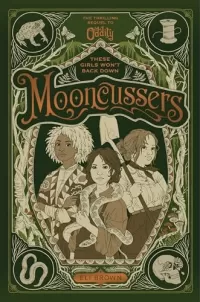
The novel follows Clover Elkin, the daughter of a frontier doctor, as she becomes caught up in a dangerous struggle involving magical Oddities and a version of nineteenth-century America whose history has taken a very different course. Brown returned to this world in Mooncussers, expanding its mythology as Clover and her companions encounter new magical objects and a growing threat in an America still at war with Napoleon.
Although his novels range from literary fiction to historical adventure and middle-grade fantasy, Brown repeatedly gravitates toward worlds that feel slightly larger and stranger than expected. A meal can become a means of survival, a familiar object can conceal impossible power, and history can turn down a road it never followed in our world. That curiosity about the hidden possibilities of ordinary things gives his fiction its distinctive sense of adventure.