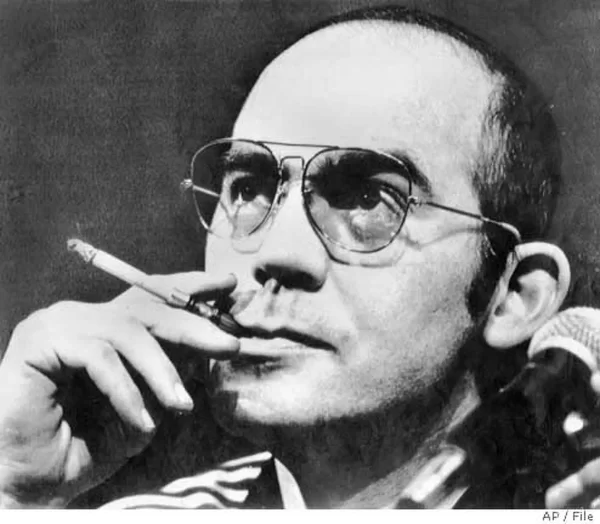
Hunter S. Thompson changed the way nonfiction could be written by tearing down the invisible wall between reporter and participant. Instead of observing events from a comfortable distance, he plunged directly into the chaos, making himself part of the story. That fearless, unpredictable approach became the foundation of gonzo journalism, a style that blended sharp reporting, personal experience, satire, and dark humor into something entirely new.
Born on July 18, 1937, in Louisville, Kentucky, Thompson's early years were marked by both promise and rebellion. A gifted writer with little patience for authority, he left a conventional path behind and found his voice while working as a journalist across the United States and Latin America. His fascination with politics, counterculture, crime, and the American Dream shaped a body of work that challenged readers as much as it entertained them.
His breakthrough came with Hell's Angels: The Strange and Terrible Saga of the Outlaw Motorcycle Gangs (1967), the result of spending nearly a year embedded with the notorious motorcycle club. The book combined immersive reporting with literary flair, revealing both the attraction and brutality of outlaw culture. Just a few years later, Fear and Loathing in Las Vegas became one of the defining books of modern American literature. Its surreal road trip through Nevada captured the excesses, anxieties, and disillusionment of an era, transforming Thompson into a cultural icon whose influence reached far beyond journalism.
Throughout his career, he refused to separate politics from personality. His coverage of presidential campaigns, most famously collected in Fear and Loathing on the Campaign Trail '72, exposed the theater, absurdity, and manipulation behind American politics with unmatched wit and relentless skepticism. Whether writing for magazines or publishing essays and books, he mixed meticulous observation with exaggeration, irony, and deeply personal reflections, creating narratives that were impossible to mistake for anyone else's.
Thompson's writing continues to resonate because it captures more than events, it captures emotion, confusion, and the strange contradictions of modern life. His work has influenced generations of journalists, novelists, and cultural critics, while the term "gonzo" has become synonymous with immersive, boundary-breaking reporting. Readers drawn to literary journalism, political commentary, memoir, and countercultural history continue to discover his books decades after they were first published.
Hunter S. Thompson died in 2005, but his legacy remains firmly embedded in American literature and journalism. His stories still challenge readers to question authority, distrust easy narratives, and embrace the messy complexity of the world, all delivered in a voice that remains as provocative and unforgettable today as when it first appeared on the page.