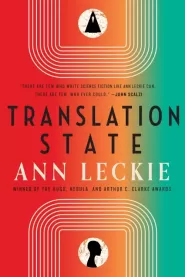
Ann Leckie is a celebrated name in the realm of science fiction, known for her thought-provoking narratives that blur the lines between artificial intelligence, identity, and power. Her writing is an exploration of humanity through the lens of the far future, where complex social structures, gender, and even consciousness itself are redefined in ways that challenge readers to see the world—and themselves—differently.
Born in 1966 in the United States, Leckie spent much of her childhood devouring science fiction and fantasy, an obsession that would eventually shape her career. Her love for speculative fiction led her to study philosophy, and that academic background can be seen in her meticulous exploration of the philosophical and ethical implications of technology, politics, and society in her work. Leckie’s writing, at once cerebral and deeply emotional, invites readers to question the assumptions that underlie our understanding of the world.
Her debut novel, Ancillary Justice, catapulted her into the science fiction spotlight, earning critical acclaim for its rich world-building, layered characters, and complex treatment of gender. The book introduces the reader to the Radch Empire and its AI-driven military, focusing on Breq, a former soldier seeking vengeance. The novel’s exploration of identity, as well as its groundbreaking use of gender-neutral pronouns, resonated with readers and critics alike, establishing Leckie as a unique voice in speculative fiction.
With Ancillary Justice and its sequels in the Imperial Radch trilogy, Leckie deftly tackles themes of empire, autonomy, and what it means to truly "be" something. Her ability to weave deeply philosophical questions into the framework of a gripping space opera has earned her numerous awards, including the Hugo, Nebula, and Arthur C. Clarke Awards. But beyond accolades, what truly sets Leckie apart is her capacity to create complex, often flawed characters who force us to confront uncomfortable truths about ourselves and our world.
Leckie’s writing style is immersive and thought-provoking, balancing intricate world-building with rich character development. Her narratives are often driven by questions about power, memory, and justice, with a philosophical undertone that never feels forced or academic. Readers are swept into her universes not just by the sheer adventure of space battles or interstellar intrigue, but by the emotional and intellectual stakes of her stories.
As she continues to expand the boundaries of what science fiction can explore, Leckie remains one of the genre's most important and innovative voices. Her works invite readers to reimagine the future while holding up a mirror to the complexities of our present. Through her exploration of AI, gender, and identity, Leckie’s fiction serves as both a philosophical inquiry and a powerful narrative experience, one that lingers long after the last page is turned.