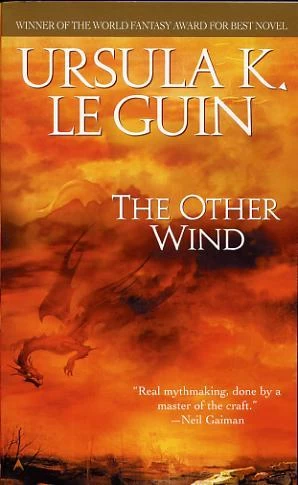
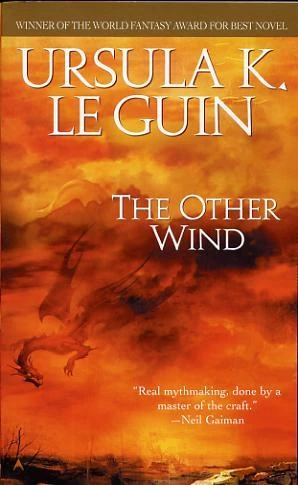
The Other Wind
World Fantasy Award 2002. Nebula Award nominee 2002, Mythopoeic Fantasy Award nominee 2002.
The sorcerer Alder fears sleep. He dreams of the land of death, of his
wife who died young and longs to return to him so much that she kissed
him across the low stone wall that separates our world from the Dry
Land – where the grass is withered, the stars never move, and lovers pass
without knowing each other. The dead are pulling Alder to them at
night. Through him they may free themselves and invade Earthsea.
Alder
seeks advice from Ged, once Archmage. Ged tells him to go to Tenar,
Tehanu, and the young king at Havnor. They are joined by amber-eyed
Irian, a fierce dragon able to assume the shape of a woman.
The
threat can be confronted only in the Immanent Grove on Roke, the
holiest place in the world and there the king, hero, sage, wizard, and
dragon make a last stand.
Le Guin combines her magical fantasy with a profoundly human, earthly, humble touch.
Readers also enjoyed
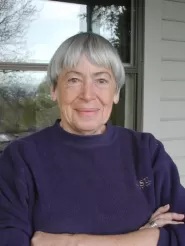
Ursula K. Le Guin
In a literary landscape often dominated by action and conquest, Ursula K. Le Guin carved quiet, radical paths—through forests of magic, across alien planets, and into the deep folds of human nature. Her stories didn’t shout; they asked, wondered, and listened. Through them, she reimagined what science fiction and fantasy could be—not just a reflection of our world, but a transformation of how we see it.
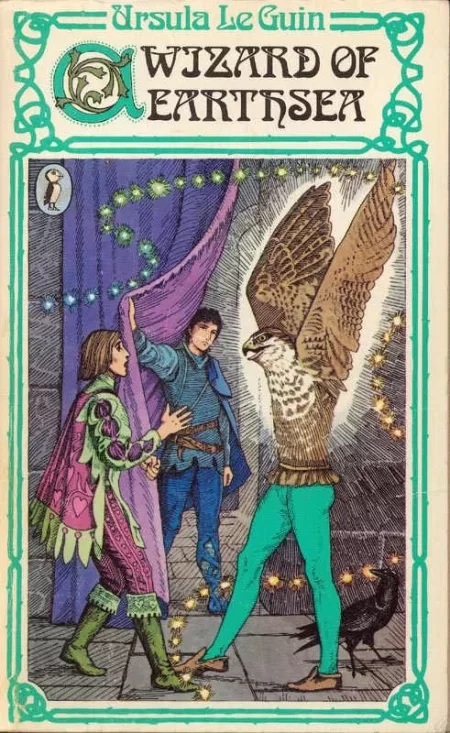
Born in 1929 to a family steeped in stories and scholarship—her father was an anthropologist, her mother a writer and the biographer of Ishi—Le Guin was raised among mythologies, cultural curiosity, and a profound respect for the power of narrative. These early influences are stitched into every book she wrote, from A Wizard of Earthsea to The Left Hand of Darkness.
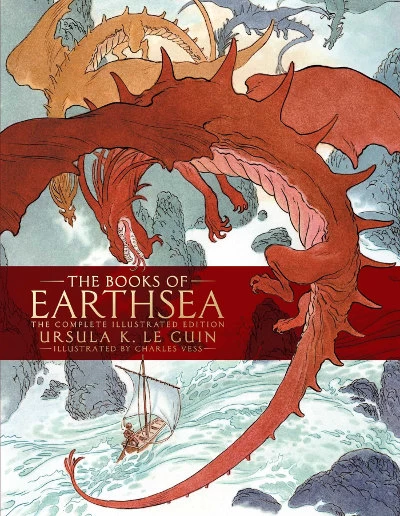
Earthsea
Earthsea consists of six primary books, and includes two additional books that complement the series but are not considered mandatory reads — considered a complete series. The current recommended reading order for the series is provided below.