After I watched 1997's Event Horizon for the second time a coupla weeks ago, I said to myself, too bad there's not a better way to tell this story . . .
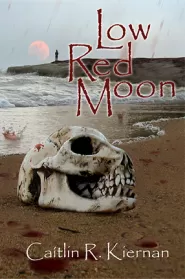
And here it is: because this novella is a haunting; it is Ishmael at the finish, “and I only am escaped alone to tell thee”(p.120). As a first-person narrative, it modulates between eighty-year-old Audrey Cather, a long-retired exopaleontologist, writing her “old woman's wasted memories”(p.21) in a Paris hovel apartment of the despotic future, and the defining moment of her life fifty years earlier in a space rescue mission on an obscure moon 15 light years away called Piros. They were told to be looking for the remains of an alien endeavor from 500 years in the past, but, in fact, the 4-man team in the ship Montelius have been sent to investigate a prior mission's disaster that has lost its on-the-ground explorer team, plus the two remaining humans are closed off in their quarters reading William Blake, listening to Beatles tunes, self-mutilating, and suicidally non-communicative. The Gilgamesh is being run by synthetic bots and the ship's computers when they arrive. Not able to make any meaningful contact with the crew and with all the files locked beyond decryption and held at bay by a bot with a boltgun they have to kill to leave, the rescuers from the Montelius decide to seek answers on Piros' surface.
At this point the read establishes a tantalizing that tickles forever, even when you leave the novel. It kicks up other masters of deconstructed prose like Aickman, Ligotti, or Barron, although author Kiernan seems more emotion-driven around the bondings of horror. As Audrey says toward the end of her story, “There are no answers. There is no truth. There [is] only . . . an infinite regression of improbable unlikelihoods leading nowhere at all”(p.118). Sure, the disquieted source is hard to describe, because answers are subtly buried in the questions, but the questions demand further information to be relevant. One thing is certain, however; everybody aboard both starships are terrified, so terrified they take death over discovery, and very, very certain that nothing—that's no thing—can leave that moon's surface.
Piros evidently had an event that wiped out five billion years of life, leaving it a “barren, arid corpse of a world”(p.101). Now, the surface examined by arriving humans is an apparent mining site left standing millennia ago. There's roads, dusty machinery and an open pit mine that can be seen from space. Fossils are discovered that are humanoid in structure, along with impressions and artifacts hinting at another species like Earth's sea serpents, possibly lifted from the liquid pool filling the bottom of the pit mine.
On Piros, the team splits in twos, and Audrey—always untrustworthy by her own admission—enters the abandoned shuttle with Captain Joakim. The in-flight voice recorder just adds complexity onto the conundrum with its laughter and hysterics(1), especially since there is no power to run the thing in the first place. Then the sandstorm increases blurring visibility, and reality tears away, leaving hallucinations or epiphanous visions into something indeterminate, cataclysmic, abominable.
Dark revolving in silent activity.
A self-containing shadow, in enormous labors occupied.
—William Blake, The Book of Urizen , c.1794
In the novel's present time, no one is left from the Montelius crew except Audrey, and she wonders when ANSA—the ruling authority of these matters—will send “some nickelslick, jackwired investigator of violated legal confidences”(p.86) to take her away for writing this all down. Her only confidant is Zora, a synthetic girl who lives in the apartments. She has become astrophobic, paranoid, phantom-obsessed. It all becomes too real when Zora is revealed to be an agent and places her under house arrest. This way, humanity will be salvaged from afflictive prospects, and Audrey'll have this dubitable journal all to herself.
“There was never any truth. Only moments, and what they contained, and the parts of ourselves we lost.”
—Audrey Cather, exopaleontologist, p.109
1) reminding me a lot of the selfie video tape found in the mysteriously-sinking sailboat in 1989's film Dead Calm. Also, of course, there's the nightmare, incomprehensible visions from Event Horizon that pepper all those badly-acted scenes of befuddlement.