The Execution Channel

British Science Fiction Association Award nominee 2007. Arthur C. Clarke Award nominee 2007.
Fighting has spread across the Middle East and Central Asia to the borders of China. In the US, refugees from climate-change disasters subsist in FEMA camps. Images of official executions circulate on the internet like al Qaeda videos. State agencies sponsor conspiracy theories as cover-ups. As the troops of the last superpower stand astride the last of the oil, China and Russia aren't the only states considering their options: certain nations of Old Europe are quietly preparing for the worst.
James Travis is a middle-aged middle manager in a software company. He has a son in the army, a daughter in a peace-protest camp outside a USAF base and a compromising relationship with a foreign intelligence service. When his cover is blown hours before a nuclear explosion destroys the base, Travis, his son and his daughter are all in serious trouble. Roisin Travis knows that what exploded was no ordinary weapon - and not just because her brother had warned her that something strange and dangerous was on its way.
As his daughter discovers that a little knowledge can be a dangerous thing, James Travis flees north through an England torn between the US and Europe, and divided by its own dark suspicions.
As the spooks and disinformation specialists focus their efforts on his capture, Travis knows that all it will take is one mistake and his only memorial will be another grainy video on The Execution Channel.
Readers also enjoyed




Ken MacLeod
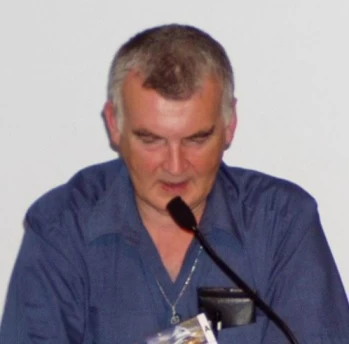
Ken MacLeod (born 1954), an award-winning Scottish science fiction writer, lives in South Queensferry near Edinburgh. He graduated from Glasgow University with a degree in zoology and has worked as a computer programmer and written a masters thesis on biomechanics.
MacLeod's novels often explore socialist, communist and anarchist political ideas, most particularly the variants of Trotskyism and anarcho-capitalism or extreme economic libertarianism. Technical themes encompass singularities, divergent human cultural evolution and post-human cyborg-resurrection. MacLeod's general outlook can be best described as techno-utopian socialist.
He is part of a new generation of British science fiction writers, who specialise in hard science fiction and space opera. His contemporaries include Iain M. Banks, Alastair Reynolds, Adam Roberts, Charles Stross and Liz Williams.
More books by Ken MacLeod