Pandora's Legions
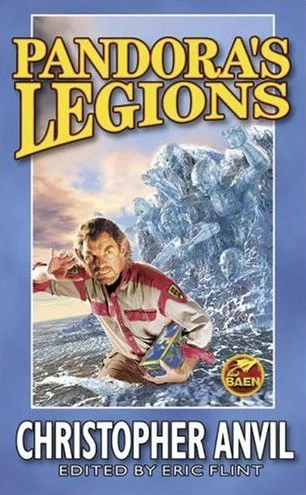
Edited by Eric Flint.
IS IT TOO LATE TO NEGOTIATE A SURRENDER?
The Centran Empire was both benevolent and complacent. Benevolent, even as it overwhelmed every new inhabited planet it encountered with its military mightbut once the planet was pacified, its inhabitants were uplifted to Centran standards of living and the benefits of membership in the Empire. Complacent, because the Empire had long been expanding without encountering more than minor obstacles. And then they came across Pandora's Planet, that is, Earth...
In spite of the Centran superiority in technology, the conquest of Earth took over three months, when the invaders were used to wrapping things up in less than two weeks. But "conquest" might be too optimistic a term to use, since the locals were still waging guerrilla warfare and sabotage, and the Centrans were hanging on by their equivalent of fingernails. And then the Centran scientists tested a group of humans and found that the humans were more intelligent than the Centrans.
One Centran leader had an idea that might save the Centrans from being ignominiously kicked off the planet again. Since the humans were good at war, why not put together teams of humans to go out to the fringes of Centran space and handle planets that were proving difficult? The teams performed magnificentlybut back in the heart of the Empire, humans and their weird new ideas were spreading like wildfire, and if something weren't done soon, the humans would end up running the former Centran Empire....
Publisher's Note: Approximately half of this novel has been published as Pandora's Planet. This is the first appearance in book form of the complete novel.
Christopher Anvil
Christopher Anvil (born 1922) is a pseudonym used by author Harry C. Crosby.
Christopher Anvil began writing science fiction in the early 1950s, publishing stories in the vintage SF magazine Imagination in 1952 and 1953. In 1956 he debuted in Astounding, the leading magazine in the field, with his story "The Prisoner." That was the beginning of an avalanche of stories for Astounding (and Analog, as the magazine was retitled in 1960) which combined fast-paced adventure plots with a pointed satirical sensibility, puncturing dogmas and bureaucracies both human and alien. His stories in Astounding/Analog frequently took first place in the magazine's reader polls, and were nominated for Hugo and Nebula awards. His work also appeared in such SF magazines as Galaxy and Amazing Stories. He lives in New York state.
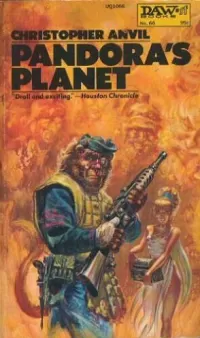
Pandora's Planet
Pandora's Planet consists of 2 total books. The current recommended reading order for the series is provided below.