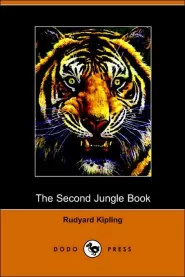
The Jungle Book

The Jungle Books can be regarded as classic stories told by an adult to children. But they also constitute a complex literary work of art in which the whole of Kipling's philosophy of life is expressed in miniature. They are best known for the "Mowgli" stories; the tale of a baby abandoned and brought up by wolves, educated in the ways and secrets of the jungle by Kaa the python, Baloo the bear, and Bagheera the black panther. The stories, a mixture of fantasy, myth, and magic, are underpinned by Kipling's abiding preoccupation with the theme of self-discovery, and the nature of the "Law".
Contents:
- Mowgli's Brothers
- Hunting-Song of the Pack (poem)
- Kaa's Hunting
- Road-Song of the Bandar-Log (poem)
- "Tiger! Tiger!"
- Mowgli's Song (poem)
- The White Seal
- Lukannon (poem)
- "Rikki-Tikki-Tavi"
- Darzee's Chaunt (poem)
- Toomai of the Elephants
- Shiv and the Grasshopper (poem)
- Her Majesty's Servants
- Parade-Song of the Camp Animals (poem)
Readers also enjoyed




Rudyard Kipling
Joseph Rudyard Kipling (1865–1936) was a British author and poet. Born in Bombay, British India (now Mumbai), he is best known for his works of fiction The Jungle Book (1894), (a collection of stories which includes Rikki-Tikki-Tavi), Kim (1901) (a tale of adventure), many short stories, including The Man Who Would Be King (1888); and his poems, including Mandalay (1890), Gunga Din (1890), and If— (1910). He is regarded as a major "innovator in the art of the short story"; his children's books are enduring classics of children's literature; and his best works speak to a versatile and luminous narrative gift.
More books by Rudyard Kipling