The Second Jungle Book
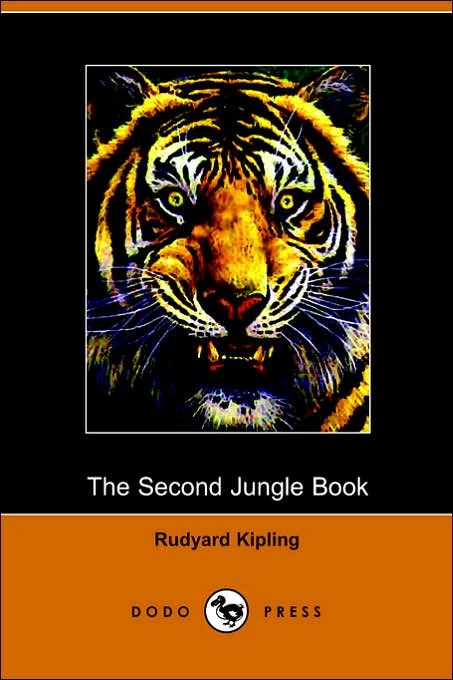
Here are the stories and songs of Kipling's Second Jungle Book: tales of Mowgli and his Seeonee Wolf-Pack and, of course, Akela the wolf; of Bagheera, the panther; Kaa, the Rock Python; Baloo, the Bear; and so many others. They are the tales of Mowgli, the lost boy raised by wolves in the jungles of India, brought up on a diet of Jungle Law, loyalty, and fresh meat from the kill, and they have captivated children and adults alike for generations. There is no better place to learn the life of the wolf pack and the natural order – the natural justice – of life in the jungle. And who could ever forget Mowgli's enemy, Shere Khan, the bragadocious Bengal tiger? To say nothing of Rikki-tikki-tavi, the mongoose? This second volume presents the further adventures of Mowgli, including the tale of his biological parents, cast out by their village for their connection to a demon child...
Contents:
- How Fear Came
- The Law of the Jungle (poem)
- The Miracle of Purun Bhagat
- A Song of Kabir (poem)
- Letting in the Jungle
- Mowgli's Song Against People (poem)
- The Undertakers
- A Ripple Song (poem)
- The King's Ankus
- The Song of the Little Hunter (poem)
- Quiquern
- Angutivun Tina (poem)
- Red Dog
- Chil's Song (poem)
- The Spring Running
- The Outsong (poem)
Readers also enjoyed





Rudyard Kipling
Joseph Rudyard Kipling (1865–1936) was a British author and poet. Born in Bombay, British India (now Mumbai), he is best known for his works of fiction The Jungle Book (1894), (a collection of stories which includes Rikki-Tikki-Tavi), Kim (1901) (a tale of adventure), many short stories, including The Man Who Would Be King (1888); and his poems, including Mandalay (1890), Gunga Din (1890), and If— (1910). He is regarded as a major "innovator in the art of the short story"; his children's books are enduring classics of children's literature; and his best works speak to a versatile and luminous narrative gift.
More books by Rudyard Kipling