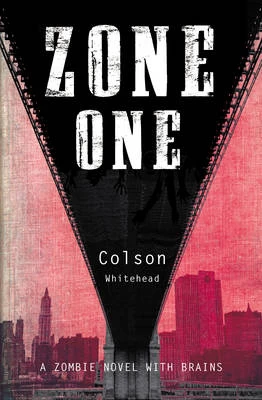
About the Book
In this wry take on the post-apocalyptic horror novel, a pandemic has
devastated the planet. The plague has sorted humanity into two types:
the uninfected and the infected, the living and the living dead.
Now the plague is receding, and Americans are busy rebuilding
civilization under orders from the provisional government based in
Buffalo. Their top mission: the resettlement of Manhattan. Armed forces
have successfully reclaimed the island south of Canal Street — aka Zone
One — but pockets of plague-ridden squatters remain. While the army has
eliminated the most dangerous of the infected, teams of civilian
volunteers are tasked with clearing out a more innocuous variety — the
“malfunctioning” stragglers, who exist in a catatonic state, transfixed
by their former lives.
Mark Spitz is a member of one of the
civilian teams working in lower Manhattan. Alternating between
flashbacks of Spitz’s desperate fight for survival during the worst of
the outbreak and his present narrative, the novel unfolds over three
surreal days, as it depicts the mundane mission of straggler removal,
the rigors of Post-Apocalyptic Stress Disorder, and the impossible job
of coming to grips with the fallen world.
And then things start to go wrong.
Both spine chilling and playfully cerebral, Zone One brilliantly subverts the genre’s conventions and deconstructs the zombie myth for the twenty-first century.