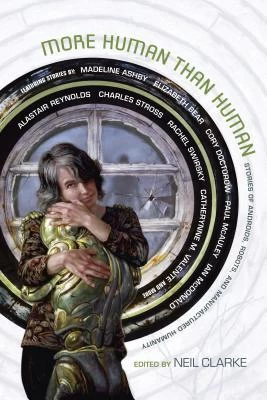
More Human Than Human: Stories of Androids, Robots, and Manufactured Humanity
- Publication
- November 7, 2017
About the Book
Edited by Neil Clarke.
The idea of creating an artificial human is an old one. One of the earliest science-fictional novels, Frankenstein, concerned itself primarily with the hubris of creation, and one's relationship to one's creator. Later versions of this "artificial human" story (and indeed later adaptations of Frankenstein) changed the focus to more modernist questions... What is the nature of humanity? What does it mean to be human?
These stories continued through the golden age of science fiction with Isaac Asimov's I Robot story cycle, and then through post-modern iterations from new wave writers like Philip K. Dick. Today, this compelling science fiction trope persists in mass media narratives like Westworld and Ridley Scott's Blade Runner, as well as twenty-first century science fiction novels like Charles Stross's Saturn's Children and Paolo Bacigalupi's The Windup Girl.
The short stories in More Human than Human demonstrate the depth and breadth of artificial humanity in contemporary science fiction. Issues of passing... of what it is to be human... of autonomy and slavery and oppression, and yes, the hubris of creation; these ideas have fascinated us for at least two hundred years, and this selection of stories demonstrates why it is such an alluring and recurring conceit.