The Pilgrim's Regress

The first book written by C. S. Lewis after his conversion,The Pilgrim's Regress is, in a sense, the record of Lewis's own search for meaning and spiritual satisfaction - a search that eventually led him to Christianity.
Here is the story of the pilgrim John and his odyssey to an enchanting island which has created in him an intense longing - a mysterious, sweet desire. John's pursuit of this desire takes him through adventures with such people as Mr. Enlightenment, Media Halfways, Mr. Mammon, Mother Kirk, Mr. Sensible, and Mr. Humanist and through such cities as Thrill and Eschropolis as well as the Valley of Humiliation.
Though the dragons and giants here are different from those in Bunyan's Pilgrim's Progress, Lewis's allegory performs the same function of enabling the author to say simply and through fantasy what would otherwise have demanded a full-length philosophy of religion.
Readers also enjoyed



C. S. Lewis
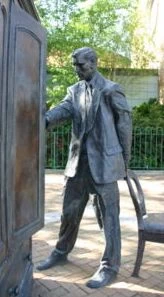
Before there was a wardrobe that opened into another world, there was a quiet boy in Belfast who filled his notebooks with imaginary creatures and fantastical realms. C. S. Lewis—known to friends as Jack—never outgrew the wonder of childhood storytelling. Instead, he transformed it into one of the most beloved and enduring fantasy worlds in literature: Narnia.
Born in 1898 in Northern Ireland, Lewis came of age in a world shadowed by war and personal loss. His mother died when he was just nine, and by his late teens he was serving in the trenches of World War I. These early experiences—both of grief and of survival—left deep marks on his work, often surfacing as themes of sacrifice, redemption, and the fragile beauty of innocence.
More books by C. S. Lewis