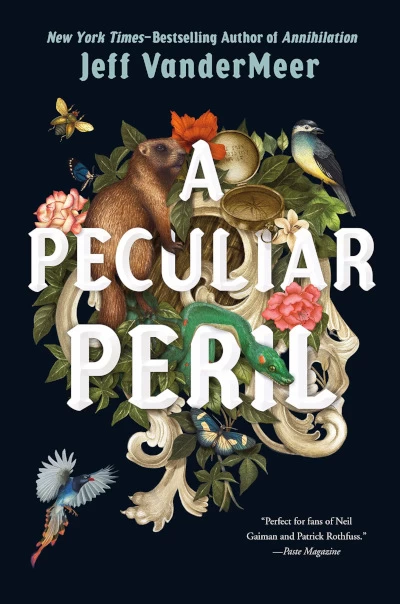
When Jeff VanderMeer writes, the world gets stranger—but in a way that feels unsettlingly familiar. Known for blurring the boundaries between nature and the surreal, his work isn’t content to just entertain—it transforms. With Annihilation, the first book in the Southern Reach Trilogy, VanderMeer didn’t just capture imaginations—he redefined what ecological science fiction could look like. The novel’s hypnotic blend of decay, transformation, and unknowable forces led to a bestselling series and a major film adaptation by Alex Garland. But for longtime readers, Annihilation was just the latest evolution of a voice that has always thrived in the liminal.
Raised in the Fiji Islands and later rooted in Florida, VanderMeer’s early exposure to biodiversity left a lasting impression—one that pulses through his fiction. His landscapes are never just backdrops. Swamps breathe, fungi think, and ecosystems assert their will. In books like Borne and Dead Astronauts, he creates biopunk worlds where the environment is not merely a setting but a character, sometimes the protagonist, sometimes the threat.
VanderMeer is often associated with the term “New Weird,” but labels don’t sit comfortably on his work. He has said that the weird isn’t about monsters under the bed—it’s about the sense that reality is subtly off-kilter. That ethos shows up in everything from his fragmented narratives to his unreliable narrators, who often find themselves unraveling as quickly as the worlds around them.
His writing is equal parts beautiful and disquieting, with prose that is lyrical yet invasive—like vines reclaiming a ruin. He explores themes of identity, memory, ecological collapse, and the porous line between human and non-human. And while his novels have earned critical acclaim—including a Nebula Award nomination, a Shirley Jackson Award, and a spot on The New York Times Best Sellers list—it’s his ability to disturb gently, to awe without overexplaining, that leaves a lasting mark.
Outside of fiction, VanderMeer is also a vocal advocate for climate awareness and rewilding efforts, often tying his literary themes to real-world environmental action. He has written nonfiction about ecological issues, curated anthologies, and championed genre-bending literature that defies easy categorization.
In his own words: “We’re haunted by the idea that we are separate from nature. But we never have been.” That tension—between what we are and what we think we are—continues to animate his body of work.
Jeff VanderMeer doesn’t just write strange fiction. He writes fiction that makes the familiar feel strange again—and in doing so, reveals how fragile and miraculous our world truly is.