
The Mercy of Gods

From the New York Times bestselling author of the Expanse comes a spectacular new space opera that sees humanity fighting for its survival in a war as old as the universe itself.
How humanity came to the planet called Anjiin is lost in the fog of history, but that history is about to end.
The Carryx – part empire, part hive – have waged wars of conquest for centuries, destroying or enslaving species across the galaxy. Now, they are facing a great and deathless enemy. The key to their survival may rest with the humans of Anjiin.
Caught up in academic intrigue and affairs of the heart, Dafyd Alkhor is pleased just to be an assistant to a brilliant scientist and his celebrated research team. Then the Carryx ships descend, decimating the human population and taking the best and brightest of Anjiin society away to serve on the Carryx homeworld, and Dafyd is swept along with them.
They are dropped in the middle of a struggle they barely understand, set in a competition against the other captive species with extinction as the price of failure. Only Dafyd and a handful of his companions see past the Darwinian contest to the deeper game that they must play to survive: learning to understand – and manipulate – the Carryx themselves.
With a noble but suicidal human rebellion on one hand and strange and murderous enemies on the other, the team pays a terrible price to become the trusted servants of their new rulers.
Dafyd Alkhor is a simple man swept up in events that are beyond his control and more vast than his imagination. He will become the champion of humanity and its betrayer, the most hated man in history and the guardian of his people.
This is where his story begins.
Readers also enjoyed
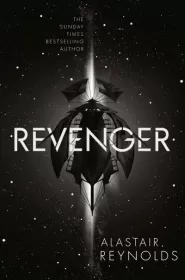

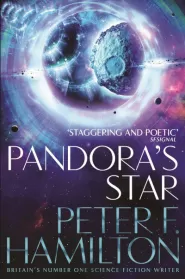


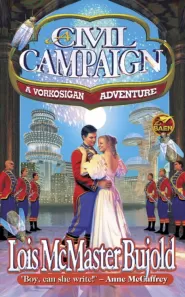


James S. A. Corey
In the vast universe of modern science fiction, few names have reshaped the genre quite like James S. A. Corey—a pseudonym that conceals a powerful creative duo: Daniel Abraham and Ty Franck. Their collaboration gave birth to The Expanse, a sweeping space opera that redefined political intrigue, interplanetary tension, and character-driven storytelling on a galactic scale. With its gritty realism, moral complexity, and vast yet intimate scope, the series captured the imagination of a generation hungry for science fiction grounded not in fantasy, but in plausible futures.
The Captive's War
On a distant world, generations of humans have lived without any memory of how they got there. Their society—isolated, quietly advanced, and curiously untouched—unfolds beneath the looming question of origin. And then the Carryx arrive.
Everything changes the moment this insectoid empire descends. Alien in every sense, the Carryx don’t seek war in the way humanity understands it. They don’t conquer with brutality—they absorb, repurpose, and twist. Their captives become tools, their cultures become resources. When a group of scientists and scholars from Anjiin are taken, they’re not imprisoned behind bars—they're immersed in the machinery of an empire that doesn’t believe it’s doing anything wrong.
The Captive's War consists of two books and series is set to expand with the upcoming release of one more book. The current recommended reading order for the series is provided below.


Reviews and Comments

I finally got around to reading this, in anticipation of the sequel's publication next week. I will say I was both satisfied and slightly disappointed. The novel hits all the right buttons you would expect from the authors of The Expanse: compelling narrative, great characters, strong visuals, terrifying aliens. The story involves a human colony world that is invaded and subsumed by an alien empire called the Carryx, and the aftermath of that disaster. A research group is brought to the Carryx homeworld to determine the "usefulness" of human civilization to the empire. The humans are forced to ask themselves if they should make themselves useful and consign their civilization to permanent enslavement, or rebel and face certain extinction. The disappointing aspect of the novel is that the ending is basically telegraphed two-thirds of the way through, and though I read on expecting some sort of surprise reversal that would upend my expectations, it actually ended exactly the way it told me it would. This slightly soured an otherwise terrific reading experience.