Risingshadow
Speculative Fiction Books
  • About
    • Home
    • Articles
    • About Us
    • Contact Us
    • Privacy Policy
    • Terms of Service
    • Staff Members
    • Newsletter
    • Finnish (FI)
  • Books
    • New Releases
    • Coming Soon
    • Bookshelf Activity
    • Advanced Search
    • Book Reviews
    • Genres & Tags
    • Submit Book
  • Community
    • Discussions
    • - Recent Messages
    • - Recent Topics
    • - Hot Topics
    • - Popular Topics
    • - Search
    • CHALLENGES
    • - Reading Challenge
    • - Book Trivia Quiz
  • Home
  • Books
  • J. R. R. Tolkien
  • The Battle of Maldon

The Battle of Maldon
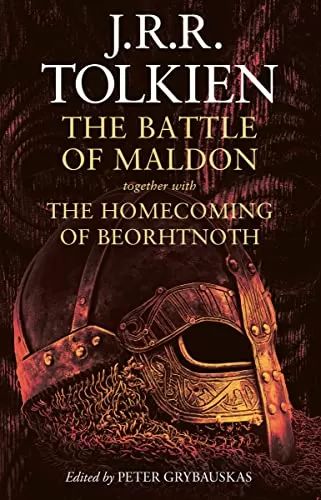
by J. R. R. Tolkien
The Battle of Maldon by J. R. R. Tolkien
Unrated

The first-ever standalone edition of one of J.R.R. Tolkien’s most important poetic dramas, that explores timely themes such as the nature of heroism and chivalry during war, featuring previously unpublished and never-before-seen texts and drafts.

In 991 AD, Vikings attacked an Anglo-Saxon defense-force led by their duke, Beorhtnoth, resulting in brutal fighting along the banks of the river Blackwater, near Maldon in Essex. The attack is widely considered one of the defining conflicts of tenth-century England, due to it being immortalized in the poem, The Battle of Maldon.

Written shortly after the battle, the poem now survives only as a 325-line fragment, but its value to today is incalculable, not just as a heroic tale but in vividly expressing the lost language of our ancestors and celebrating ideals of loyalty and friendship.

J.R.R. Tolkien considered The Battle of Maldon “the last surviving fragment of ancient English heroic minstrelsy.” It would inspire him to compose, during the 1930s, his own dramatic verse-dialogue, The Homecoming of Beorhtnoth Beorhthelm’s Son, which imagines the aftermath of the great battle when two of Beorhtnoth’s retainers come to retrieve their duke’s body.

Leading Tolkien scholar, Peter Grybauskas, presents for the very first time J.R.R. Tolkien’s own prose translation of The Battle of Maldon together with the definitive treatment of The Homecoming of Beorhtnoth and its accompanying essays; also included and never before published is Tolkien’s bravura lecture, “The Tradition of Versification in Old English,” a wide-ranging essay on the nature of poetic tradition. Illuminated with insightful notes and commentary, he has produced a definitive critical edition of these works, and argues compellingly that, Beowulf excepted, The Battle of Maldon may well have been “the Old English poem that most influenced Tolkien’s fiction,” most dramatically within the pages of The Lord of the Rings.

Amazon: Check Best Offer

Historical FictionPoetry
Release date: June 6, 2023

Book Order
Amazon
Kindle
Audible
Amazon CA
Amazon UK
Amazon Europe

Your Rating
☆☆☆☆☆☆☆☆☆☆
Standard Shelves

Readers also enjoyed

Babel: An Arcane History
★ 7.50 / 10
The Cautious Traveller's Guide to the Wastelands
★ 7.50 / 6
The Buried Giant
★ 8.00 / 11
The Egyptian
★ 8.62 / 24
The Name of the Rose
★ 8.18 / 27
The Last Kingdom (The Last Kingdom #1)
★ 8.00 / 20
The Book Thief
★ 7.96 / 29

Join the Discussion
You can post as a guest or sign in for more features.
Have questions about this book or want to share your thoughts? Join the conversation!
J. R. R. Tolkien

J. R. R. Tolkien

J. R. R. Tolkien, the creator of Middle-earth, was not just a writer; he was a weaver of worlds, a philologist whose deep understanding of language and mythology breathed life into epic landscapes, timeless characters, and legends that still captivate readers around the world. Born in 1892 in Bloemfontein, South Africa, Tolkien’s early years were marked by tragedy—his father’s untimely death and the loss of his mother, both of which shaped the tone of his writing. His roots in the English countryside, where he moved as a child, became the fertile ground for the stories that would define an entire genre.

Read more ...

A professor of Anglo-Saxon at Oxford, Tolkien’s passion for ancient languages and myths guided his creative journey. It was through his academic work that he cultivated an understanding of storytelling traditions that would later inform The Hobbit (1937) and The Lord of the Rings trilogy (1954-1955). These novels, which began as a simple bedtime story for his children, transformed into a vast, intricate epic that combined linguistics, folklore, and his personal experiences—especially his time as a soldier in World War I. The desolate landscapes of war inspired much of the darkness found in Middle-earth, from the vast, haunted wilderness of Mordor to the sorrowful journeys of characters like Frodo Baggins.

Tolkien's approach to writing was as meticulous as his scholarship. His world-building is legendary, with languages and cultures as fully realized as any character in his books. His characters, from the humble hobbits to the noble elves, embody themes of bravery, friendship, and sacrifice. Yet, beneath the surface of his high fantasy is a deep reflection on the nature of evil and the fragility of power—lessons drawn from his own experiences and the history he so passionately studied.

Beyond his literary genius, Tolkien was a devoted family man. His deep affection for his wife, Edith, inspired much of the romance in his works, particularly the relationship between Beren and Lúthien in The Silmarillion. Tolkien’s children, too, played a part in his creative process, often offering playful suggestions that found their way into his stories.

Though he passed away in 1973, Tolkien's legacy continues to resonate. His works have been translated into dozens of languages, adapted into blockbuster films, and studied for their rich mythological and linguistic elements. Middle-earth has become more than just a fictional world; it is a cultural touchstone, one that generations continue to return to for solace, adventure, and the reminder that even in the darkest times, hope can be found.

As Tolkien once said, “Not all those who wander are lost.” It is this sense of adventure, of exploring worlds beyond our own, that remains at the heart of his enduring appeal. His influence stretches far beyond the pages of his books, making J. R. R. Tolkien not just a cornerstone of fantasy literature, but a creator whose imagination has shaped the way we see the world itself.

More books by J. R. R. Tolkien

The Fall of Númenor (Tales of Middle-Earth)
★ 9.00 / 3
The Nature of Middle-earth
★ 9.26 / 4
The Fall of Gondolin (Tales of Middle-Earth)
★ 8.60 / 5
Beren and Lúthien (Tales of Middle-Earth)
★ 9.00 / 1
The Art of The Lord of the Rings by J. R. R. Tolkien
★ 8.20 / 5
The Story of Kullervo
★ 6.26 / 8
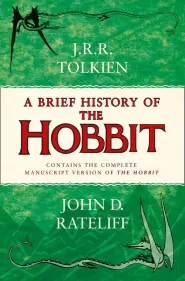
A Brief History of The Hobbit
★ 9.00 / 1
Beowulf: A Translation and Commentary, together with Sellic Spell
Unrated
The Fall of Arthur
★ 8.00 / 1
The Art of the Hobbit
★ 8.20 / 5
The Legend of Sigurd and Gudrún
★ 8.66 / 3
The Children of Húrin (Tales of Middle-Earth)
★ 7.80 / 47
The History of Middle-earth: Part One (The History of Middle-earth (omnibus editions) #1)
★ 7.00 / 2
The History of Middle-earth: Part Two (The History of Middle-earth (omnibus editions) #2)
★ 8.00 / 1
The History of Middle-earth: Part Three (The History of Middle-earth (omnibus editions) #3)
★ 8.00 / 1
Roverandom
★ 6.88 / 31
The Peoples of Middle-earth (The History of Middle-earth #12)
★ 7.50 / 4
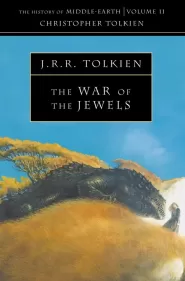
The War of the Jewels (The History of Middle-earth #11)
★ 8.00 / 1
Morgoth's Ring (The History of Middle-earth #10)
★ 8.00 / 2
Sauron Defeated (The History of Middle-earth #9)
★ 7.00 / 2
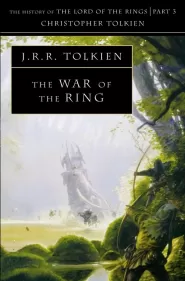
The War of the Ring (The History of Middle-earth #8)
★ 7.34 / 3
The Treason of Isengard (The History of Middle-earth #7)
★ 7.34 / 3
The Return of the Shadow (The History of Middle-earth #6)
★ 7.20 / 5
The Lost Road and Other Writings (The History of Middle-earth #5)
★ 7.50 / 4
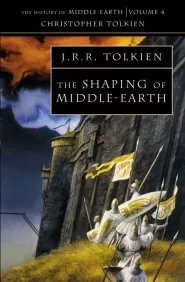
The Shaping of Middle-earth (The History of Middle-earth #4)
★ 7.50 / 4
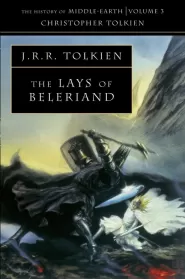
The Lays of Beleriand (The History of Middle-earth #3)
★ 7.80 / 5
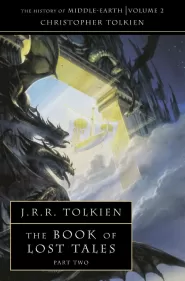
The Book of Lost Tales, Part Two (The History of Middle-earth #2)
★ 7.58 / 7
The Book of Lost Tales, Part One (The History of Middle-earth #1)
★ 7.20 / 10
Mr. Bliss
★ 5.84 / 13
The Letters of J. R. R. Tolkien
★ 7.40 / 10
Unfinished Tales
★ 7.98 / 47
The Silmarillion
★ 8.38 / 102
The Father Christmas Letters
★ 7.34 / 6
Sir Gawain and the Green Knight, Pearl, and Sir Orfeo
★ 9.00 / 2
The Lord of the Rings (The Lord of the Rings)
★ 9.12 / 167
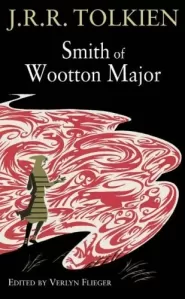
Smith of Wootton Major
★ 6.72 / 25
Tree and Leaf
★ 7.76 / 24
The Adventures of Tom Bombadil
★ 6.86 / 21
The Return of the King (The Lord of the Rings #3)
★ 9.24 / 111
The Fellowship of the Ring (The Lord of the Rings #1)
★ 8.84 / 148
The Two Towers (The Lord of the Rings #2)
★ 9.12 / 116
Farmer Giles of Ham
★ 6.82 / 33
The Hobbit
★ 8.36 / 183


^ Top
Follow Us: Newsletter | Facebook | X | Mastodon | RSS
Hosted by Planeetta Internet Oy
© 1996 - 2025 Risingshadow. All rights reserved.
This website uses cookies to ensure you get the best experience on our website.
Privacy Policy