

Author
Margaret Killjoy
Margaret Killjoy writes fantasy and horror shaped by a life spent outside conventional boundaries. An author, musician, podcaster, and longtime participant in anarchist and DIY communities, she brings an unusual sense of lived experience to stories about outsiders, witches, wanderers, and people tr…
Read more
Margaret Killjoy writes fantasy and horror shaped by a life spent outside conventional boundaries. An author, musician, podcaster, and longtime participant in anarchist and DIY communities, she brings an unusual sense of lived experience to stories about outsiders, witches, wanderers, and people trying to build something better amid dangerous circumstances.
Born and raised in Maryland, Killjoy took an unconventional route toward becoming a professional writer. She attended art school but left in the early 2000s as she became involved in the anti-globalization movement. For roughly fifteen years, she lived an itinerant life, traveling across the United States, spending time in squats and activist communities, and becoming involved with projects ranging from Food Not Bombs to guerrilla gardening. She eventually settled in the Appalachian Mountains of western North Carolina.
Writing was already part of that wandering life. Killjoy came out of DIY and zine culture, where publishing could be as immediate as making something yourself and putting it into other people's hands. As her interest in fiction deepened, she began thinking seriously about whether imaginative storytelling could explore the same questions about freedom, power, and community that occupied her elsewhere. An important influence was Ursula K. Le Guin, whom Killjoy interviewed about anarchism and fiction. She later attended the Clarion West Writers Workshop in 2015.
Those concerns are woven deeply into A Country of Ghosts, a fantasy novel about a journalist covering an imperial war who encounters a society organized along radically different principles. Rather than treating anarchism as background decoration, the novel asks what such a community might actually look like, including the compromises, relationships, and everyday work required to sustain it.
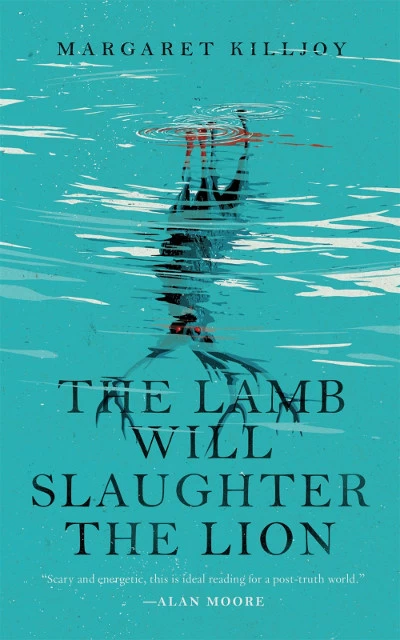
Killjoy reached a wider fantasy and horror readership with The Lamb Will Slaughter the Lion, the first story in the Danielle Cain series. Danielle is a wandering anarchist who arrives at the squatter community of Freedom, Iowa, only to discover that its supernatural protector has become something far more frightening. The novella blends contemporary fantasy, folk horror, punk culture, queer characters, and occult mystery without losing sight of the human communities at its center. It was nominated for the Shirley Jackson Award for Best Novella.
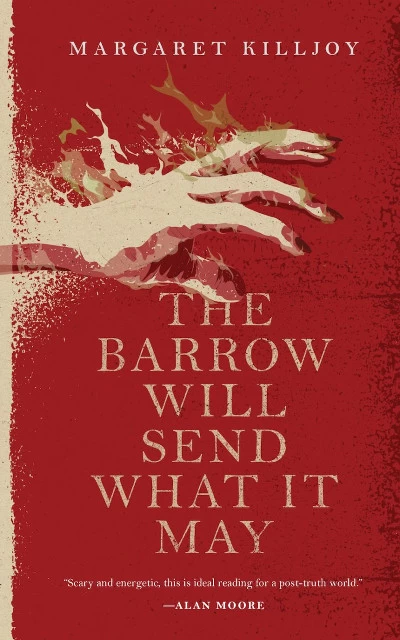
Danielle's travels continued in The Barrow Will Send What It May, which earned a Lambda Literary Award nomination, and later in The Immortal Choir Holds Every Voice. Across the series, demons and magic may create the immediate danger, but Killjoy remains equally interested in friendship, chosen family, mutual aid, and what happens when people attempt to live without familiar hierarchies.
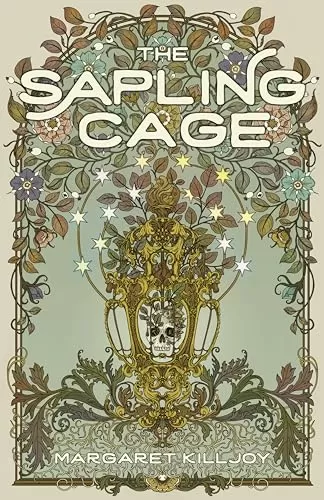
Her fantasy took another direction with The Sapling Cage, the opening volume of the Daughters of the Empty Throne trilogy. The novel follows Lorel, a young trans girl who longs to become a witch in a world where witchcraft is closed to those perceived as boys. Drawing partly on Killjoy's own experiences of adolescence and influenced by the coming-of-age fantasy tradition of writers such as Tamora Pierce, the book combines a personal story of identity with witches, rebellion, war, and ecological magic. The Sapling Cage was shortlisted for the 2025 Ursula K. Le Guin Prize for Fiction and named to the Otherwise Award Honor List.
Beyond novels and novellas, Killjoy has written short fiction collected in We Won't Be Here Tomorrow and Other Stories. She is also the principal songwriter behind the atmospheric black metal project Feminazgûl and hosts Cool People Who Did Cool Stuff, a history podcast focused on rebels, activists, and resistance movements. Her podcast Live Like the World Is Dying approaches preparedness and survival through community resilience and mutual aid rather than individual isolation.
These different parts of her creative life rarely feel separate. Punk and metal culture, historical research, political thought, wilderness, queer identity, and years spent among unconventional communities all find their way into her fiction. The result is speculative fiction that can be eerie, adventurous, and occasionally brutal, but remains fascinated by a deceptively simple question: when the structures people rely on fail them, what might they choose to build in their place?
Books by this author
5 books in this view
Daughters of the Empty Throne Book 3 2027 ★ 9.0/10 2 anticipation ratings Fantasy Daughters of the Empty Throne #3 Daughters of the Empty Throne Book 2 2027 ★ 9.6/10 5 anticipation ratings Fantasy Daughters of the Empty Throne #2 The Sapling Cage 2024 ★ 10.0/10 2 ratings Fantasy Daughters of the Empty Throne #1 The Barrow Will Send What It May 2018 Fantasy Danielle Cain #2 The Lamb Will Slaughter the Lion 2017 Fantasy Danielle Cain #1THE AUTHOR’S WORLDS