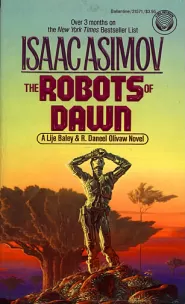
Isaac Asimov’s name is synonymous with the future—a future shaped by boundless imagination, scientific inquiry, and an unwavering belief in human progress. With a prolific career spanning across science fiction, popular science, and beyond, Asimov not only anticipated technological advancements but also explored the philosophical and ethical questions that would arise from them. His writing, characterized by its clarity, precision, and expansive ideas, set the stage for generations of readers to dream about the potential of science and humanity.
Born in 1920 in Petrovichi, Russia, Asimov’s journey to becoming one of the most influential authors of the 20th century began with a love of reading. After his family immigrated to the United States when he was a child, Asimov was drawn to the world of books, devouring everything he could find in his local Brooklyn store. It was clear from an early age that he would pursue writing, though it wasn’t always science fiction that captured his imagination. Asimov’s first passion was in the sciences, earning a PhD in biochemistry, and he often merged his academic insights with his storytelling. This blend of science and fiction became a hallmark of his work, offering readers not just entertainment, but intellectual engagement.
Asimov’s contributions to the science fiction genre are monumental, and his Foundation series stands as one of the most revered in the history of the genre. This epic saga of galactic empires and the rise and fall of civilizations was one of the first to introduce the concept of “psychohistory,” the idea that large-scale human behavior could be predicted and shaped by mathematics. His Foundation universe—rich in its depiction of political intrigue, social structures, and the struggle for power—also explored themes of knowledge, ethics, and the relationship between science and society, questions that remain as relevant today as they were in the mid-20th century.
Asimov didn’t just write about the future; he helped shape it. His robot stories, most famously collected in I, Robot, laid down the now-iconic Three Laws of Robotics, which have influenced both real-world robotics and how we think about artificial intelligence. The interplay between logic and humanity in his robot tales is a recurring theme throughout his work, where machines are both tools of progress and cautionary figures. His exploration of human nature—what it means to be human, what it means to be conscious—resonates deeply, making his work essential not only for sci-fi enthusiasts but for anyone contemplating the intersection of technology and society.
In addition to his fiction, Asimov’s popular science writing broke down complex topics for the average reader, creating a bridge between the scientific community and the general public. His ability to explain the most difficult concepts with engaging prose made subjects such as chemistry, physics, and astronomy approachable, sparking curiosity in countless minds.
Throughout his life, Asimov received numerous accolades, including Hugo and Nebula Awards, and his influence continues to be felt across both literature and technology. He once said, “I write for the same reason I breathe—because I have to.” This compulsion to create, paired with his profound curiosity about the world, led to a legacy that stretches far beyond his original stories. Asimov’s work remains a touchstone for anyone interested in the future, in the role of science and technology in shaping human destiny, and in the enduring power of ideas.
In the end, Isaac Asimov’s brilliance lies not just in the worlds he built, but in the way his words made readers question the world they lived in. His stories were not merely about futuristic settings or speculative technology; they were about what it means to be human in an ever-evolving universe.
Asimov wrote the Lucky Starr series of juvenile science-fiction novels using the pen name Paul French.