Palimpsest
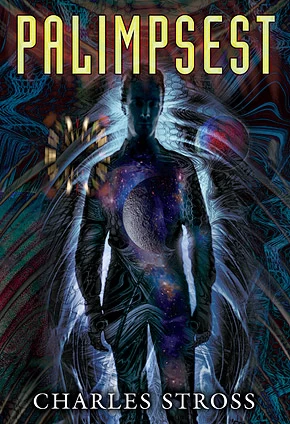
A novella. Dust jacket and interior illustrations by J. K. Potter.
Welcome to the Stasis, the clandestine, near-omnipotent organization that stands at the heart of Charles Stross’s Hugo Award-winning novella, Palimpsest.
By mastering the mysteries of the Timegate, the Stasis has repeatedly steered mankind away from the brink of utter extinction. Through countless millennia, through the “mayfly flickerings” of innumerable transient civilizations, its members have intervened at critical junctions, reseeding the galaxy with viable potential survivors. In the process, they have reconfigured the basic structure of the universe, all in the name of human continuity.
Pierce is a newly recruited member of the Stasis, serving out a complex twenty- year apprenticeship while struggling to find his way through the paradoxical maze of history (and unhistory) that surrounds him. As his once simple existence expands and replicates over vast stretches of time, Pierce uncovers a new and unexpected destiny, one that will embroil him in the larger purposes of the Stasis and in the ultimate, unresolved fate of humanity itself.
Skillfully merging the threads of an individual life with the grandest, most overarching concerns, Palimpsest offers both visionary brilliance and narrative excitement in equal measure. Powerfully imagined, beautifully constructed, and written throughout with great economy of means, it is the kind of mind-expanding mini-epic that only science fiction — and only a master practitioner like Charles Stross — could produce.
Readers also enjoyed




Charles Stross
Charles Stross doesn’t just write science fiction—he reverse-engineers the future. Whether unraveling the complexities of AI, economics, or cosmic horror, his stories feel less like speculative fiction and more like eerily plausible roadmaps to tomorrow. A former software developer and technical writer, Stross brings a hacker’s mindset to storytelling, dissecting the machinery of reality and exposing the glitches beneath.
Born in Leeds, England, Stross grew up surrounded by the last vestiges of the Industrial Age, a landscape that would later inform his fascination with systems—both human and technological. Before becoming a full-time author, he dabbled in everything from pharmacy to computer science, experiences that lend his work an uncanny level of authenticity. His early exposure to computing and online culture made him one of the first sci-fi writers to deeply explore the implications of a hyper-connected world, long before the tech boom turned cyberpunk into a reality.
More Books Charles Stross