The Rapture of the Nerds
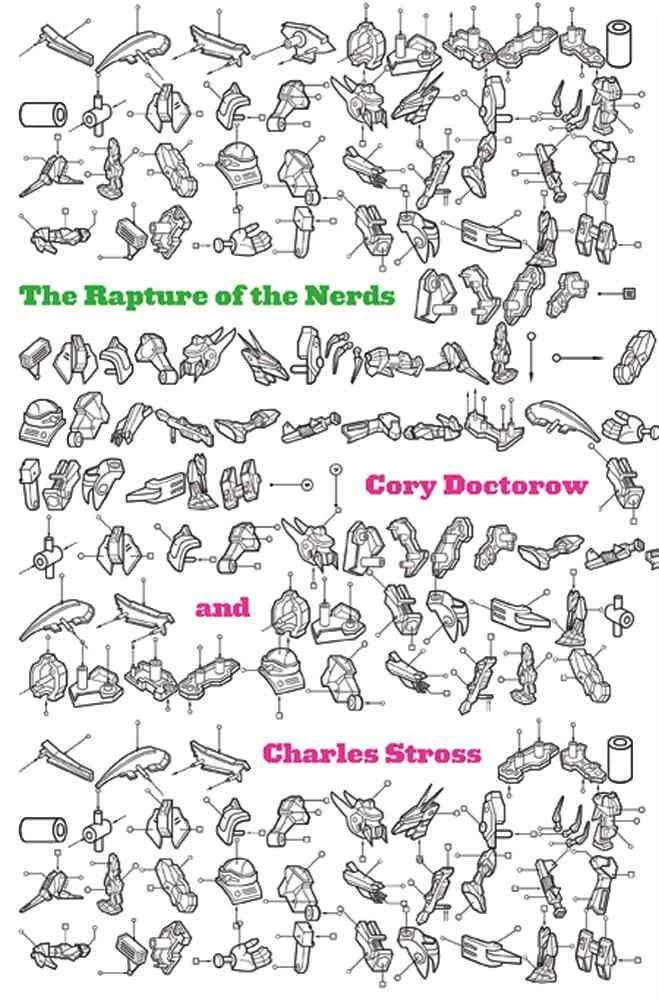
From the two defining personalities of post-cyberpunk SF, a brilliant collaboration to rival 1987's The Difference Engine by William Gibson and Bruce Sterling
Welcome to the fractured future, at the dusk of the twenty-first century.
Earth has a population of roughly a billion hominids. For the most part, they are happy with their lot, living in a preserve at the bottom of a
gravity well. Those who are unhappy have emigrated, joining one or
another of the swarming densethinker clades that fog the inner solar
system with a dust of molecular machinery so thick that it obscures the
sun.
The splintery metaconsciousness of the solar-system has
largely sworn off its pre-post-human cousins dirtside, but its minds
sometimes wander… and when that happens, it casually spams Earth's
networks with plans for cataclysmically disruptive technologies that
emulsify whole industries, cultures, and spiritual systems. A sane
species would ignore these get-evolved-quick schemes, but there's always someone who'll take a bite from the forbidden apple.
So until
the overminds bore of stirring Earth's anthill, there's Tech Jury
Service: random humans, selected arbitrarily, charged with assessing
dozens of new inventions and ruling on whether to let them loose. Young
Huw, a technophobic, misanthropic Welshman, has been selected for the
latest jury, a task he does his best to perform despite an itchy
technovirus, the apathy of the proletariat, and a couple of truly awful
moments on bathroom floors.

Charles Stross
Charles Stross doesn’t just write science fiction—he reverse-engineers the future. Whether unraveling the complexities of AI, economics, or cosmic horror, his stories feel less like speculative fiction and more like eerily plausible roadmaps to tomorrow. A former software developer and technical writer, Stross brings a hacker’s mindset to storytelling, dissecting the machinery of reality and exposing the glitches beneath.
Born in Leeds, England, Stross grew up surrounded by the last vestiges of the Industrial Age, a landscape that would later inform his fascination with systems—both human and technological. Before becoming a full-time author, he dabbled in everything from pharmacy to computer science, experiences that lend his work an uncanny level of authenticity. His early exposure to computing and online culture made him one of the first sci-fi writers to deeply explore the implications of a hyper-connected world, long before the tech boom turned cyberpunk into a reality.
More Books Charles Stross