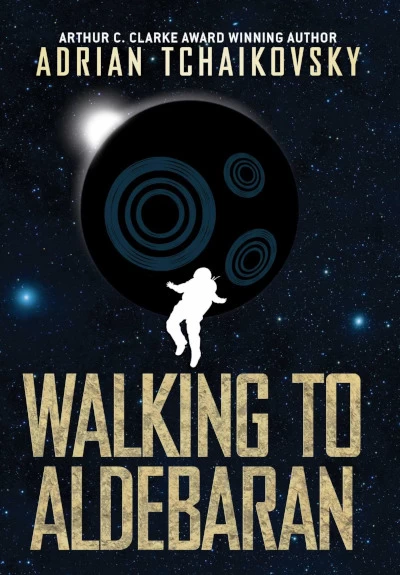
Walking to Aldebaran
Chilling story of a lost astronaut on an alien artefact, struggling to find his way home even as the world around him transforms his body and mind
My name is Gary Rendell. I’m an astronaut. When they asked me as a kid what I wanted to be when I grew up, I said, “astronaut, please!” I dreamed astronaut, I worked astronaut, I studied astronaut.
I got lucky; when a probe sent out to explore the Oort Cloud found a strange alien rock and an international team of scientists was put together to go and look at it, I made the draw.
I got even luckier. When disaster hit and our team was split up, scattered through the endless cold tunnels, I somehow survived.
Now I’m lost, and alone, and scared, and there’s something horrible in here.
Lucky me.
Lucky, lucky, lucky.
Readers also enjoyed
Adrian Tchaikovsky
In the realm of speculative fiction, where the boundaries between science and imagination blur, Adrian Tchaikovsky writes with the precision of a biologist and the curiosity of a philosopher. Known for weaving evolutionary theory into alien worlds and giving sentience to the most unexpected of creatures, he crafts stories that challenge not just what it means to be human—but what it means to be alive.
Tchaikovsky’s breakout novel, Children of Time, didn’t just introduce readers to a distant planet populated by hyper-intelligent spiders—it redefined what readers expect from space opera. Bold, cerebral, and emotionally resonant, the book went on to win the Arthur C. Clarke Award, with its sequel Children of Ruin deepening the saga’s exploration of consciousness, cooperation, and survival. In 2023, the Children of Time series earned the Hugo Award for Best Series, a fitting recognition for stories that dare to look evolution in the eye and ask: what if?
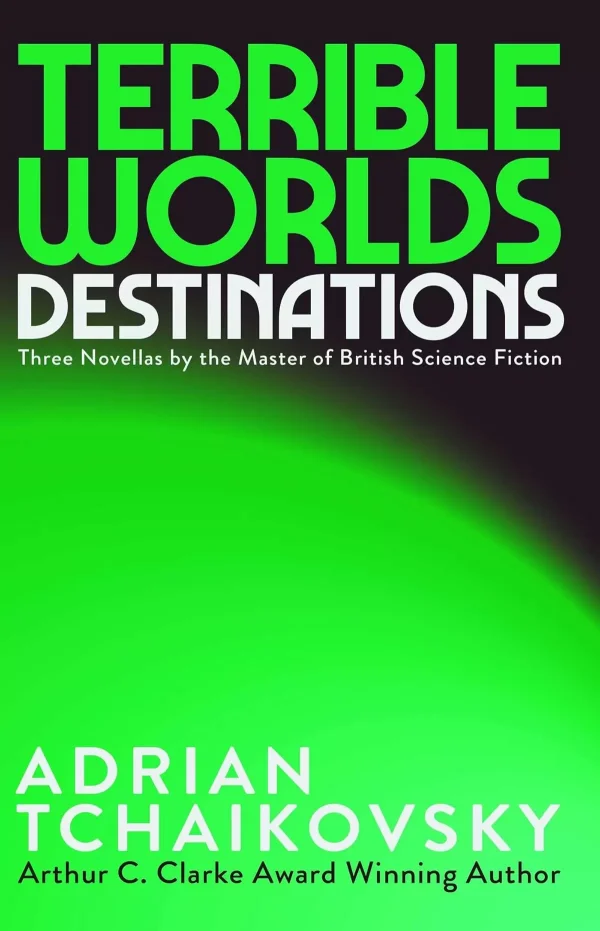
Terrible Worlds: Destinations
Stories set, themed around journeys to terrible, isolating places.
Terrible Worlds: Destinations consists of three primary books, and includes one additional book that complement the series but is not considered mandatory reads — considered a complete series. The current recommended reading order for the series is provided below.