
The Thin Man
Dashiell Hammett's classic The Thin Man introduced the world to Nick and Nora Charles, further made famous by the popular Thin Man films. With a new introduction by Denise Mina.
Nick Charles seems to find trouble wherever he goes. He thinks his sleuthing days are behind him when Julia Wolf, a former acquaintance, turns up dead. Nick—thanks to some persuasion from his enchanting wife, Nora—finds himself falling back into old habits and making a few polite inquiries. The prime suspect, Julia’s lover and boss Clyde Miller Wynant, has vanished without a trace. Everyone is after him, but Nick is not so sure Wynant is the culprit. And when another dubious figure bursts into their bedroom, waving a loaded handgun, it seems Nick and Nora’s adventure is only just beginning.
Nick and Nora Charles are among Dashiell Hammett’s most alluring creations: a rich, glamourous couple who solve homicides in between wisecracks and martinis. At once knowing and unabashedly romantic, The Thin Man is a murder mystery that doubles as a sophisticated comedy of manners.
Readers also enjoyed
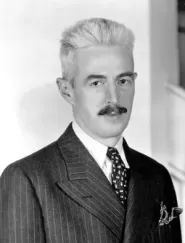
Dashiell Hammett
Dashiell Hammett was born May 27, 1894, in St. Mary's County, Maryland, to Richard Hammett and Mary Bond. He joined the Baltimore branch of the Pinkerton Detective Agency in 1915. He enlisted in the US Army's Ambulance Corps in June 1918 and was posted to a camp 20 miles from Baltimore, where he caught the flu, which developed into tuberculosis. He was invalided out of the army in July 1919 and returned to Pinkerton's. Hammett entered the veterans hospital near Tacoma, Washington, with tuberculosis in 1920. Upon his release he worked at Pinkerton's Spokane branch. Hospitalized again with tuberculosis, he met and courted a nurse, Josephine Dolan. In February 1921 he was moved to an army hospital near San Diego. After he was released he married a now-pregnant Josie in San Francisco. Hammett worked for the San Francisco branch of Pinkerton's, but left the agency in 1921 or 22 due to ill health. He took a writing course and sold droll vignettes to "The Smart Set" magazine during 1922, and some short stories to other magazines. He began to sell detective stories to "The Black Mask" from 1923. After the birth of the couple's second daughter in 1926, Hammett gave up freelance writing and became an advertising copy writer for the jeweler Albert Samuels, but left after six months due to ill health. Forced by his tuberculosis to live apart from Jose and the children, the marriage eventually broke up. Hammett supported himself through writing, chiefly for "The Black Mask", now under editor Joe Shaw. Hammett's long short stories were republished in novel form by Alfred Knopf. In 1929 Hammett moved to New York. After the success of his novel "The Maltese Falcon", he was engaged as a screenwriter by Paramount Pictures and moved to Hollywood, where he met Lillian Hellman. He returned to New York in 1931, where he wrote "The Glass Key". "The Thin Man" was published as a magazine serial in 1933. Hammett was encouraged by Hearst to write the "Secret Agent X9" comic strip, which ran from 1934-35, his last original work. In 1942 he re-enlisted in the army and was posted to the Aleutian Islands off of Alaska, where he edited The Adakian. When discharged in 1945, he returned to New York and became President of the NY Civil Rights Congress. In July 1951 Hammett was subpoenaed to testify on the Civil Rights Congress' bail fund, and was jailed for refusing to answer questions. Upon his release from jail, he was presented with a bill by the Internal Revenue Service for $111,000 in back taxes. In failing health, he lived off and on with Hellman. In 1961 he was admitted to New York's Lenox Hill Hospital, New York, where he died on January 10.