The Dain Curse
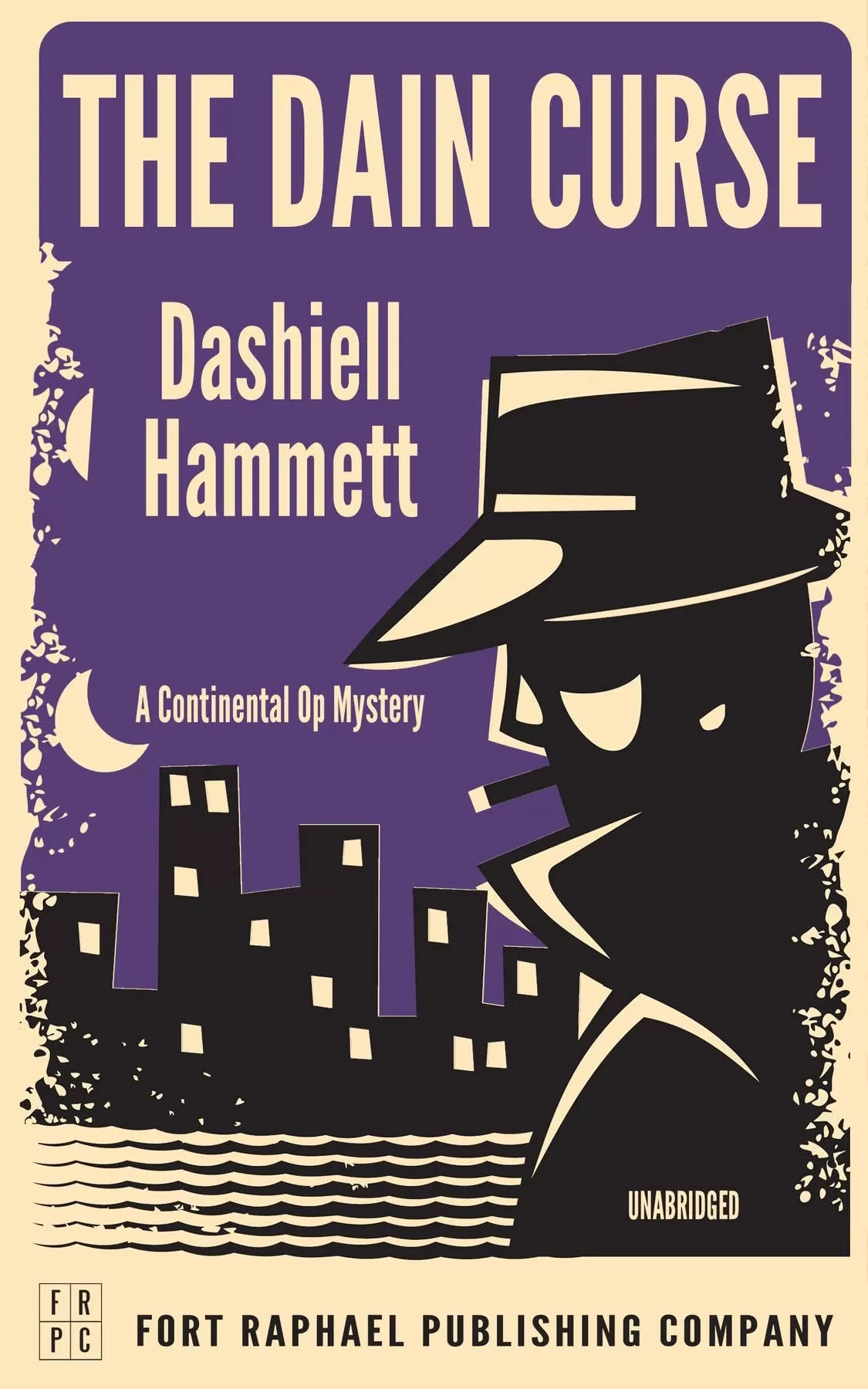
"The Dain Curse" is the second novel by Dashiell Hammett, the author universally regarded as the father of "hard boiled" detective fiction. The book was first serialized in the pulp fiction magazine Black Mask in 1928 and released as a novel in 1929.
The story is told in the first person, narrated by Hammett's enigmatic detective known only as the Continental Op. Sent to investigate a diamond heist from Edgar Leggett, patriarch of the wealthy Leggett family of San Francisco, the Op learns that a supposed "curse" lingers over Leggett's in-laws, the Dain family. The "Dain Curse" is said to be responsible for the violent deaths of a number of people associated with the Dains and as the Op delves deeper into the mystery, he uncovers an intricate web of deceit, robberies, addiction...and murder.
"The Dain Curse" is among the finest works of Dashiell Hammett and its publication, in tandem with his first novel, a Continental Op mystery "Red Harvest," marked the arrival of one of the 20th century's most celebrated writers of detective fiction. It is presented here in its original and unabridged format.

Readers also enjoyed
Dashiell Hammett
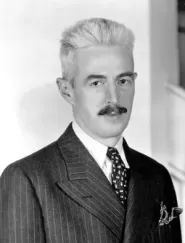
Dashiell Hammett was born May 27, 1894, in St. Mary's County, Maryland, to Richard Hammett and Mary Bond. He joined the Baltimore branch of the Pinkerton Detective Agency in 1915. He enlisted in the US Army's Ambulance Corps in June 1918 and was posted to a camp 20 miles from Baltimore, where he caught the flu, which developed into tuberculosis. He was invalided out of the army in July 1919 and returned to Pinkerton's. Hammett entered the veterans hospital near Tacoma, Washington, with tuberculosis in 1920. Upon his release he worked at Pinkerton's Spokane branch. Hospitalized again with tuberculosis, he met and courted a nurse, Josephine Dolan. In February 1921 he was moved to an army hospital near San Diego. After he was released he married a now-pregnant Josie in San Francisco. Hammett worked for the San Francisco branch of Pinkerton's, but left the agency in 1921 or 22 due to ill health. He took a writing course and sold droll vignettes to "The Smart Set" magazine during 1922, and some short stories to other magazines. He began to sell detective stories to "The Black Mask" from 1923. After the birth of the couple's second daughter in 1926, Hammett gave up freelance writing and became an advertising copy writer for the jeweler Albert Samuels, but left after six months due to ill health. Forced by his tuberculosis to live apart from Jose and the children, the marriage eventually broke up. Hammett supported himself through writing, chiefly for "The Black Mask", now under editor Joe Shaw. Hammett's long short stories were republished in novel form by Alfred Knopf. In 1929 Hammett moved to New York. After the success of his novel "The Maltese Falcon", he was engaged as a screenwriter by Paramount Pictures and moved to Hollywood, where he met Lillian Hellman. He returned to New York in 1931, where he wrote "The Glass Key". "The Thin Man" was published as a magazine serial in 1933. Hammett was encouraged by Hearst to write the "Secret Agent X9" comic strip, which ran from 1934-35, his last original work. In 1942 he re-enlisted in the army and was posted to the Aleutian Islands off of Alaska, where he edited The Adakian. When discharged in 1945, he returned to New York and became President of the NY Civil Rights Congress. In July 1951 Hammett was subpoenaed to testify on the Civil Rights Congress' bail fund, and was jailed for refusing to answer questions. Upon his release from jail, he was presented with a bill by the Internal Revenue Service for $111,000 in back taxes. In failing health, he lived off and on with Hellman. In 1961 he was admitted to New York's Lenox Hill Hospital, New York, where he died on January 10.
The Continental Op
The Continental Op consists of two books. The current recommended reading order for the series is provided below.