
Hundred-Dollar Baby
A client from a decades-old case reaches out to Boston PI Spenser-but can he rescue troubled April Kyle once more?
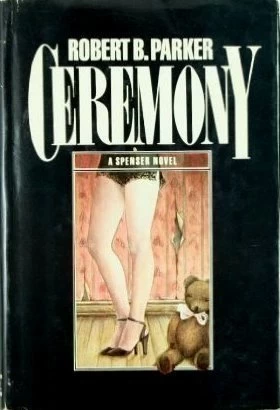
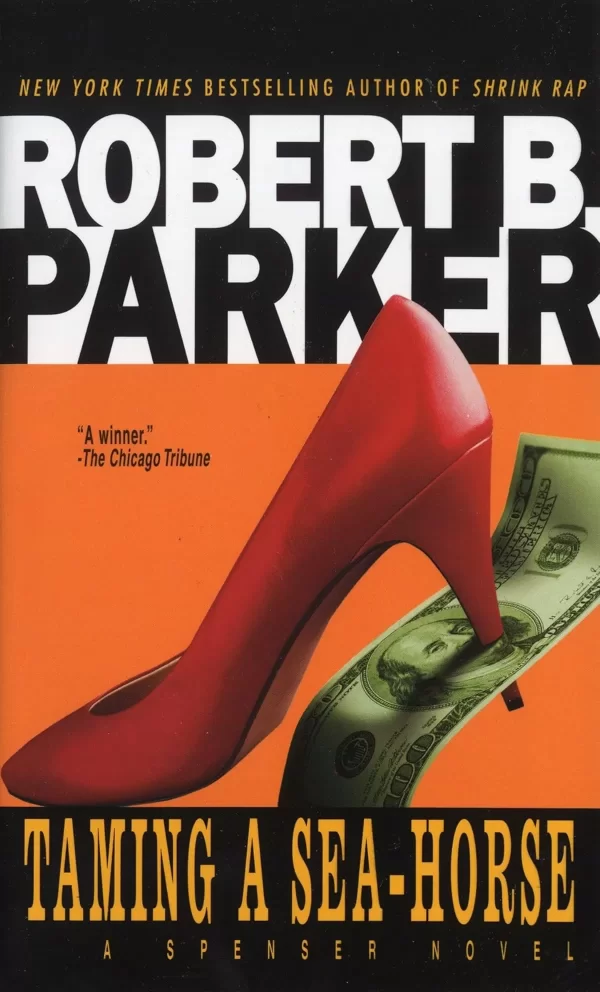
Longtime Spenser fans will remember that once upon a time, though not so long ago, there was a girl named April Kyle-a beautiful teenage runaway who turned to prostitution to escape her terrible family life. The book was 1982's Ceremony, and, thanks to Spenser, April escaped Boston's "Combat Zone" for the relative safety of a high-class New York City bordello. April resurfaced in Taming a Sea-Horse, again in dire need of Spenser's rescue-this time from the clutches of a controlling lover. But April Kyle's return in Hundred-Dollar Baby is nothing short of shocking.
When a mature, beautiful, and composed April strides into Spenser's office, the Boston PI barely hesitates before recognizing his once and future client. Now a well-established madam herself, April oversees an upscale call-girl operation in Boston's Back Bay. Still looking for Spenser's approval, it takes her a moment before she can ask him, again, for his assistance. Her business is a success; what's more, it's an all-female enterprise. Now that some men are trying to take it away from her, she needs Spenser.
April claims to be in the dark about who it is that's trying to shake her down, but with a bit of legwork and a bit more muscle, Spenser and Hawk find ties to organized crime and local kingpin Tony Marcus, as well as a scheme to franchise the operation across the country. As Spenser again plays the gallant knight, it becomes clear that April's not as innocent as she seems. In fact, she may be her own worst enemy.
Readers also enjoyed
Robert B. Parker
Robert B. Parker's résumé is familiar to most of his readers. Born and raised in Massachusetts, graduated from Colby College in Maine, married Joan Hall, had two sons, earned his Ph.D. at Boston University, taught at Northeastern University, and wrote nearly seventy books.
There are other factoids about him that are less well known. Bob's talent for rhythm was first put to work when the U.S. Army sent him to Korea as a Morse code radio operator. He always wanted to be a writer, but he needed a steady income to support his young wife and, later, his sons. Bob was hired as a technical writer first for Raytheon and then for Curtiss-Wright, which soon laid him off. He next worked as editor of a magazine for Prudential insurance agents and freelanced as a partner in Parker/Farman, the "world's smallest advertising agency."
Spenser
In the layered streets of Boston, where power shifts like the tides and loyalty is the rarest currency, one man has built a career on standing firm when others bend. The Spenser series carves out a world that feels startlingly real—gritty yet sharply human, laced with danger but grounded by heart. At the center of it all is a private investigator whose code of honor is as unshakable as the city’s granite foundations.
Spenser consists of fifty-two primary books, and includes one additional book that complement the series but is not considered mandatory reads and series is set to expand with the upcoming release of one more book. The current recommended reading order for the series is provided below.


Unable to take any more of corporate America, and with no interest in advertising, Bob returned to school. The plan was to earn a doctorate, get a job teaching, and have the time to start writing seriously. While going to school, he held down as many as five college teaching jobs at once, often took care of his sons, and did odd jobs for a consulting company. Fortunately for the family, Joan had a job in education that paid well.