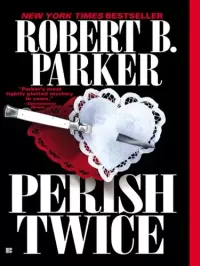
Perish Twice
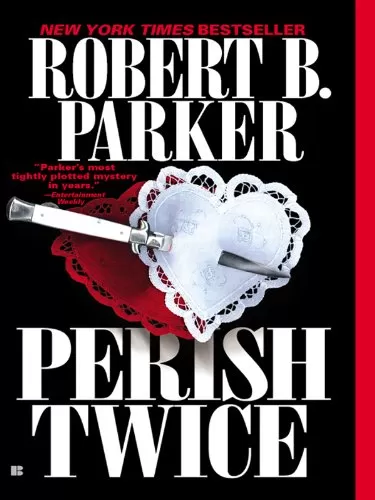
This time out, Sunny finds herself enmeshed in the problematic lives of three troubled women. The first is her sister Elizabeth, a shallow, self-absorbed neurotic who loses her bearings when her husband leaves her for another woman. The second is her old friend Julie, a professional therapist struggling to cope with the painful dissolution of her own moribund marriage. The third is a client named Mary Lou Goddard, a feminist and self-professed lesbian who hires Sunny to protect her from an unidentified stalker. Mary Lou's dilemma, with its multilayered mysteries and attendant dangers, serves as the novel's central dramatic thread.
Sunny quickly identifies the stalker as Lawrence Reeves, a pathetic middle-aged misogynist. Shortly after Sunny's first confrontation with Reeves, Gretchen Crane, Mary Lou's assistant, is murdered, ostensibly because of her slight resemblance to Mary Lou. Shortly after that, Lawrence Reeves commits -- or appears to commit -- suicide, leaving an unambiguous confession behind. Satisfied, the Boston PD closes the file on Gretchen's murder, while Sunny, not at all satisfied, continues to investigate. Her investigation carries her from the bastions of radical feminism to the sleazy underworld of organized prostitution, gradually uncovering a sordid account of twisted relationships, sexual betrayal, and blind, murderous rage.
With consummate skill, Parker moves the complex narrative back and forth across three intersecting story lines. In the process, he takes us deeply into Sunny Randall's life, an austere, disciplined existence built around her love of art, her absolute dedication to her chosen profession, and her unresolved relationship with ex-husband Richie Burke, whose family, ironically

Robert B. Parker
Robert B. Parker's résumé is familiar to most of his readers. Born and raised in Massachusetts, graduated from Colby College in Maine, married Joan Hall, had two sons, earned his Ph.D. at Boston University, taught at Northeastern University, and wrote nearly seventy books.
There are other factoids about him that are less well known. Bob's talent for rhythm was first put to work when the U.S. Army sent him to Korea as a Morse code radio operator. He always wanted to be a writer, but he needed a steady income to support his young wife and, later, his sons. Bob was hired as a technical writer first for Raytheon and then for Curtiss-Wright, which soon laid him off. He next worked as editor of a magazine for Prudential insurance agents and freelanced as a partner in Parker/Farman, the "world's smallest advertising agency."
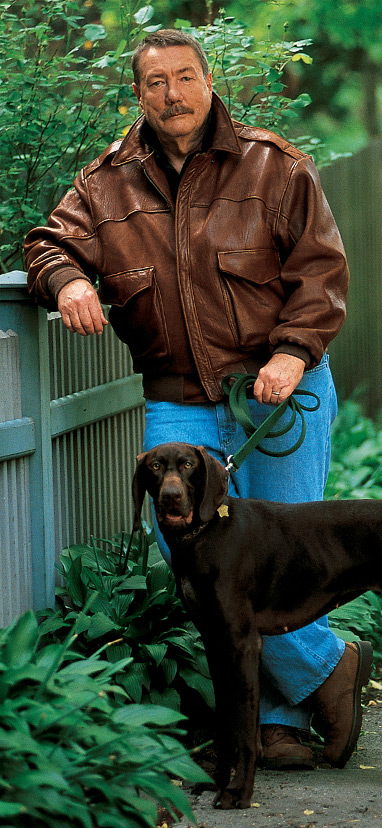 Unable to take any more of corporate America, and with no interest in advertising, Bob returned to school. The plan was to earn a doctorate, get a job teaching, and have the time to start writing seriously. While going to school, he held down as many as five college teaching jobs at once, often took care of his sons, and did odd jobs for a consulting company. Fortunately for the family, Joan had a job in education that paid well.
Sunny Randall
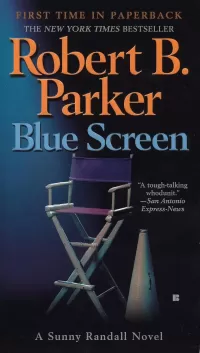
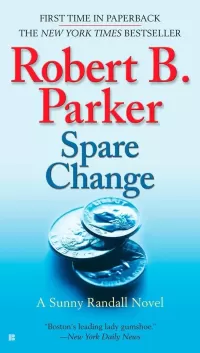
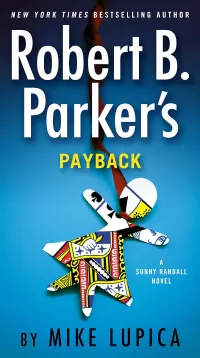
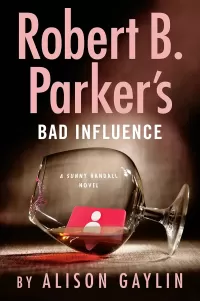
Sunny Randall consists of thirteen books and series is set to expand with the upcoming release of one more book. The current recommended reading order for the series is provided below.