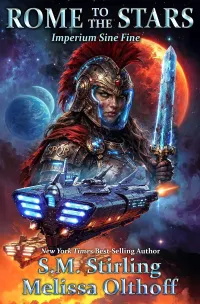
Rome to the Stars
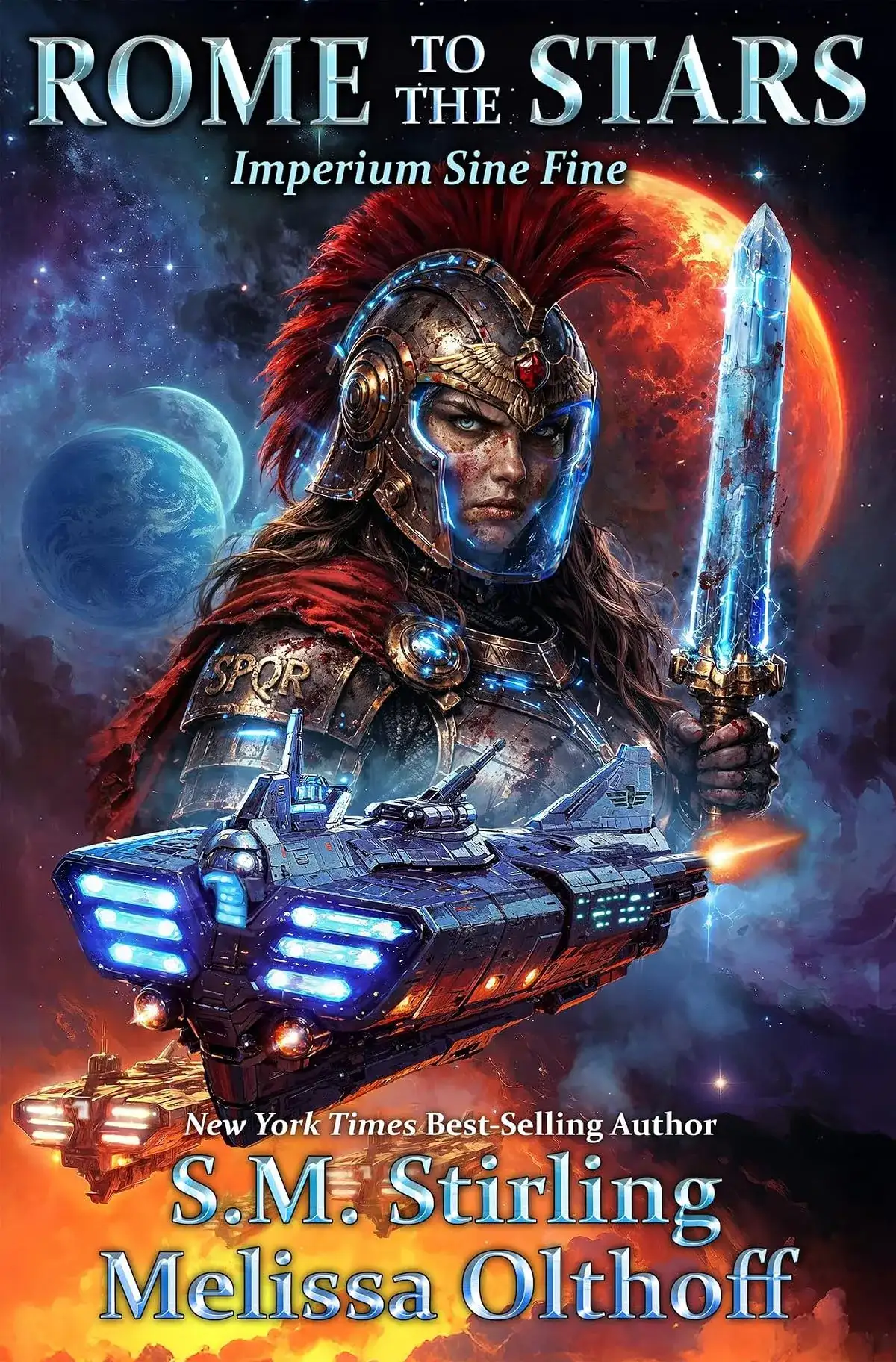
S.M. Stirling continues the new timeline where Rome never fell into ruin and, indeed, is reaching for the stars!
Rome Never Fell.
To save mankind from nuclear doom, time travelers brought future technology to a faltering Rome (as chronicled in To Turn the Tide). This Roman Empire conquered the world and united mankind before spreading across the solar system and beyond—where they discovered they hadn’t united all of mankind. Nor was Rome the only civilization expanding into the galaxy. For the first time in centuries, Rome is both challenged and once again facing barbarian hordes.
When a Roman colony world is invaded by the Gra’ak, an alliance of Fallen Empire barbarians, Emperor Marcus Verus Augustus Caesar charges what can be spared of the Roman Navy and Legions with reclaiming it. Because once a world was beneath the wings of the Eagles, it was guaranteed the protection of their talons.
Commander Aquila Amphion is tasked with leading the fleet, and she embraces the responsibility for both professional and personal reasons. The Gra’ak threatened to extinguish three million Roman citizens, among them the one man who meant more to her than any other—Evander Triarius, the scion of one of Rome’s noblest families . . . and her fiancé.
Driven by duty and love, Aquila devises a bold plan to not just save their colony, but to take the fight to the Gra’ak home world and conquer it for the Roman Empire.
Imperium sine fine.
Empire without limits.
Favored by the Gods, guarded by brave men and women, they would bring all worlds and all of far-flung humanity beneath the banner of the Roman Empire. Even the barbarians.
Readers also enjoyed






S.M. Stirling
S. M. Stirling writes speculative fiction that often begins with a single, unsettling question, what happens when the rules of civilization suddenly change? Across alternate histories, post-apocalyptic landscapes, and sweeping historical fantasies, his novels explore how societies adapt, fracture, and rebuild when technology, power, or history itself takes a different path.
Born in 1953 in France to Canadian parents, Stirling spent parts of his childhood moving between countries before eventually settling in North America. That international upbringing left its mark on his imagination. His stories frequently draw on deep historical knowledge, cultural detail, and the ways traditions survive even when the world around them collapses. Rather than focusing only on catastrophe, his fiction tends to linger on the human response, how communities organize, what values endure, and how myths and legends grow out of crisis.