Victor Dixen writes at the meeting point of imagined futures and reinvented pasts. Across science fiction, fantasy, horror, and alternate history, his novels have sent teenagers toward Mars, transformed familiar fairy tales, confronted the possibilities of artificial intelligence, and rebuilt the court of Louis XIV as a vampire-ruled empire.
Born to a French mother and Danish father, Dixen grew up with travel as a regular part of life. That international outlook continued into adulthood. He has lived in places including Paris, Denver, Dublin, Singapore, New York, and Washington, D.C., gathering landscapes and cultures that would later feed into his fiction. Another influence has been more constant: insomnia. A lifelong light sleeper, Dixen has described his sleepless nights not simply as a problem, but as companions and sources of imagination.
His first major fantasy series, The Strange Case of Jack Spark, introduced a writer already interested in the border between the recognizable world and the fantastic. Its opening novel won the Grand Prix de l'Imaginaire in 2010. Dixen received the award again in 2014 for Animale, a series that delves beneath familiar fairy tales such as Goldilocks and The Snow Queen to imagine the darker stories hidden within them.
With Phobos, his fiction turned toward space. The series follows young people chosen for a highly publicized mission to Mars, combining science fiction, romance, survival, and the disturbing possibilities of turning human lives into entertainment. The books became one of Dixen's best-known creations and strengthened his reputation among young adult readers well beyond France.
His fascination with the future continued in Cogito and Extincta. The former explores artificial intelligence and humanity's increasing dependence on technology, while the latter confronts climate change and ecological collapse. Rather than treating these subjects as distant abstractions, Dixen builds fast-moving stories around the ways technological and environmental change can reshape individual lives.
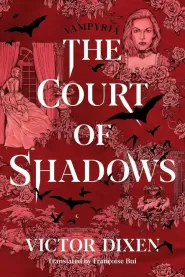
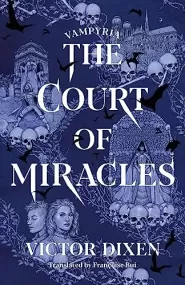
The Vampyria saga looks in the opposite direction, toward history, Gothic horror, and vampire mythology. Its alternate version of Europe imagines Louis XIV becoming an immortal vampire and creating a society in which the aristocracy literally feeds upon the people beneath it. Beginning with The Court of Shadows, the series combines the intrigue and decadence of the royal court with rebellion, horror, and supernatural fantasy. Dixen has continued expanding Vampyria beyond the central novels through stories, graphic novels, and other projects, developing it into a larger fictional universe.
More recently, his Perdido Agency books have moved into supernatural mystery, while his wider body of work continues to range across novels, short stories, and graphic fiction.
Dixen's career has brought him numerous French literary honors, including two Grand Prix de l'Imaginaire awards, the Prix Imaginales des Collégiens for Phobos, and the Prix Imaginales des Lycéens for Cogito. His books have been translated into a dozen languages, carrying his mixture of science fiction, fantasy, alternate history, and Gothic imagination to an increasingly international audience.
Despite the variety of settings, a recognizable tension runs through his fiction. Dixen is drawn to worlds that promise something irresistible, whether immortality, technological progress, another planet, or a different version of history, and then asks what that promise might cost. The future in his books can be seductive and frightening, while the past is rarely as safely buried as it first appears.