Bob Milne avatar

RISINGSHADOW BOOKSHELF

Bob Milne

Initiate· Level 15

THE READER’S VOICE

Book Reviews

Bob Milne’s own thoughts on books they have read. These are reader-written book reviews, separate from Risingshadow’s editorial reviews.

34 book reviews
Sort book reviewsSort: Date written · Newest first
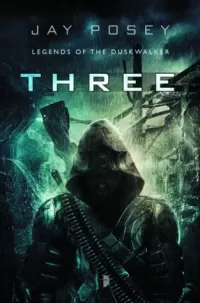
Three

BOOK REVIEW

Three

Jay Posey

8/10Written Oct 8, 2013

What would happen if Mad Max were to step into the world of The Dark Tower, aided and abetted on his journey by the likes of William Gibson and Richard Matheson? Well, you'd get something very much like Jay Posey's post-apocalyptic cyberpunk thriller, simply titled Three.

This is a book that demands a lot of the reader - a lot of patience, a lot of imagination, and a lot of faith that Posey knows where he's going with it all. He simply drops us into the middle of his world and expects us to catch up. Not only isn't there a lot of narrative exposition, there's not a lot of background or explanation provided. Terms and concepts are casually tossed around by characters who clearly know what they're talking about, but we're expected to read between the lines and pay attention to the snippets of information to figure out the larger picture. It's likely to be frustrating for some readers, especially since we never do get all the answers, but it really immerses you in Posey's world, with the mystery and the suspense a large part of the book's appeal.

In terms of characters, Three, Cass, and Wren make for a solid trio to guide us on our journey through this barren landscape. Equal parts Mad Max and Roland Deschain, Three is the mysterious loner who stands apart from everyone and everything around him. He's as coldly arrogant as he is fiercely independent, but he's also unshakably loyal, morally grounded, and altogether human beneath that harsh exterior. Cass is a complex character - damaged, addicted, and on the run. She sacrificed her own future long ago, but is desperate to preserve that of her son, while she still can. Wren is somewhat problematic, a little too perfect and precocious, but he has potential. Here is a young boy, on the cusp of something amazing, who holds a mysterious power that certain people would kill to understand.

As for the primary villains - Asher and his villainous gang of henchmen - they don't seem like much more than thugs originally, but as we learn more about who and what they are, they take on a life of their own. By the end of the story, they're not just a serviceable threat, but legitimate foils. More importantly, they're developed as characters with drives and motivations, as unsavory as those may be, and even deserving of some small dose of sympathy. Actually, they probably develop a bit better than the protagonists in that their changes are more gradual, and far less remarkable, than of Three in particular.

The world of Three is largely your typical post-apocalyptic landscape, a barren wasteland broken here and there by remnants of civilization. Much of what's left is literally underground (sewers, bunkers, tunnels, etc.), and the only safe refuge from the Weir once the sun goes down. Despite all that's been lost or destroyed, however, there remains a complex cyberpunk-type element to the world, with characters 'wired' into some sort of network that allows them to do everything from check the time to map their GPS coordinates, and others mechanically augmented with varying degrees of technology. As for the Weir, some readers will definitely be left frustrated by the lack of information regarding their true nature, but Posey seems to understand that monsters are at their most frightening when left with a little mystery. Think fast zombies with a sort of collective cyberpunk consciousness, and you get enough of an idea to truly fear when darkness falls.

It's not a perfect book, but it's damn-near. Yes, we'd all like more information and more answers, but so long as Posey delves deeper into how and why the world works in subsequent volumes, I'm quite fine with that. There's definitely a little emotional manipulation going on here that may strike some readers as a cheap ploy, particularly with Cass and Wren, but it worked for me because their relationship seemed natural/normal, and served to ground the story. The pacing is excellent and the narrative sharp, and even if the conclusion leaves us a little frustrated, it also leaves us demanding more.
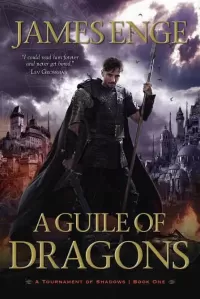
A Guile of Dragons

BOOK REVIEW

A Guile of Dragons

James Enge

6/10Written Oct 8, 2013

In this first book of his Morlock Ambrosius origin story, James Enge provides us with a 'classic' epic fantasy tale, centered around the clash between dwarves and dragons, augmented with a little alternative history, a story of parallel worlds, and a really interesting take on the Arthurian legends. It's an odd mix of storytelling elements, but A Guile of Dragons works quite well, despite a few awkward passages.

The opening chapters certainly felt a bit rushed, as if Enge were impatient to have Ambrosius grow up, without getting into the whole coming-of-age storytelling mess. Don't get me wrong, there are some authors who have done the coming-of-age thing well (Tad Williams immediately comes to mind), but all too often it feels like padding, so I'm not disappointed that Enge passed it by.

Fortunately, once we get outside the city and meet back up with Earno, the man responsible for Merlin's exile, the story really begins to pick up. There's a subtle antagonism between the two men that you can feel, and enough conflicted loyalties on both sides to really add some tension to the tale. Neither are particularly likable as protagonists, which does present a bit of a challenge - especially when the dwarves so often steal the show - but they're interesting, and admirable in their own way.

It's with the first appearance of the dragons, however, that Enge completely won me over.

The dragons broke through the clouds in groups of three, casting distorted shadows behind them by their own light. There were perhaps a dozen groups. Most of them soared steeply out of the range of sight, but three dragons flew directly to the windows of the High Hall of the East. One roosted directly before the windows (the mountain shook beneath them) and peered within: smoke and fire trailing from his jaws, his bright scales shedding red light at their edges, his slotted eyes as red and gold as molten metal.

It seems as if dragons have become somewhat passé in recent years, as gritty realism and militaristic tales have come to dominate much of the market, so it was refreshing to encounter real dragons again - intelligent, greedy, treasure-seeking, malevolent creatures, full of magic and fire. Add to that the idea of a guile, of a collared dragon claiming mastery over a group of its kin, herding them and marshaling them into a sort of army, and you've got one hell of a great story.

The writing is crisp, and flows well; the battle scenes are played out beautifully; and the characters are both complex and engaging. A Guile of Dragons isn't a particularly deep fantasy tale, although I can sense a great story waiting to be told. Perhaps readers already familiar with the character will find more nuances to the tale than I, but it's still more than adequate as an introduction to Ambrosius' world, and strong enough to make me want to read Wrath-Bearing Tree, the second book of A Tournament of Shadows.

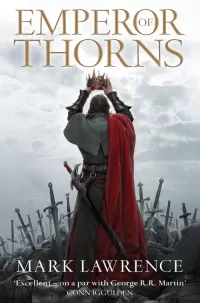
Emperor of Thorns

BOOK REVIEW

Emperor of Thorns

Mark Lawrence

8/10Written Oct 8, 2013

‘Dark times call for dark choices. Choose me.’

For all you Jorg haters out there, that one line, that simple declaration, sums up The Broken Empire better than anything I might be able to coax from my tired brain. Yes, for the second night in a row, a book has gotten its hooks into me and demanded I stay up far too late reading the final 200 pages. Fortunately, Emperor of Thorns delivered in almost every respect, defiantly answering my every conflicting emotion resulting from its predecessor, King of Thorns.

Mark Lawrence has taken the successful formula of the first two books, tweaked it, twisted it, and triumphed over the most problematic - and predictable - portions. Once again we find ourselves on a journey, but it's rediscovered some of the novelty and macabre sense of wonder that made the first book so fun. As was the case with the first two books, we have two interwoven stories, but whereas I found the flashback portion of the second book a bit weak, here it's strong enough to carry a tale all on its own. As for my concerns about the artifacts of Builder technology playing such a crucial role in the climax of the first two books, I am very pleased to say that they've proven to be completely unfounded. In fact, what Lawrence does to bring that aspect of the tale to the forefront here is one of the novel's most pleasant surprises.

Another pleasant surprise is the continuing growth of Jorg. Yes, he's a right royal bastard, and about as far from a knight in shining armor as you can get, but he's human. We saw some growth in the second book as he matured and grew into his role as king, but here we see him grow into the role of expectant father as well. Of course, that brings about a whole slew of issues, given his dark relationship with his own father, but Lawrence develops it well, making it a key focus of the story, without overdoing it. In fact, there are some very nice parallels with the first book, including a surprise appearance of the very carriage that carried Jorg's mother and brother to their doom. Sadly, Miana feels a bit wasted here, given her developed in the last book, but I thought Katherine's role in things was very nicely played out, with more than a few surprises.

An even darker book than the first two, with the Dead King's armies sweeping across the land, Emperor of Thorns still manages to provide a little dark humor, and even some genuine emotion along the way. I could have done without the interludes of Chella's story, but that's a minor quibble on my part. As for the climax . . . well, there are really two endings to the tale, both of which are extraordinarily well played. Without getting into spoiler territory, the first is largely inevitable, but still a hell of a lot of fun to watch come to fruition, while the second is a complete and utter surprise, an entirely bold choice on Lawrence's part to provide a note of finality to things.

I said in my review of King of Thorns that it was a bigger book than the Prince of Thorns in every respect, and a tale that leaves even bigger expectations. Well, even if this is a somewhat smaller and more intimate tale, it more than manages to deliver on those expectations. An entirely satisfying conclusion to an original and exciting saga. Highly recommended.

You Are Sloth!

BOOK REVIEW

You Are Sloth!

Steve Lowe

6/10Written Oct 8, 2013

Remember that spam email you received promising to share millions of dollars if you'd just share your bank account with the spouse of some crooked African dictator? How about the one where some 'gorgeous' Russian girl with a vocabulary south of the bimbo mark begs you for the pleasure of calling her 900 number? Or what about the one threatening absolute catastrophe if you don't immediately forward the message to 20 of your closest friends? If you've ever had even a passing thought of opening one of those ticking e-bombs, Steve Lowe has a word of caution for you:

"Why you are sloth? Because fuck you is why! HAHAHAHAHA!!1!"

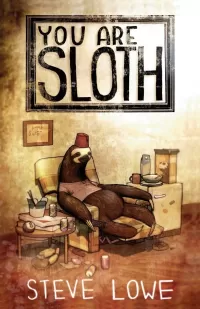
It is with that pithy, English-as-a-third-language, taunt that everything begins going wrong for the reader - because, as the title suggests, YOU are the protagonist. Magically transformed into an honest-to-gosh sloth, complete with yellow claws, a furry back, and an extraordinary long tongue, you're left to play everything from cute wingman, to furry target of gay men's affections, to vengeance-seeking superhero. This is one rude, crude, and lewd adventure, filled with ridiculous toilet humor, the worst kind of gay stereotypes, and a rather piss-poor opinion of humanity. It's also wildly imaginative, very funny, and even pithy and insightful, provided you can allow yourself to see through the Bizarro spectacle.

Lowe is definitely one of the more accessible authors of the genre, somebody who gives as much attention to telling a story as to exploring the surreal. His narrative is simple and free-flowing, without playing any sort of literary tricks to confuse or amuse. In addition, his characters actually have a personality, and develop through the course of the story. His story is deliberately offensive in many ways, but as a caricature or over-the-top parody, never as a mean-spirited attack. There are some Bizarro titles I skim through for scenes that catch my eye, and others that I read cover-to-cover . . . Lowe is definitely one of the latter, and a gentleman I need to read more of.

Into the Storm

BOOK REVIEW

Into the Storm

Taylor Anderson

6/10Written Oct 8, 2013

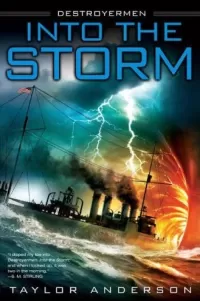
A contemporary battleship being sent back to prehistoric times would have been interesting enough, but making the ship a WWI destroyer that is already failing when pressed into WWII service is a nice touch, and making that prehistoric world an alternate one, populated by a cat-like race at war with a reptilian one, is fantastic.

As sea-fairing military thrillers go, this a solid read. I tend to gravitate more towards submarines than destroyers when looking for a naval adventure, but the historical aspect was more than enough to pique my interest. The characters were all nicely developed, with a few standouts that I hope get more page time as the series continues. In terms of world-building, this is more establishing a concept than truly executing on it, but Anderson lays out enough detail to make the story work, and to make you want to keep reading. The clear delineation between the 'good' race and the 'bad' one is a bit simplistic, so I hope he blurs that line a bit in subsequent volumes. I'm really interested to see how the tentative American/Japanese true develops, and would be disappointed if Anderson didn't blur some lines there as well, particularly in terms of alliances with the new races.

There's a lot of potential here, and while I'm not sure it can sustain eight books (which is where the series stands today), I'm more than willing to go along for the ride and see how long the fun lasts. It's a book full of ideas that have been done before, but never quite in this manner. As for the writing, it's a bit cold and simplistic to start, but I could feel Anderson becoming more and more comfortable as the book progressed, with bodes well for future volumes.

King Breaker

BOOK REVIEW

King Breaker

Rowena Cory Daniells

8/10Written Oct 8, 2013

Not to be deliberately facetious, but I only had two concerns with King Breaker, the conclusion to King Rolen's Kin - namely, the beginning and the end. That's not to say that this is, by any means a bad book, or that Rowena Cory Daniells did, in any respect, a poor job of wrapping up the various threads left hanging after The Usurper. Far from it. It's simply an acknowledgement of where I had issues.

Let's start with the beginning. Granted, Daniells had a lot to catch up on in terms of characters and plot threads, but I found the opening chapters to be a very slow read. There's a lot of talk, a lot of angst, and a lot of shared frustration, but nothing that really moves the story forward. For the most part, it's a lot of set-up and maneuvering of game pieces, setting up the reunions and confrontations that we know will drive the heart of the story. We're actually a good 150 pages in before the story really takes off, but once it does, it's just as good - if not better - than any of the books that came before.

While the entire saga has largely been Byron's story, the other main characters get a lot of time centre stage in this final volume. Fyn's story is likely my favorite and, if not the strongest, one of the most pivotal. He really struggles with his loyalties, stuck somewhere between love and duty, and I thought Daniells carried his story well. Florin's story I didn't care for quite as much, mainly because it felt so drawn out, but for a character who really emerged from the second tier to become a viewpoint character, it certainly has it's moments. Garzik's story is, by far, the darkest of the lot, with some really difficult scenes to watch him suffer through, although Daniells, quite mercifully, doesn't dwell on the details. Like Fyn, he's very much trapped between divided loyalties, and his growth over the course of the series is nothing short of remarkable.

After being physically separated and emotionally distanced from one another for so long, it was nice to see Byron and Orrade together again. I think Daniells may have tried a little too hard to restore their friendship, and to prove Byron was over his homophobia, but there's no denying that there's real power to that friendship. Their early scene involving a man overboard, a dead wyvern, and a very intimate sort of healing is one of the series' finest moments. As for Piro, her story was, for me, the weakest of the lot - but a lot of that likely has to do with the fact that I never found her to be a likable character, and didn't find her relationship with Siordun nearly as interesting once his true identity was out in the open.

That brings us, of course, to the ending. While Daniells did a solid job of wrapping up the key story threads, and providing a resolution to all of the key character arcs, I had honestly hoped for something a bit . . . well, happier and uplifting. There are certainly some triumphs to be celebrated, and some happy endings for a few characters, but the overall tone is rather melancholy and troubled. I think it's absolutely a strong ending (not to mention a brave one), and one that's entirely realistic, given the social and political realities of her world, but it was just a bit more gritty than I had hoped for.

My own minor quibbles aside, King Breaker was a solid, largely satisfying end to the saga. There's certainly room for Daniells to revisit the characters again, should she choose, but there are no cliffhangers or nagging questions like there were with The Usurper. If you're a fan of the series, then this final volume should be precisely what you're looking for. If you're new to the series, then step back and begin with The King's Bastard - you won't regret it.

The Companions

BOOK REVIEW

The Companions

R. A. Salvatore

4/10Written Sep 18, 2013

It's been a very long time since I last read a Drizzt Do'Urden novel, much less anything set in the Forgotten Realms, so I was excited about the opportunity to reacquaint myself with R.A. Salvatore's heroic dark elf and find out how his companions fared. Sadly, I should have either saved myself the trouble, or taken the time to investigate what The Sundering is all about.

Basically, The Sundering is the story of giant reboot, designed to shoehorn existing characters and settings into a 'simplified' set of 5th edition rules, to be dubbed D&D Next. The Companions is the first book of that reboot.

I don't like reboots.

As the story begins, Drizzt's friends (all of whom are deceased), find themselves reincarnated, with all of their memories intact, and a shared purpose to meet again and resume their companionship. Um, yeah. Silliness aside, the resurrection of Wulfgar is probably the last thing I remember of Forgotten Realms, and that mistake is a large part of what caused me to drift away. So, to multiply that mistake with the likes of Regis, Cattie-brie, and Bruenor, is to ensure the series gets off to a rocky start. It felt like a Terry Goodkind-like attempt to artifically extend a series, except he does it by taking away powers and memories, whereas Salvatore does it by giving them back. As for Drizzt, he's more of a framing device and less of a character here, which is a shame because he's always been the most interesting of the lot.

So, basically, what we get here are three heroes, trapped in the bodies of children, forced to pretend they don't know or remember things that should be impossible. It's an awkward kind of coming-of-age story, and while it does have its interesting moments, it all feels very scattered - which is not surprising when you're following multiple characters across two decades. There are some snippets of battle scenes, and some other adventures that evoked memories of earlier books like The Crystal Shard, but it somehow all feels artificial. What's more, there was no doubt, no tension, and no real suspense as to whether they would all make it to their eventual rendezvous . . . not to mention a climax that just falls flat.

I could be wrong, and my reading may be colored by the end-goal of The Sundering, but it all felt like a story Salvatore was told he had to provide, not an adventure he wanted to write. It's not necessarily a bad book - die-hard readers of Forgotten Realms will likely enjoy it - but, for me, it lacked the magic and the mystery I remembered from my original adventures with Drizzt.

Knowing what I know now about The Sundering, I doubt I'll continue with the series.

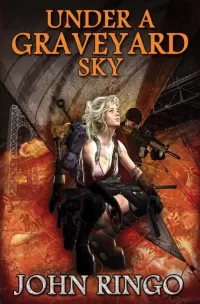
Under a Graveyard Sky

BOOK REVIEW

Under a Graveyard Sky

John Ringo

7/10Written Sep 18, 2013

All things considered - and it definitely did have its flaws - Under a Graveyard Sky was probably one of the better apocalyptic tales I've read in a long time, and certainly one of the best zombie tales in recent memory. Rather weak and unbelievable in terms of characters, but very strong in terms of action and plot, John Ringo has pulled together a novel that is sure to please his fans, and potentially win him some new ones.

The book starts on an awkward note, plunging us right into the action, without so much as an introduction to the characters involved. It was so disconcerting that I nearly abandoned it, but the way in which Ringo approached the situation intrigued me. He puts the fate of the world not in the hands of the military or the authorities, but in an investment bank and a well-connected family of 'preppers'. I'm sure there's a socio-political statement there for Ringo, and the bank's resources stretch the bounds of credibility somewhat, but it's an interesting approach that actually makes a lot of sense, once the shock factor wears off.

It's that family which introduces the primary weakness, however, particularly thirteen-year-old Faith the Zombie Slayer. Seriously, you might as well call this girl the next chosen one, except she's all about the high-powered assault weapons instead of the stakes and crossbows. It's ludicrous how well prepared she is, and the ease with which she wades into danger and so gleefully delivers death to the infected is over-the-top and then some. There's actually a point where another character is shot down when he assumes her dad must have been a Buffy fan. She's a likable enough character, and could definitely work in a supernatural setting, this is a book that's deliberately grounded in realism - so much so that Ringo constantly reminds us that the zombies are dangerous, incurable, infected human beings . . . not the living dead.

The zombies themselves are part of what I really liked about the book. There's no supernatural or mystical element here. The zombies are the product of a man-made virus, deliberately designed to be both air-borne and blood-borne for maximum dispersal. It turns its victims into raging, mindless, homicidal maniacs with a hunger for human flesh. There's no cure, and no halting its spread. Although the bank has managed to develop a vaccine by harvesting the spinal cords of living zombies, they are only good for about a dozen doses each.

The first half of the book details the initial spread of the zombie outbreak, with life struggling to continue as normal for as long as possible. We see the police struggle to deal with a situation using tasers and batons, when deadly force is the only real option, while the government limits itself to identifying the source of the plague, rather than curing it. It's a slow descent into madness for civilization, with the first half of the book ending in a brutal bloodbath at a drug-fueled endless rave in Washington Square Park. It's so surreal that it seems plausible, and it makes for fantastic transition to the second, post-apocalyptic half of the novel.

The second half of the book has a far slower pace, and really lacks the sense of urgency that comes from trying to escape impending doom, but it's where the story really develops. Faith and family set out to sea, where they search for other boats and ships to cleanse, rescue, and recover. As if battling zombies weren't tough enough, imagine doing so in the dark, claustrophobic depths of strange ships, adrift at sea. It makes for some great reading, and evolution of their makeshift civilian navy is really interesting to watch develop. Here's where the book is its most political, in discussing how to best organize and implement a new regime, with a lot of dialogue about historical precedent that comes close to being tedious, but is smartly resolved just in time.

That brings us to the final flaw of the novel - basically that it just stops. There is a climactic set-piece to rival the rave in Washington Square Park, appropriately described by one of the characters as Resident Evil: The Cruise Ship, but it doesn't actually resolve anything. The reluctant arrival of the remnants of the US navy is a nice twist, particularly with them unable to do anything more than watch and advise, but all that really does is plant some seeds for the second book - nothing has been accomplished or resolved. There's no cliffhanger either (Ringo manages to avoid that source of reader wrath), but it does feel very much like an unfinished tale.

All things considered, Under a Graveyard Sky was an enjoyable take on the zombie apocalypse. So long as the second book makes some attempt to deal with Faith's impending breakdown, delivers on the promise of multinational intrigue, resolves the 'lost' storyline of Steve's brother and the exodus of investment bankers, and doesn't jump the shark on the zombie infestation, we could be in for a good series.

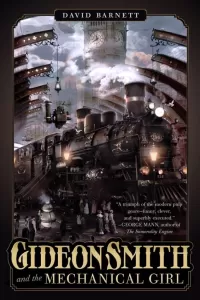
Gideon Smith and the Mechanical Girl

BOOK REVIEW

Gideon Smith and the Mechanical Girl

David Barnett

9/10Written Sep 18, 2013

Next to perhaps River of Stars and The Marching Dead, both of which I went into with high expectations, I don't think I've enjoyed a book this year as much as I did Gideon Smith and the Mechanical Girl. From the concept to the characters, I enjoyed every aspect of it and came away wanting more . . . much more.

David Barnett's novel has been called "the ultimate Victoriana / steampunk mash-up" but that doesn't begin to describe it. It's also an old-fashioned horror story, a penny dreadful romp around the world, and an adventure worthy of Indiana Jones. Barnett takes us from the streets of London to the sands of Egypt, and from the dizzying heights of battling dirigibles to the claustrophobic depths of ancient pyramids, all with vampires, mummies, devil dogs, and monstrous frogs along for the ride.

More than anything, however, this is a tale of heroes. It's a story about heroes lost and found, made and unmade. It's a story about what makes a hero, why we worship them, and why the world needs them. It's also a story about how heroes can be found in the unlikeliest of places. Gideon Smith starts the novel as a shy young man in search of a hero to delve into the mystery hidden below the cliffs; a mystery that he is certain claimed the life of his father's crew. It's a search that brings him into contact with the likes of Bram Stoker and Elizabeth Bathory, as well as the mechanical girl who captures his heart. Ultimately, it's also a journey that brings him to the realization of his own innocent brand of heroism.

As for the mechanical girl who makes up the other half of the title, Maria is a fascinating creation who doesn't get nearly the page time she deserves. She's a fully fledged character, as likable as she is sympathetic, but she's more of a catalyst than a character. It's a search for answers and a desire for vengeance that takes Gideon Smith through the first half of the novel, and a love for Maria that carries him through to the end. She does have a pivotal role to play in the story, both as a peril and a power in the climactic showdown. I won't spoil the adventure with details, but it's safe to say a mechanical girl pales in comparison to what rises from the depths of the pyramid at the end.

In the end, there's not just room for a sequel here, but a cliffhanger that demands it. That's not to say Gideon Smith and the Mechanical Girl isn't a complete story on its own, because it is, but like the best of the penny dreadfuls it leaves us with us with the start of a whole other adventure. Exciting, adventurous, and exceptionally well-told, filled with equal parts amusement and astonishment, this is sure to be a fixture of best-of lists come the end of the year.

Evil Children of Naor

BOOK REVIEW

Evil Children of Naor

Justyna Plichta-Jendzio

8/10Written Sep 18, 2013

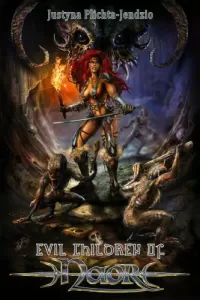
For a moment, forget the old adage about not judging a book by its cover. Take a look at the glorious cover to this collection of tales - look close and appreciate not just the detail that went into it, but the elements that are scattered throughout. Dark and fantastic, magical and horrific, it is one of those rare instances where the material inside delivers precisely upon expectations.

Much like she did in her first collection, Dark Children of Naor, Justyna Plichta-Jendzio has created another work of classic/traditional fantasy here that weaves together fully realized characters and complex monsters - some of whom are one and the same - and some very dark fairy-tale like themes.

With Evil Children of Naor we are once again presented with a trio of stories, linked both thematically and by their shared world. Here, the fight is against an evil within, which raises some interesting questions about who we are born to be and who we choose to become.

The first story, featuring Namaris' fateful confrontation with the truth about her parentage, is the perfect choice to kick off the collection. It really sets the tone in terms of pacing and subject matter, and quite cleverly lulls the reader into a false sense of comfort before letting the clues begin to slip. Tarion's story is as different from the first as he is from the lovely Namaris, but it was probably my favourite of the three. While the each story had its strength, there was something about the flawed sort of heroism there that called to me. Jansemi's story brings us full circle, in a sense, with a story that echoes some of the themes of Namaris, but which is entirely it's own narrative.

If you enjoyed your first trip to Naor, then you are certain to enjoy this return visit. If you are new to Justyna Plichta-Jendzio's world, however, fret not. Evil Children of Naor can most certainly be enjoyed as a standalone collection of tales, and loses nothing with being read first. You will notice I said 'first' . . . because you will want to back and read Dark Children of Naor as well.