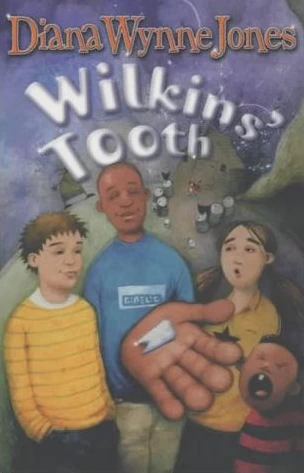
Wilkin's Tooth
Wilkin's Tooth is also known as Witch's Business (US edition, 1974).
OWN BACK LIMITED – it seemed like a marvellous scheme! Frank and Jess had set up the business because they needed money – their pocket-money had been stopped just when Frank owed Buster Knell ten pence. Their father had put a quick stop to ERRANDS RUN, so why not try something that was bad instead? Something like arranging for Buster Knell to fall down a man-hole and charging five pence... dreadful things that other people didn't dare to do? So they pinned up the notice on the potting-shed – REVENGE ARRANGED, PRICE ACCORDING TO TASK, ALL DIFFICULT TASKS UNDERTAKEN, TREASURE HUNTED, ETC.
The first customer to take the idea seriously was Buster Knell himself. He said he'd let Frank off the 10p if Frank would help him get his revenge on Vernon Wilkins, who'd knocked his tooth out – what Buster wanted was one of Wilkins' teeth in return. That was a bit of a problem, but luckily Vernon's small brother was just loosing a tooth...
Then the two strange girls from the cheese-coloured house by the allotment wanted to get their own back on Biddy Iremonger, who was rumoured to be a witch, and who, they said, had put a spell on them. Quickly, news of the business spread and more children became entangled in the web of plots and mystery, while Biddy Iremonger also felt she had a right to revenge herself – and perhaps she really was a witch?