Cage of Souls
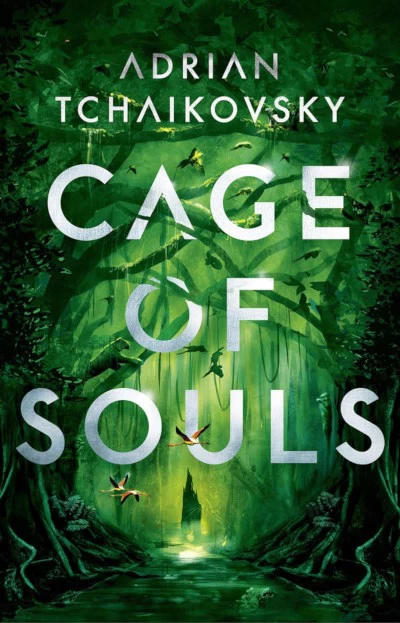
The Sun is bloated, diseased, dying perhaps. Beneath its baneful light, Shadrapur, last of all cities, harbours fewer than 100,000 human souls. Built on the ruins of countless civilisations, surviving on the debris of its long-dead progenitors, Shadrapur is a museum, a midden, an asylum, a prison on a world that is ever more alien to humanity.
Bearing witness to the desperate struggle for existence between life old and new, is Stefan Advani, rebel, outlaw, prisoner, survivor. This is his testament, an account of the journey that took him into the blazing desolation of the western deserts; that transported him east down the river and imprisoned him in verdant hell of the jungle's darkest heart; that led him deep into the labyrinths and caverns of the underworld. He will treat with monsters, madman, mutants. The question is, which one of them will inherit this Earth?
Readers also enjoyed




Adrian Tchaikovsky
In the realm of speculative fiction, where the boundaries between science and imagination blur, Adrian Tchaikovsky writes with the precision of a biologist and the curiosity of a philosopher. Known for weaving evolutionary theory into alien worlds and giving sentience to the most unexpected of creatures, he crafts stories that challenge not just what it means to be human—but what it means to be alive.
Tchaikovsky’s breakout novel, Children of Time, didn’t just introduce readers to a distant planet populated by hyper-intelligent spiders—it redefined what readers expect from space opera. Bold, cerebral, and emotionally resonant, the book went on to win the Arthur C. Clarke Award, with its sequel Children of Ruin deepening the saga’s exploration of consciousness, cooperation, and survival. In 2023, the Children of Time series earned the Hugo Award for Best Series, a fitting recognition for stories that dare to look evolution in the eye and ask: what if?
More books by Adrian Tchaikovsky