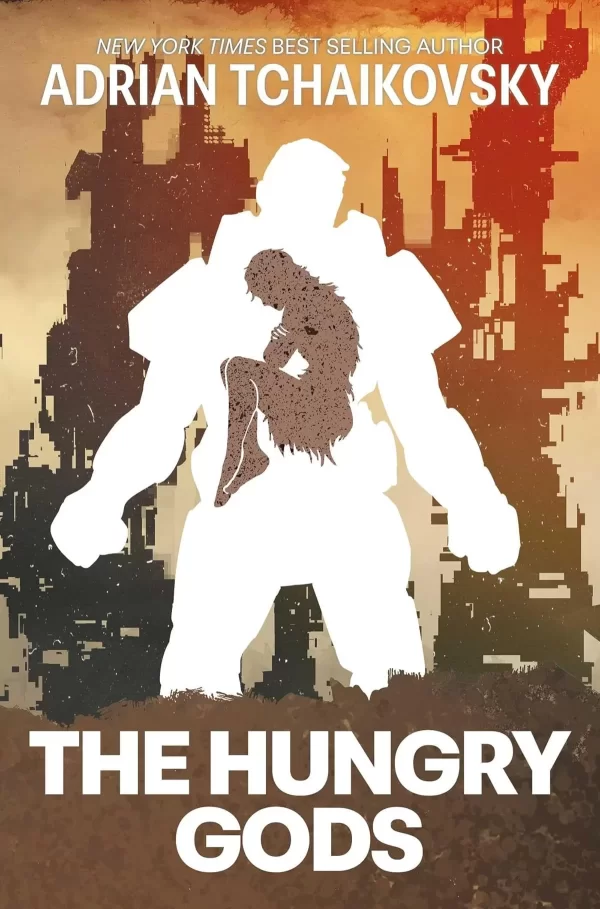
The Hungry Gods
The Gods have returned to the world.
Amri was a Rabbit, one of a tribe of survivors scratching out an existence in the blasted landscape of a shattered, poisoned world. The Seagull fight, the Pigeon trade and the Cockroach scavenge, but the Rabbit had one rule: If you want to see tomorrow, you run.
But they didn’t run fast enough when a weapon fell from the sky and consumed their home, and now Amri is alone, in the company of a fallen god named Guy Vesten. A god who promises revenge against the three gods who turned against him, and who killed her tribe.
But gods don’t die easily. Guy will need followers, like any god, and warriors to aid him in his quest. And if Amri is to find a place in the world that is to come, she may as well be standing at his right hand, as his priestess…
Readers also enjoyed
Adrian Tchaikovsky
In the realm of speculative fiction, where the boundaries between science and imagination blur, Adrian Tchaikovsky writes with the precision of a biologist and the curiosity of a philosopher. Known for weaving evolutionary theory into alien worlds and giving sentience to the most unexpected of creatures, he crafts stories that challenge not just what it means to be human—but what it means to be alive.
Tchaikovsky’s breakout novel, Children of Time, didn’t just introduce readers to a distant planet populated by hyper-intelligent spiders—it redefined what readers expect from space opera. Bold, cerebral, and emotionally resonant, the book went on to win the Arthur C. Clarke Award, with its sequel Children of Ruin deepening the saga’s exploration of consciousness, cooperation, and survival. In 2023, the Children of Time series earned the Hugo Award for Best Series, a fitting recognition for stories that dare to look evolution in the eye and ask: what if?