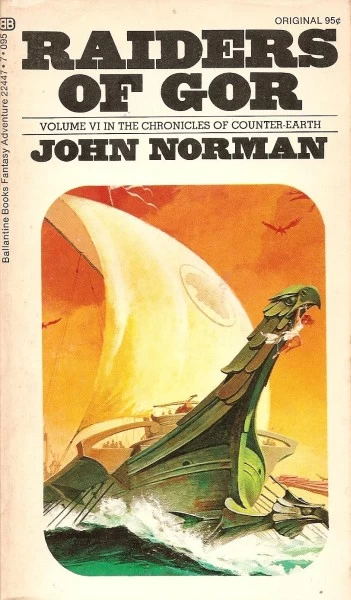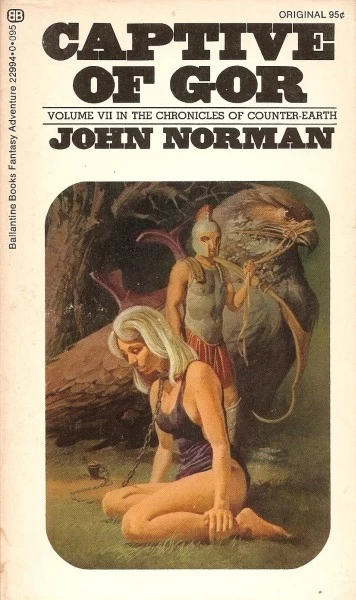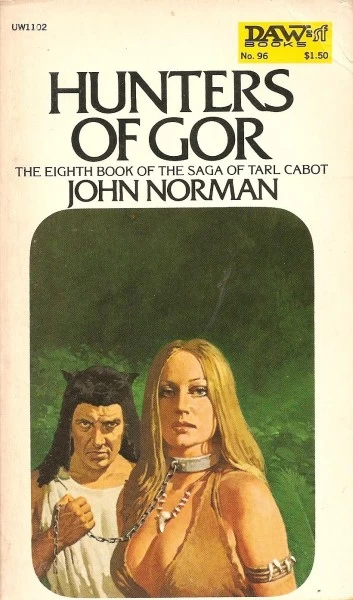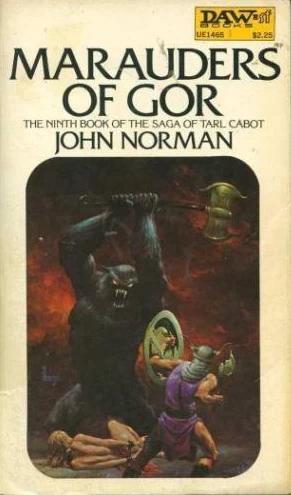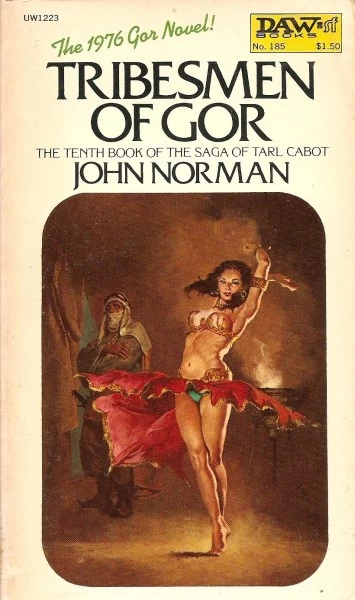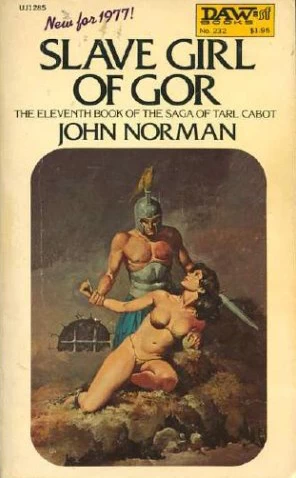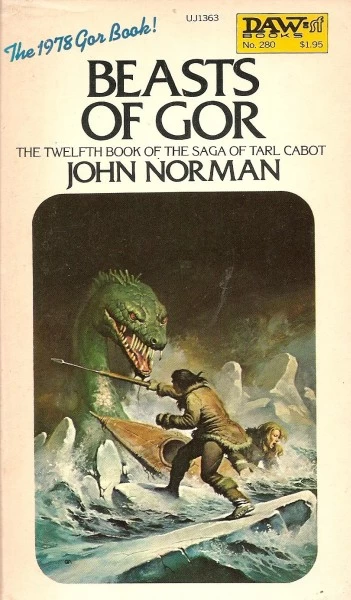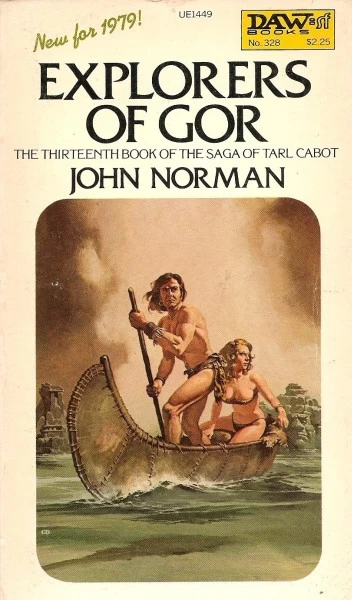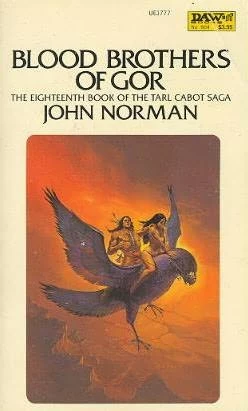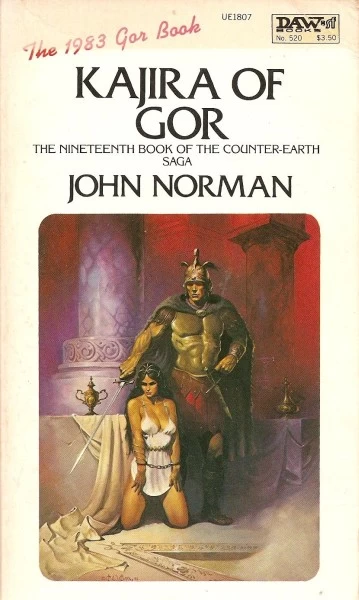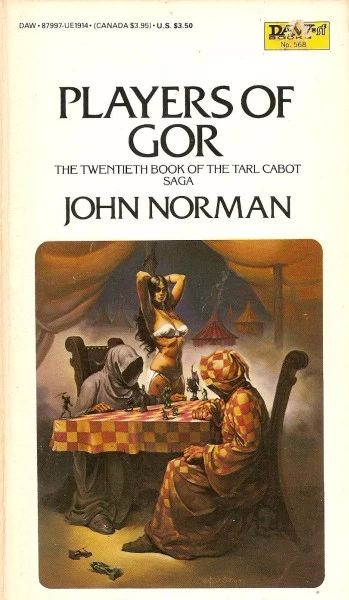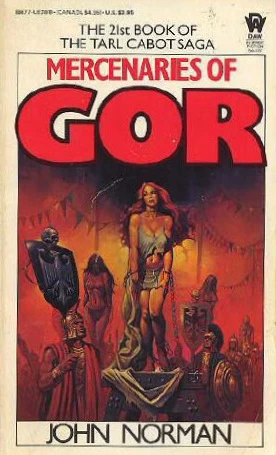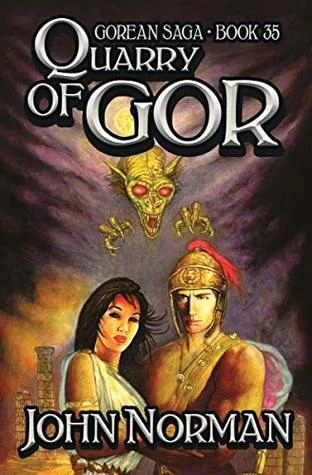
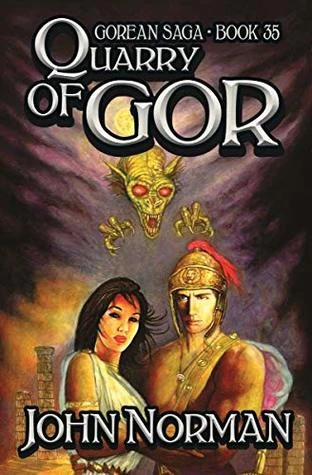
Quarry of Gor
A well-to-do, upper-class young woman, intelligent, fashionable, educated, strikingly beautiful, exploitative, selfish, and haughty, a despiser of men as she knows them, taking them all as manipulable weaklings, meets a mysterious, unsettlingly attractive male at a cocktail party, one who is not only distant and seemingly immune to her brandished charms, but who seems to hold her, to her disgruntlement and indignation, in a subtle contempt.
Later her life undergoes an unexpected, dramatic, and radical change. Seized and shipped with others as cargo, as human cattle, to the beautiful, green, fresh, perilous world of Gor, she finds she is now only an object and beast, a slave. She is collared and branded. Her clothing, if any, and her food, as it might be, are now at the whim of others. She learns to kneel, to address the free as “Master” or “Mistress,” to strive to be pleasing, to obey immediately, beautifully, and without demur, in all things and in any respect, and to kiss a whip and hope that it will not be used on her. Later she meets again, on Gor, the mysterious man she met long ago at the cocktail party, only now she is before him, collared and branded, in a rag, on her knees, a lowly slave.
Readers also enjoyed
John Norman
Long before his name became a lightning rod in speculative fiction circles, John Norman was simply John Frederick Lange Jr.—a philosophy professor with a fascination for power, myth, and the boundaries of human freedom. That academic lens never quite left his work, even as he stepped into the realm of science fiction and fantasy, where he would go on to build one of the most controversial and enduring cult sagas in genre history.
Norman is best known for his Chronicles of Gor, a sweeping sword-and-planet epic that began in the late 1960s with Tarnsman of Gor and sprawled into dozens of books. Set on a parallel world governed by a blend of ancient ideals, warrior cultures, and interplanetary manipulation, the series is equal parts philosophy text and adventure tale. It isn’t just escapism—it’s a provocation. Themes of dominance, societal roles, and nature vs. civilization form the backbone of his worldbuilding, often pushing readers to wrestle with questions that reach far beyond fiction.
Chronicles of Gor
On the surface, Gor is a mirror of Earth—similar in geography, touched by echoes of ancient civilizations—but beneath its twin moons lies a world ruled by vastly different codes. The Chronicles of Gor isn’t just a science fiction series—it’s a sprawling philosophical epic that explores the primal architecture of power, identity, and control through the lens of speculative culture.
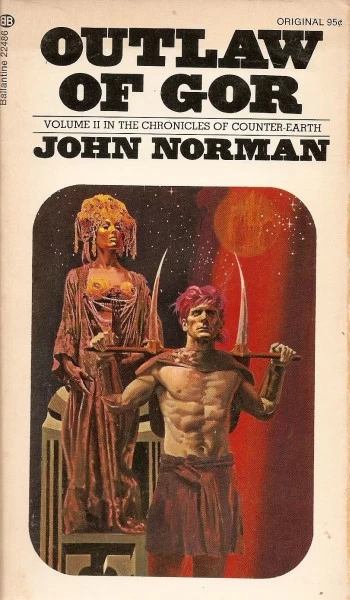
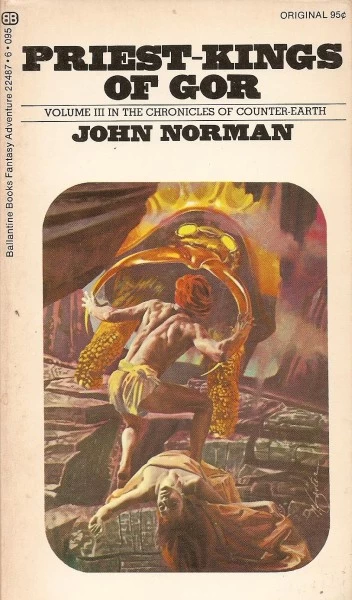
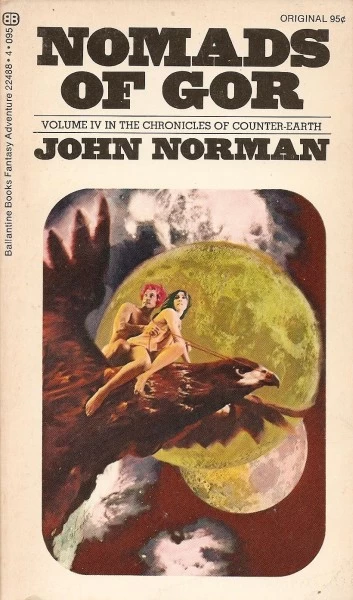
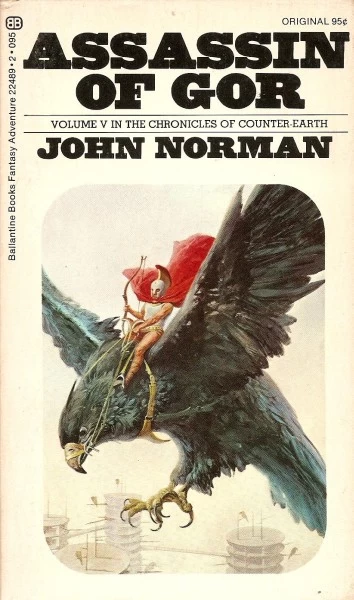
Chronicles of Gor consists of thirty-eight books and series is set to expand with the upcoming release of one more book. The current recommended reading order for the series is provided below.