Invasive Procedures
Based on the Card's short story Malpractice (1977).
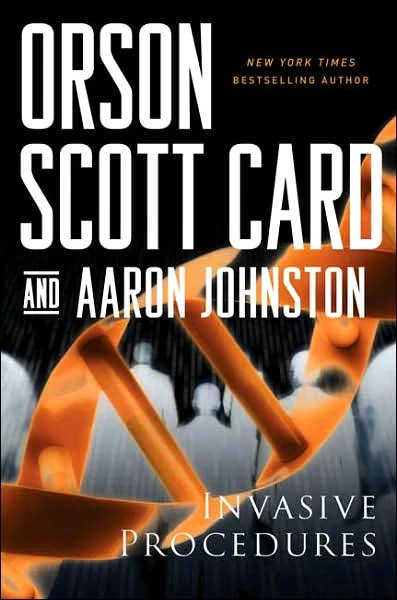
George Galen is a brilliant scientist, a pioneer in gene therapy. But Galen is dangerously insane – he has created a method to alter human DNA, not just to heal diseases, but to “improve” people – make them stronger, make them able to heal more quickly, and make them compliant to his will.
Frank Hartman is also a brilliant virologist, working for the government’s ultra-secret bio-hazard agency. He has discovered how to neutralize Galen’s DNA-changing virus, making him the one man who stands in the way of Galen’s plan to "improve" the entire human race.
This taut thriller takes the reader a few years into the future, and shows the promise and danger of new genetic medicine techniques.
Readers also enjoyed








Orson Scott Card
Before Ender’s Game became required reading in classrooms and a touchstone for science fiction fans worldwide, it was just a short story—one that Orson Scott Card wrote while trying to understand how humanity might survive its own genius. That idea, born of curiosity and a deep interest in moral complexity, would eventually grow into a sprawling series exploring war, empathy, leadership, and the loneliness of brilliance.
Born in Richland, Washington in 1951 and raised mostly in Utah and California, Card grew up in a family where storytelling was a living thing—spoken, passed down, constantly evolving. Though he began his career writing plays and studying literature, he found his true voice in speculative fiction. And when he wrote Ender’s Game—and later Speaker for the Dead—he did something science fiction rarely dared at the time: he treated the genre as a tool for exploring the human soul.
More books by Orson Scott Card