Risingshadow
Speculative Fiction Books
  • About
    • Home
    • Articles
    • About Us
    • Contact Us
    • Privacy Policy
    • Terms of Service
    • Staff Members
    • Newsletter
    • Finnish (FI)
  • Books
    • New Releases
    • Coming Soon
    • Books of the Year
    • Bookshelves Activity
    • Recently Added
    • Advanced Search
    • Reviews / Comments
    • Genres and Tags
    • * Submit Book
  • Community
    • Discussions
    • - Recent Messages
    • - Recent Topics
    • - Hot Topics
    • - Popular Topics
    • - Search
    • CHALLENGES
    • - Reading Challenge
    • - Book Trivia Quiz
  • Home
  • Books
  • Orson Scott Card
  • Mither Mages
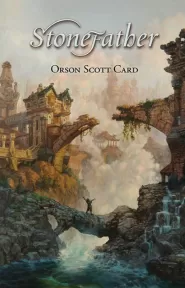
  • Stonefather

Stonefather

Mither Mages
by Orson Scott Card
Stonefather (Mither Mages) by Orson Scott Card
Unrated

A novella. Illustrations by Tom Kidd.

When Runnel leaves his mountain valley to head for the great city of the water mages, he has no idea of his own magical talents. But he soon finds that without meaning to, he complicates and then endangers the lives of everyone he comes to know and care about. For when it comes to magic, there are rules and laws, and the untrained mage-to-be must be careful not to tap into deep forces and ancient enmities. Other people might end up paying the price for his mistakes.

Stonefather is set in the same world as the multivolume Mithermages series.

Amazon: Check Best Offer

Fantasy
Release date: November 18, 2008

Book Order
Amazon
Kindle
Audible
Amazon CA
Amazon UK
Amazon Europe

Your Rating
☆☆☆☆☆☆☆☆☆☆
Standard Shelves

Readers also enjoyed

Free the Darkness (King's Dark Tidings #1)
★ 9.38 / 16
The Lions of Al-Rassan
★ 9.28 / 14
The Name of the Wind (The Kingkiller Chronicle #1)
★ 9.18 / 182
The Lord of the Rings (The Lord of the Rings)
★ 9.12 / 168
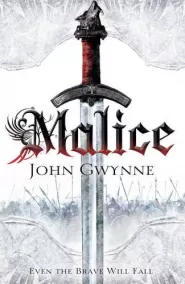
Malice (The Faithful and the Fallen #1)
★ 9.08 / 12
The Scar (Bas-Lag)
★ 9.06 / 20
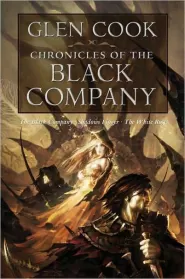
Chronicles of the Black Company (The Black Company (omnibus editions) #1)
★ 9.00 / 14

Join the Discussion
You can post as a guest or sign in for more features.
Have questions about this book or want to share your thoughts? Join the conversation!
Orson Scott Card

Orson Scott Card

Before Ender’s Game became required reading in classrooms and a touchstone for science fiction fans worldwide, it was just a short story—one that Orson Scott Card wrote while trying to understand how humanity might survive its own genius. That idea, born of curiosity and a deep interest in moral complexity, would eventually grow into a sprawling series exploring war, empathy, leadership, and the loneliness of brilliance.

Born in Richland, Washington in 1951 and raised mostly in Utah and California, Card grew up in a family where storytelling was a living thing—spoken, passed down, constantly evolving. Though he began his career writing plays and studying literature, he found his true voice in speculative fiction. And when he wrote Ender’s Game—and later Speaker for the Dead—he did something science fiction rarely dared at the time: he treated the genre as a tool for exploring the human soul.

Read more ...

Card’s stories often revolve around young protagonists placed in impossible moral situations—characters like Ender Wiggin, whose tactical genius hides a tortured conscience. Rather than romanticizing heroism, Card leans into the consequences of power, especially when it’s given to children. His work blends emotional depth with high-stakes storytelling, and he’s known for his skill in portraying complex interpersonal dynamics, particularly within families and communities.

He is one of the few authors to win both the Hugo and Nebula Awards two years in a row—first for Ender’s Game and then for Speaker for the Dead—an achievement that reflects both critical acclaim and cultural resonance. But even beyond the Enderverse, Card has ventured into historical fiction, fantasy (The Tales of Alvin Maker), and even religious commentary, always writing with a voice that challenges, provokes, and invites reflection.

Card’s influence in science fiction is undeniable, but his writing often resists the genre’s traditional boundaries. His characters are rarely just heroes or villains—they're people shaped by trauma, faith, and moral ambiguity. That willingness to dig beneath the surface has drawn both admiration and controversy, making his career one of the most talked-about in modern speculative fiction.

In one interview, Card remarked, “Every person is the center of their own story.” It's a philosophy that underpins much of his work—whether he's writing about a child commander in deep space or a young visionary reshaping early America. For readers willing to grapple with big questions, Card’s books don’t offer easy answers—just the kind that stay with you.

Mither Mages

Mither Mages consists of three primary books, and includes one additional book that complement the series but is not considered mandatory reads. The current recommended reading order for the series is provided below.
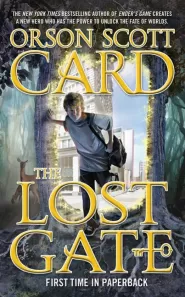
The Lost Gate (Mither Mages #1)
★ 9.00 / 6
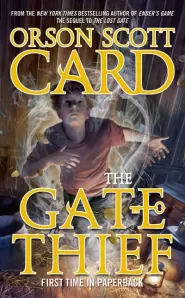
The Gate Thief (Mither Mages #2)
Unrated
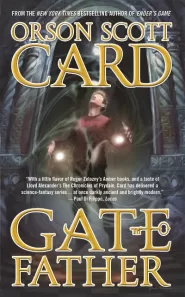
Gatefather (Mither Mages #3)
Unrated
Stonefather (Mither Mages)
Unrated


^ Top
Follow Us: Newsletter | Facebook | X | Mastodon | RSS
Hosted by Planeetta Internet Oy
© 1996 - 2026 Risingshadow. All rights reserved.
This website uses cookies to ensure you get the best experience on our website.
Privacy Policy