
Latest Book Reviews and Comments



Starting this book, I expected a bit of mouldy story (the book being published in the early 70's). As you can imagine: I was wrong. What a luck! It is split into three parts where each of them is thrilling enough. However, I've liked the middle part best, where Mr. Asimov outnumbers every other description of an alien people I've ever read. The society he describes is at once foreign, weird and absolutely believable; what is more: it's amiable. This is one of the best SciFi books I've ever read and so I'd like to recommend it to all other fans of marvellous Science Fiction.


First of all, I love the cover. The artist also makes the covers for the Mercy Thompson series, which is a favorite of mine. This book did not live up to my expectations. I expected more humour and somehow easier read. This wasn't light, it's very dark fantasy, and urban fantasy. The language was also tiring to read with all the flowering, "fairy" expressions.
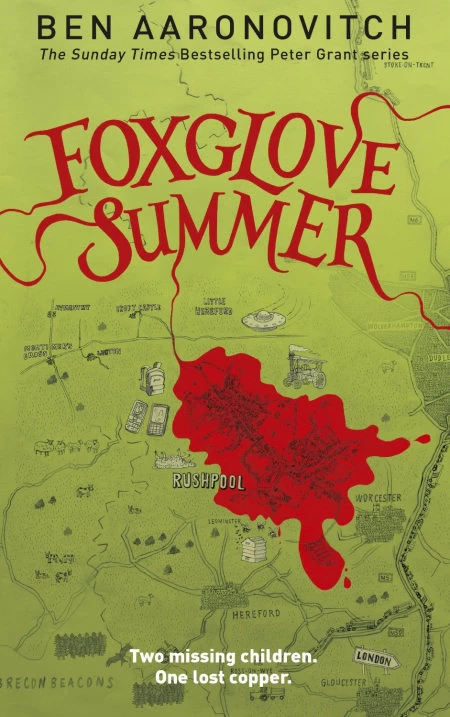
This is my favorite book in the Peter Grant series so far. This time, the story line was more of a real, well-woven narration and Peter developed to a real person instead of a wizard's apprentice only. Like in the previous books, police work means a lot of abbreviations. Finally, I've managed to memorize some of them - the funnier ones :-) - so that the flow in reading wasn't interrupted any longer. It was a nice change to the first books of the series. I like crime stories very much, so I've enjoyed this Peter Grant story which didn't lay much stress on wizardry.


I love the series, hate waiting for the next book.


Preacher has it all; grotesque action, horror, humor, depth - and most of all: style to tell the story. This is why I read for!

Best comic I've read in ages! Interesting plot and fascinatingly twisted characters. Absolutely awesome!

Great & intriguing story and some wonderful art!


"A Court of Thorns and Roses" - what a wonderful title! - is the first part of a trilogy that is truly unique. People who've read the "Throne of Glass" series by Maas might be a little surprised with the fact that ACOTAR, as this book is also known, seems to be written for a slightly older age group. It's really obvious when you're reading it. That's something I, personally, didn't think was so interesting about the novel, which made for the first 100 and last 100 pages really good. The middle was a little more 'basic', as far as that's possible. Nevertheless, there are some really good pieces in the novel and it's worth the read.

How very sad! A very complex and moving story about ecology, father-and-son relationships (over 3 generations), animal rights, eco-warriors and their adversaries and - not to forget - bees. Johanna Sinisalo tells her story well-worded and imaginative, lets the reader know only small pieces at a time which makes this book an intriguing read.

For the whole book I was waiting for something to grab my attention. Something to make interested. Something to start liking the main character. It didn't happen. The main character remained distant. Like skimming the water without getting in to it. Feelings were thin, so felt the other characters. The story also had long time jumps that distanced the feeling even further. It was long wait of "end already".

"Fairest" was included by Marissa Meyer as being a kind of prequel to the Lunar Chronicles in which we see the young Queen Levana of Luna take form and change her into the being she is in the series. The most interesting - and good - thing about the book is probably the fact that some of the reader's assumptions throughout "Cinder", Scarlet" and "Cress", the most noticeable being the things we hear from Selene's mother. Those things make "Fairest" truly enjoyable. A downside of it is that the novel is only 220 pages thick and I couldn't shake the feeling that Meyer could have taken her time a bit more. Sometimes it goes rather quickly. Another good element, however, is that a lot of the other characters are 'introduced' here - since the action takes place before the other books and a lot of them are recognizable. That's very nicely done and came to me as a surprise. Now we're just waiting for "Winter", of which the first three chapters are already included in this book!
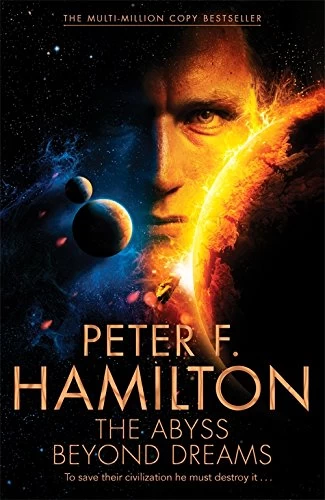
Just finished this afternoon after a marathon re-reading of the firts Void trilogy. As always, a very enjoyable and entertaining read ... looking forward to the next in the series ... 2016? Oh well, maybe Rothfuss will publish something in the interim.

I've been avoiding Mary Sue heroines for quite some time now. So it took some persuasion from my part to actually start reading Written in Red. And honestly I have no idea how to rate this book. Let me give you some examples. So what's this book about? Well there is a girl who can cut herself and see the future. She manages to escape her former master and ends up with group of shifters called 'Others.' Sounds good doesn't it? Well, these shifters aren't the usual fuzzy and cuddly kind. They pretty much eat people and have wet dreams about slaving them all. Oh and yeah, they call all humans 'monkeys'. So still sounds promising eh, but then comes the BUT. The Others are protecting the girl, Meg, and no one messes with the Others (because they eat people). Okay fine. So why the Others are protecting a human in the first place? 'Coz they like her. You guys starting to get my point? The Others likes her because she delivers their mail and is their first decent Human Liaison, like ever. So that's when I started to wonder why everyone liked Meg for no apparent reason. I can't honestly say. I liked her. I don't like Mary Sues but still liked her somehow. She's not THE snowflake but a snowflake nevertheless. And 90% of this book was Meg delivering the mail. So I'm a bit confused here you see. I liked the multiple POV, I liked Meg and the supportive cast (magical ponies!). The evil was evil and at least entertaining the last 10 % of the book. So somehow my observations should not be leading me toward generous review. Still solid 4 stars. Sue me.

Certainly very different kind of scifi story from what we usually have. The details and society were quite interesting. The story however, I'm not that interested about a life of a spoiled rebellious teenager. The story without the society and tech part would be worth just two stars from me. If I would have been reading this instead of listening it as audio book, I would have never finished the story.

Very rewarding collection about Magnus Bane, filling some of the storyline gaps for both Mortal Instruments and Infernal Devices, like how Magnus originally met Camille and Raphael Santiago, his friendship's (or not so frienfly relations) to various Shadowhunter and Downworlders families and how he got mixep up in the war with Valentine. My personal favorites of the collection were: What Really happened in Peru -because Duh!, What to Buy the Shadowhunter Who Has Everything (And Who You're Not Officially Dating Anyway) - Magnus pondering over Alec's birthday gift, The Last Stand of the New York Institute is where Valentine comes in and finally The Course of True Love (And First Dates) - hilarious disaster of Magnus' and Alec's first date, for this alone the book was worth every penny!

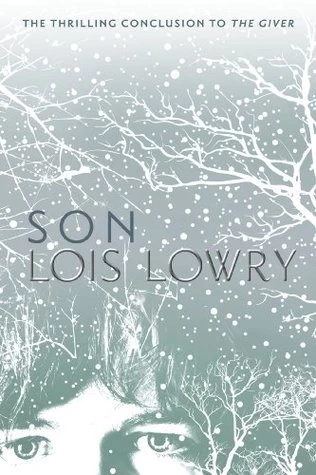
This review is on SON by Lois Lowry. It is the second book I have read by this author. This book is part four of The Giver Quartet, composed of The Giver, Gathering Blue, Messenger, and Son. I have not read books two and three. The Giver was released as a motion picture in 2014 and I saw it on DVD. It was great and followed the book closely; again not explaining what happens to the main character, Jonas, at the end. This book starts out with a young fourteen year old girl named Clair who has been assigned the role of Vessel or Birthmother. Clair is about to have her first child and she must wear a blindfold so as not to see the “Product” after it is born. It is easier this way to avoid feeling any attachment to the baby. This is a problem with the birth and Clair ends up having a healthy, but troublesome, baby boy. Unfortunately, Clair can no longer have children and is told she has been decertified and must be reassigned to another job in the community. Soon Clair begins to have feelings and realizes that she really misses her child and wants to see him. Clair is determined to find her child and figures out a way to visit him in the nursery. At this point in the story, Clair meets the man who cares for her boy and finally gets to hold her son named Gabe. Unlike other mothers in the community, Clair develops true feelings for her child and is determined not to let him go. When Jonas escapes and takes Gabe with him, the connection between Book 4 and Book 1 is made. Form this point on the story goes in a new direction. Clair decides to leave the community to find her missing son. Clair faces many ordeals in her search for her son and the world she knew vanishes forever. I give this story four stars because the writing is very good and the author makes you feel the emotions the new characters experience in this book. I choose this book to find out what happened to Jonas and the baby boy after reading The Giver. There is no ambiguity in the telling or ending of this story. Perhaps I will read Books 2 and 3 in the future to see how interconnected they are to the same story line in Books 1 and 4.

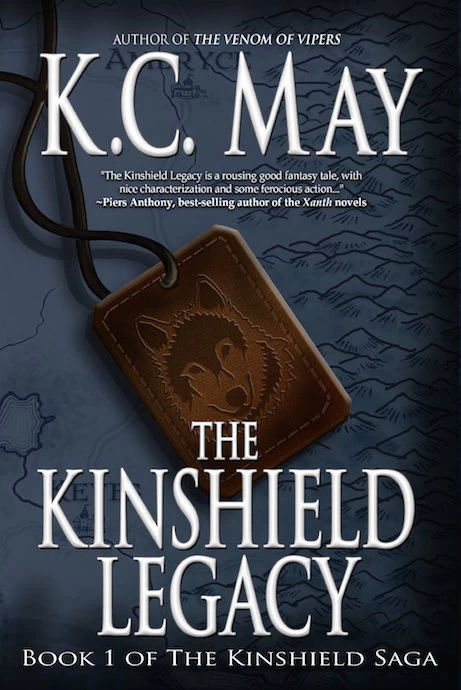
Fairly typical of the fantasy genre, but an enjoyable, fast-moving read with plenty of action and adventure. The plot is simple and straightforward, without a lot of embellishment, but the protagonists are believable and engaging. The book opens with a scene guaranteed to make you want to read more. The reluctant hero stays reluctant, and his nobility outweighs his lowborn crassness, inspiring a somewhat gratuitous loyalty in those who follow him and his cause. I found the antagonist a little flat; for a man planning to take over the kingdom, his actions seem small and petty in scope and give no view of how he sees his future. As another reviewer mentioned, the occasional crass comments from the male characters could have been omitted. They did nothing for the story and, in fact, detracted from the overall pace of the tale. Aside from that, I found May's style to be engaging and humorous, and I look forward to reading the next book in the series.

The dedication already makes clear, what’s to be expected from this book – and the reader won’t be disappointed ;-) I was really glad to see that Joe Abercrombie returned to a more sophisticated structure of a story (after the quite weak “Best Served Cold”) – even if it wasn’t what you’d call a soothing bedtime reading. I don’t think, there were more than a few chapters (5 – 8?) without betrayals, men changing allegiances, massacres … in short: magnificent!

My curiosity was piqued when I discovered this was set in the Welsh borderlands and in an earlier time period than we are accustomed to, but Lawhead's notes make perfect sense of his choice. The people in the book are wonderfully characterized, particularly Robin/Bran, who starts out as a spoiled, spineless annoyance. The book moved along at a good pace most of the time, and I was not put off by the slower parts. I found the details surrounding who was in charge (William Rufus) and what was going on (the Franks in Wales) a little confusing, as though it was assumed that this was information everyone automatically knows. While the author's notes at the end clarified, I wish I'd read them first. Even so, I already bought 'Scarlet,' the second book in the series
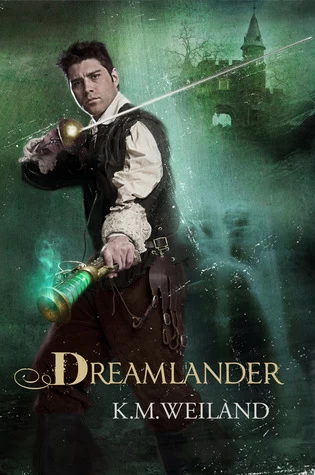
From the immediate appeal of the opening paragraph to the highly emotional ending, Ms. Weiland has crafted a wonderful story encompassing the "real" and the "dream" worlds. Her world-building is creative and interesting without bowling the reader over, and her descriptions conjure colorful, unique scenery. The Reivers are delightful, the fearless Cherazii are compelling, the Garowai peculiar and mysterious. The unique technology puts the tale within the borders of steampunk without it actually becoming an alternate history of our world. Indeed, "our world" is firmly in the present day. I wasn't certain I'd be sold on the "dreamworld" premise, but it is written in a fashion that makes it entirely believable, entirely plausible--and the tension is increased by the sheer stress of the situation. The dreaming of the protagonist, from one world to the other, is so filled with emotion and physical duress that it's a wonder he got any rest at all. I found the development of individual characters very well done, with flawed and yet appealing personalities. Some of the relationships with other people were outstanding--particularly the one between Chris and his father--while others were a little lackluster. For all of the emotional involvement between one person and the other, which lent a fine sense of depth and reality, the romantic interest left me wanting somewhat, at least in the middle. It wasn't bad, it was just not quite "there" for me. The end, on the other hand, was marvelous and heart-rending. The theme of choices and consequences resonates. More people should be aware and attentive of their actions, not just to each other, but in the way it affects themselves. Ms. Weiland skillfully handles the technical side of writing while presenting a nearly seamless tale that will have the reader avoiding chores and/or staying up late to reach a very startling, very satisfying ending.
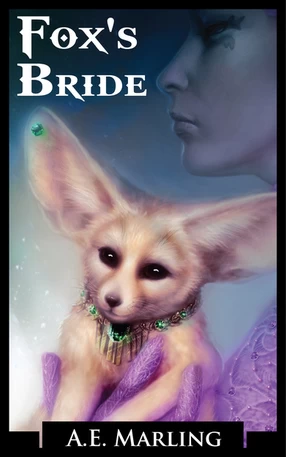
Enchantress Hiresha's intelligent fantasy/mystery story continues in the wonderful follow-up to "Brood of Bones." Marling's prose beautifully captures the flavor of the desert, creating richly painted scenes. The plot is full of expertly crafted twists and turns, and the characters are brought to you in vibrant technicolor. I loved seeing Hiresha thwarted, regrouping, stepping outside the bounds of what she knows, and growing as she does. She's not just a focused 'scientist,' she's whimsical, at times callous, and she has a habit of putting her foot in her mouth. Her new bodyguard, Chandur, strikes me as a good-hearted, wonderfully loyal and idealistic but frustratingly dense individual, but he too grows through his experiences, making for a more solid, engaging character. The doings of the Soultrapper antagonist are devious and woven expertly into the tapestry with threads of creepiness and dark humor. Well done! I would have liked Tethiel to figure a little more prominently; I missed his biting wit and dry humor, and the knife-edge relationship with Hiresha developed in "Brood of Bones" only received token attention after his reintroduction. "Fox's Bride" flows well, keeps a quick pace, and ends on a strong note. Again, I am looking forward to Marling's next book.
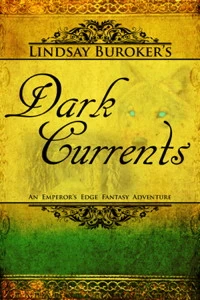
I really enjoyed the first book in this series, Emperor’s Edge, and the fun continues in Dark Currents. Buroker has developed a good, solid framework of society that isn’t thrown off kilter with the inclusion of magic—a magic that is referred to in Amaranthe’s world as “science.” Her writing style is smooth and engaging, neatly balancing narrative and dialogue. The characters continue to capture the reader’s interest. What’s more, they develop even further—no cardboard cutouts here! They are each wonderfully detailed and clearly different from one another, and the fact that they are not all always comfortable and heroic makes them even more believable. When one of them goes out of his comfort zone in order to get something important accomplished, it *means* something. The quality of writing style, grammar, punctuation, formatting, characterization, setting—all are top notch. The story is a quick read, not too long and it’s fast-paced. There are some wonderfully quirky twists and surprises, though the antagonists remained slightly distant and nebulous. If I have one complaint it’s about the gratuitous crass innuendoes. They felt like a forced afterthought and could honestly (and beneficially) have been left out altogether. Otherwise, the humor and the usual exchange of barbs had me laughing out loud in places. Buroker has a knack for telling a good tale.